


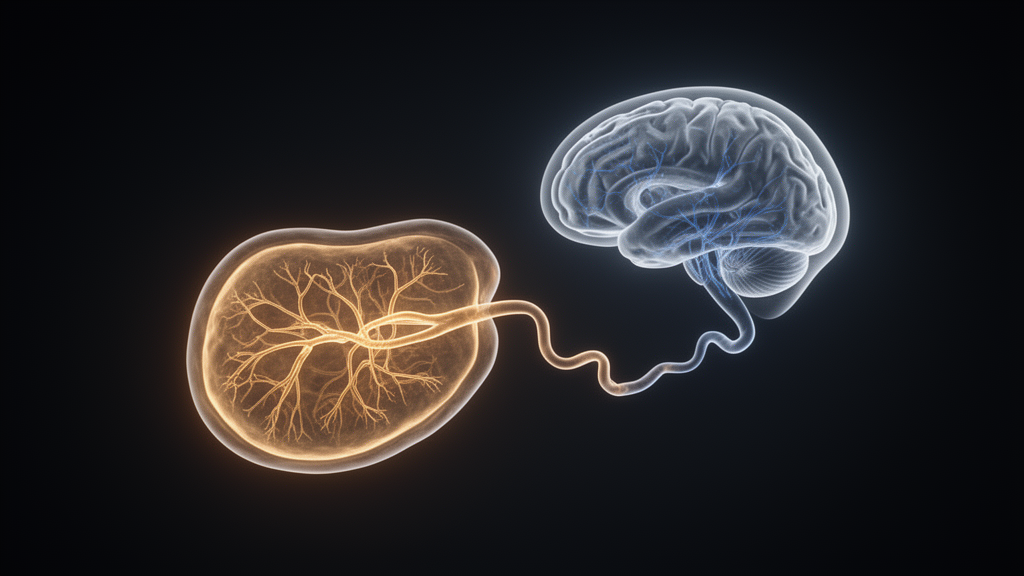
Some of the most consequential brain research begins before birth. When a placenta fails to deliver adequate oxygen and nutrients to a developing fetus—a condition known as intrauterine growth restriction, or IUGR—the consequences can ripple through the nervous system for decades. A new scoping review published in Pediatric Research has now mapped, across species and across forty years of literature, what happens to the brains of babies born small at term as they grow into adolescents and adults. The findings reveal both striking patterns and troubling blind spots in how science has tracked this population.
The review, led by Ginevra Chincarini and colleagues at RMIT University in Melbourne, Australia, alongside collaborators in Canada, systematically combed six major research databases for studies published between January 1985 and February 2025. The team was looking for something specific: research that followed people born at term with IUGR, small for gestational age (SGA), or low birth weight (LBW) into adolescence and young adulthood, measuring how they moved, thought, and felt. They also searched for animal studies in which IUGR had been experimentally induced through placental insufficiency and behavioral outcomes were assessed at developmental stages equivalent to human adolescence or early adulthood.
What emerged was a map of 28 studies—16 clinical and 12 preclinical—that collectively paint a picture of a field with significant strengths and equally significant gaps. Cognitive outcomes were the most frequently studied, appearing in 19 of the 28 investigations. Motor outcomes came second, assessed in 14 studies. Anxiety-related behaviors, however, were examined in only 11 studies overall—and the distribution was strikingly lopsided: just 3 of the 16 clinical studies looked at anxiety, while 8 of the 12 preclinical studies did.
This asymmetry is not merely an academic curiosity. It represents what the authors call a translational gap—a mismatch between what animal models are telling us and what human studies are actually measuring. Animal researchers have extensively probed anxiety-like behaviors in IUGR models using tools like the open field test, the elevated plus maze, and the light–dark box. Rabbit models of IUGR, in particular, consistently show increased anxiety-like behavior, characterized by reduced exploration and increased immobility. Rat models, by contrast, have shown no increase in anxiety-like behavior on standard measures, though some displayed increased locomotor activity—a finding that itself is ambiguous, since heightened movement in an open field could reflect hyperactivity, escape behavior, or stress rather than a primary motor deficit.
On the clinical side, the evidence for motor outcomes is suggestive but not uniform. Five clinical studies examined motor performance in adolescents and young adults born SGA or LBW, using standardized tools such as the Movement Assessment Battery for Children and the Beery-Buktenica Developmental Test of Visual-Motor Integration. Across these studies, reductions in fine motor coordination and manual dexterity were reported in growth-restricted groups compared with appropriately grown peers, while gross motor performance was largely preserved. One study, however, found no differences in total Movement ABC scores between SGA and appropriate-for-gestational-age groups, and in young adults, SGA was associated with lower scores on the Visual Motor Integration motor coordination subtest. Notably, none of these studies incorporated antenatal confirmation of IUGR.
Cognitive outcomes tell a somewhat more consistent story. Ten clinical studies evaluated cognition, most using standardized assessments such as the Wechsler Intelligence Scales or national academic testing frameworks. Reported outcomes included lower full-scale and verbal IQ scores on the WAIS-III, WISC-R, and Otis test, as well as reduced executive and attentional performance on tasks like the Trail Making Test, the Stroop test, and the Wisconsin Card Sorting Test in SGA and LBW groups compared with appropriately grown peers. Two studies that incorporated antenatal measures of growth or placental function identified greater cognitive differences in confirmed IUGR subgroups, though these subgroups were small—just five and six participants respectively.
Preclinical studies of cognition focused on more circumscribed domains, using paradigms like the Morris water maze, the Y-maze, the T-maze, and novel object recognition tasks. In rat models, several studies reported deficits in spatial or working memory and impaired recognition performance, particularly during adolescent-equivalent stages. Rabbit studies demonstrated short-term memory impairments on novel object recognition tasks but often normal performance on T-maze learning. In sheep—the only gyrencephalic species represented, meaning an animal with a folded, human-like brain cortex—mild spatial learning impairments were reported in males but not females, with normalization by adulthood. Few studies investigated sex differences systematically, but where they did, effects were inconsistent across species: some showed more prominent effects in female rats, others in male sheep.
The review also surfaced a methodological problem that has haunted the field for decades: the conflation of IUGR with SGA and LBW. These terms are not synonymous. IUGR reflects a pathological process of restricted growth due to compromised placental function, whereas SGA describes a statistical measure of low birthweight—below the 10th percentile for gestational age—that may occur in otherwise healthy fetuses. Yet the majority of clinical studies in this review classified participants as SGA or LBW without any antenatal confirmation of placental insufficiency. Only two of the sixteen clinical studies applied antenatal ultrasound or Doppler criteria to confirm IUGR. This diagnostic inconsistency, the authors argue, complicates interpretation of long-term neurodevelopmental outcomes and hinders precise translation between human and preclinical research.
The preclinical evidence base, meanwhile, is narrow in its species representation. All twelve preclinical studies used rodents, rabbits, or sheep—seven rat studies, three rabbit studies, and two sheep studies. No studies were conducted in non-human primates. Only the sheep, as a gyrencephalic species, offered any anatomical comparability to the human brain. Moreover, all rodent and rabbit models induced placental insufficiency in mid-to-late gestation, capturing only late-onset growth restriction. The sheep carunclectomy model, which surgically reduces implantation sites before conception, is the exception, affecting placental function throughout gestation. This distinction matters because IUGR arising from early placental maldevelopment in humans may produce a different neurodevelopmental profile than late-onset insufficiency—a nuance the current preclinical evidence base does not capture.
The authors also note that seven of the sixteen clinical studies drew participants from the same Norwegian birth cohort born between 1986 and 1988, meaning the clinical evidence base represents approximately nine independent populations rather than sixteen. While this overlap limits diversity, it does enable comparison of outcomes from the same cohort at both adolescence and young adulthood across motor, cognitive, and anxiety domains. Looking forward, the review’s authors call for standardised diagnostic frameworks incorporating antenatal imaging and placental pathology, alignment of behavioural testing across species, systematic inclusion of sex and environmental modifiers, and expansion into gyrencephalic or large-animal models. Without these coordinated changes, the full neurobehavioural profile of growth restriction beyond childhood will remain stubbornly out of focus.
Subject of Research: Long-term neurobehavioural outcomes of term intrauterine growth restriction across human and animal studies
Article Title: Neurobehavioural outcomes after term IUGR from adolescence to adulthood: a cross-species scoping review
Article References: Chincarini, G., Gilchrist, C. P., Coyle, M. E., Walker, D. W., Tolcos, M., & Cumberland, A. (2026). Neurobehavioural outcomes after term IUGR from adolescence to adulthood: a cross-species scoping review. Pediatric Research. https://doi.org/10.1038/s41390-026-05583-3
Image Credits: AI Generated
DOI: 10.1038/s41390-026-05583-3
Keywords: intrauterine growth restriction, IUGR, neurodevelopment, placental insufficiency, small for gestational age, cognitive outcomes, motor coordination, anxiety, scoping review, cross-species comparison, Pediatric Research, developmental origins of health and disease
Cite Scienmag News
Cassandra Pierce. (October 16, 2026). How a Starved Placenta Shapes the Brain for Decades: New Review Maps IUGR’s Hidden Legacy. Scienmag. https://scienmag.com/how-a-starved-placenta-shapes-the-brain-for-decades-new-review-maps-iugrs-hidden-legacy/
Cassandra Pierce. "How a Starved Placenta Shapes the Brain for Decades: New Review Maps IUGR’s Hidden Legacy." Scienmag, 16 October 2026, https://scienmag.com/how-a-starved-placenta-shapes-the-brain-for-decades-new-review-maps-iugrs-hidden-legacy/. Accessed 16 October 2026.
Cassandra Pierce. "How a Starved Placenta Shapes the Brain for Decades: New Review Maps IUGR’s Hidden Legacy." Scienmag. October 16, 2026. https://scienmag.com/how-a-starved-placenta-shapes-the-brain-for-decades-new-review-maps-iugrs-hidden-legacy/


