


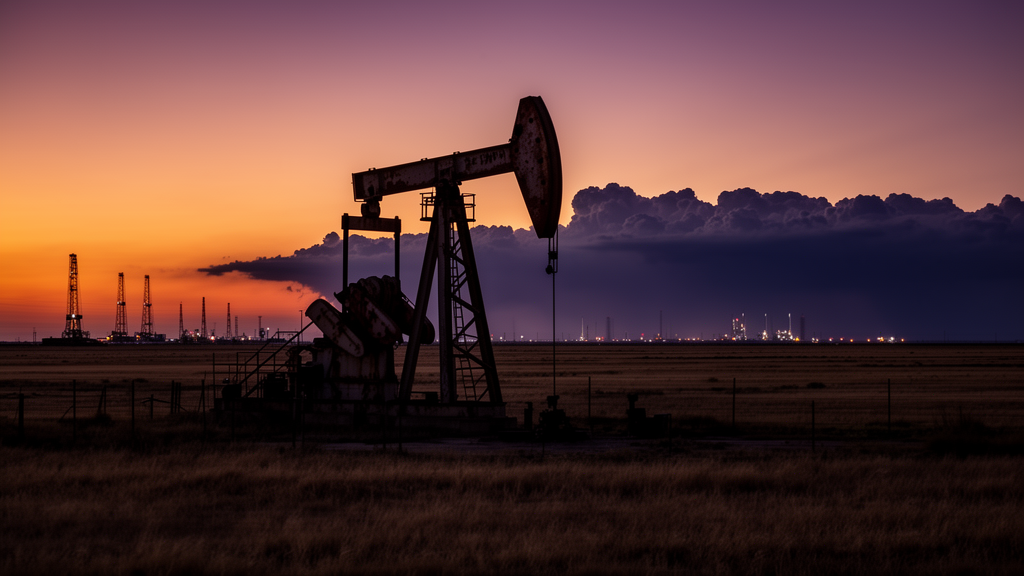
A new peer-reviewed forecast argues that United States oil and gas production is at, or very near, its resource-limited maximum, and that the celebrated shale boom that made America the world’s largest producer of liquid fuels will begin a steep and sustained decline within a few years. The study, published in Frontiers in Sustainable Resource Management by veteran petroleum geologist J. H. Laherrère of ASPO France and energy analyst R. W. Bentley of the University of Reading, projects US production category by category all the way to 2100, and its conclusions stand in sharp contrast to the more optimistic outlooks published by the US Energy Information Administration.
The analytical heart of the paper is a technique with a storied history: Hubbert linearization, or HL. The method plots a commodity’s annual production divided by its cumulative production against cumulative production itself. When cumulative output has followed a logistic curve, the plot falls on a straight line whose intersection with the horizontal axis yields an estimate of the ultimately recoverable resource, the URR, the total quantity that will ever be produced. Because production following a logistic curve peaks at the mid-point of its URR, the technique allows forecasters to predict not just how much remains but when the resource-limited maximum will arrive.
That logic made scientific history in 1956, when geophysicist M. King Hubbert used logistic-derivative curves constrained by URR estimates of 150 to 200 billion barrels for Lower-48 conventional oil to forecast that US production would peak in 1965 or 1970. Lower-48 conventional oil indeed peaked in 1970, when roughly half the upper estimate had been produced, a prediction that became one of the most famous in resource economics. The new paper’s HL analysis of pre-shale US production data yields a straight line from 1973 to 2008 indicating a URR of about 240 billion barrels for Lower-48 conventional oil plus Alaskan, shallow offshore and some deep offshore oil, closely supporting Hubbert’s upper figure despite seven decades of subsequent exploration and drilling technology.
Applying the same method to the modern era, the authors disaggregate US crude-plus-condensate oil into its components. Lower-48 conventional oil, approximated by subtracting Alaska, the Gulf of Mexico and light-tight oil from EIA totals, shows a URR of about 220 billion barrels, only some 10 percent above Hubbert’s 1956 upper estimate. Alaskan oil, which peaked in 1988, carries a URR of 25 billion barrels. Gulf of Mexico oil, shallow and deep combined, is assessed at around 40 billion barrels, with shallow-water production following a clean linear trend at 14 billion barrels and deepwater, still being discovered in reasonable quantities, adding about 24 billion. Most consequentially, monthly HL analysis of light-tight oil, the fracked oil from shale basins that transformed the US energy picture after 2008, shows a straight line emerging from 2021 onward, suggesting a URR of about 70 billion barrels, later revised down by roughly 20 percent to 57 billion barrels.
Summing the components gives a URR for total US crude-plus-condensate oil of about 355 billion barrels, which the authors round down to 340 billion to align with a recent EIA Short-Term Energy Outlook and to improve the symmetry of the forecast rise and decline. The resulting production curves are dramatic. Lower-48 conventional oil peaked in 1971 and has declined steeply since. Alaska peaked in 1988. Gulf of Mexico output looks to peak around now. Light-tight oil also looks to be peaking about now, in 2026, and must decline rapidly if cumulative production is to remain within its assessed URR, a decline made steeper by the notoriously fast falloff of individual shale wells compared with conventional fields. Total US crude-plus-condensate production, the paper concludes, is at peak right now.
The forecast for natural gas follows a parallel logic. Total US marketed gas shows no clear HL trend, again because of the recent surge in tight gas, but dry shale gas alone yields a straight line indicating a URR of about 660 trillion cubic feet. US conventional gas, examined over the 1985 to 2005 window before tight gas became dominant, peaked in 2000 and implies a URR of about 1,750 trillion cubic feet. Adding a conservative 560 trillion cubic feet for tight gas gives an all-gas URR of roughly 2,300 trillion cubic feet, which points to a resource-limited peak in total US gas production that likely already occurred in 2025, with marketed gas peaking around 2028 or slightly after and tight gas between 2026 and 2028.
Sensitivity analysis suggests these dates are robust. Raising the oil URR from 340 to 400 billion barrels, an optimistic scenario consistent with persistently high prices, shifts the oil peak only from 2026 to about 2028 and slows but does not eliminate the subsequent decline; lower URRs of 326 and 336 billion barrels change little. For gas, raising the URR to 2,900 trillion cubic feet, based on an August 2026 EIA chart of monthly dry shale gas production by formation, moves the peak from 2025 to about 2031. The authors note that US kerogen, holding perhaps 1,000 billion barrels of theoretically recoverable oil, plus oil chemically converted from coal and gas, could extend supply, but carbon-dioxide constraints, low energy return on investment and high costs make rapid deployment unlikely.
Strikingly, three independent methods converge on the same oil conclusion. A calculation using Rystad Energy data, combining cumulative production of 246 billion barrels to 2024 with Rystad’s 169 billion barrels of 2PCX reserves, yields a URR of 415 billion barrels, close to the paper’s high case, and places cumulative production well past the mid-point. Globalshift.co.uk, which forecasts bottom-up by individual field and project, sees total fossil oil peaking at about 20 million barrels per day around 2025, the same date as the paper’s crude-plus-condensate peak. The EIA’s 2026 Annual Energy Outlook, by contrast, assumes a crude-plus-condensate URR near 550 billion barrels, derived from a technically recoverable resource of 310 billion barrels plus cumulative production, and expected to grow further through learning by doing, and therefore shows no significant oil decline out to 2050. For gas, the paper’s forecast, Globalshift’s, and the IEA’s 2023 Stated Policies scenario all see near-term peaks, while the EIA’s 2023 AEO again projects no peak before 2050.
The authors argue that the discrepancy hinges on URR assumptions rather than production data, and they caution that EIA figures are estimates aggregated from 50 states and many agencies, with only Bureau of Ocean Energy Management Gulf of Mexico data considered fully reliable, and only from 2001 to 2019. If the near-term peaks they identify are correct, the consequences are far-reaching: US oil production in 2050 would fall to its 1935 level, and gas output would return to its 1955 level by 2045, eroding the cheap-energy advantage that currently gives American gas a price perhaps a quarter of European levels. The authors urge that these resource-limited maxima be incorporated into energy models and policy-making now, before the decline, and its political and economic shockwaves, arrives.
Subject of Research: Forecasting the dates of resource-limited peaks in United States oil and gas production to 2100 using Hubbert linearization
Article Title: Forecasts of United States oil and gas production to 2100
Article References: Laherrère, J. H., & Bentley, R. W. (2026). Forecasts of United States oil and gas production to 2100. Frontiers in Sustainable Resource Management, 5, Article 1946271. https://doi.org/10.3389/fsrma.2026.1946271
Image Credits: AI Generated
DOI: 10.3389/fsrma.2026.1946271
Keywords: peak oil, Hubbert linearization, light-tight oil, shale gas, ultimately recoverable resource, US Energy Information Administration, natural gas liquids, Gulf of Mexico oil, energy forecasting, Annual Energy Outlook, Rystad Energy, resource depletion
Cite Scienmag News
Violet Maxwell. (October 16, 2026). US oil and gas production may be peaking right now, new forecast warns. Scienmag. https://scienmag.com/us-oil-and-gas-production-may-be-peaking-right-now-new-forecast-warns/
Violet Maxwell. "US oil and gas production may be peaking right now, new forecast warns." Scienmag, 16 October 2026, https://scienmag.com/us-oil-and-gas-production-may-be-peaking-right-now-new-forecast-warns/. Accessed 16 October 2026.
Violet Maxwell. "US oil and gas production may be peaking right now, new forecast warns." Scienmag. October 16, 2026. https://scienmag.com/us-oil-and-gas-production-may-be-peaking-right-now-new-forecast-warns/


