


A fungus that quietly defends crop roots…
The findings from this study arrive at a moment when the global agricultural sector is actively searching for ways to reduce its dependence on synthetic fungicides and soil fumigants. Chemical crop protection products, while effective in the short term, carry well-documented drawbacks including residues on food, harm to non-target organisms, contamination of waterways, and the gradual emergence of resistant pathogen strains. Biological control agents built around beneficial fungi such as Trichoderma harzianum offer an alternative that works with ecological processes rather than against them. Yet the practical success of any biocontrol product hinges on a deceptively simple question: can enough viable spores be produced cheaply, and can they survive long enough on a shelf to be useful to a farmer? The Tanzanian research team addressed both halves of this question simultaneously, which is what gives their results particular value for anyone attempting to move a laboratory isolate into field-scale use.
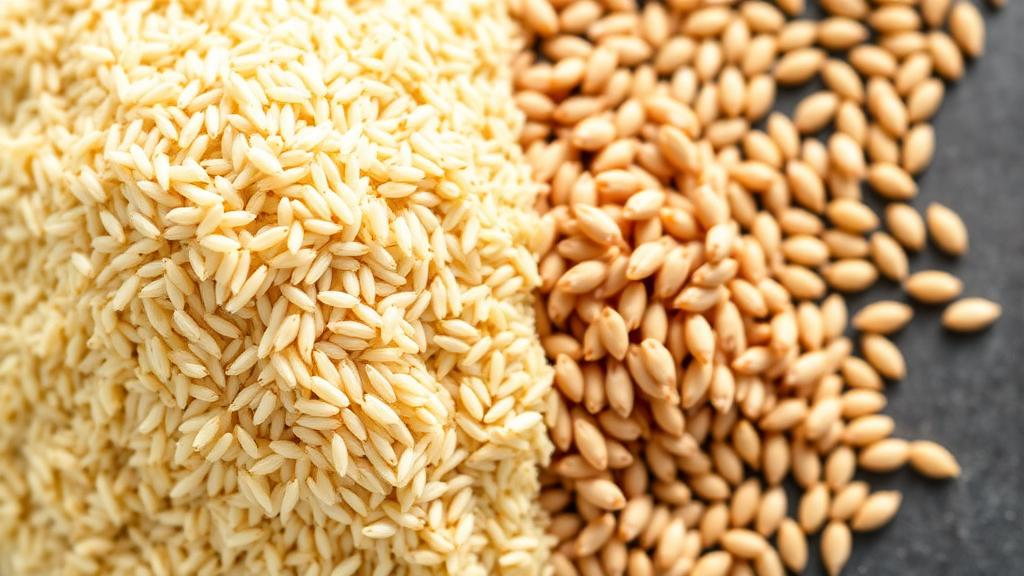
One of the most instructive aspects of the work is the way it separates two performance criteria that are often conflated in the biocontrol literature. High spore production and high storage stability are not the same thing, and a substrate that excels at one may fail at the other. Rice powder, with its fine particle structure and large accessible surface area, drove the most impressive initial sporulation, with isolate BH10-2 reaching 8.55 log colony-forming units per gram after ten days of fermentation. That figure represents an enormous number of propagules in a small mass of material, and it illustrates why powdered substrates are tempting for producers who want to maximize yield per batch. However, the same rice powder formulation showed the steepest decline in viability over the ninety-day storage window, meaning that much of that early abundance was lost before the product ever reached a customer. Sorghum grain, by contrast, produced more modest initial yields but preserved its spores far more effectively, especially for isolate MG7-2.
This trade-off has a clear physical and physiological logic. Whole grains provide a three-dimensional architecture with air spaces between kernels, allowing oxygen to penetrate the substrate bed and giving developing conidia a protected microenvironment during drying and storage. Powdered substrates pack more densely, which can create anaerobic pockets during fermentation and leave spores more exposed to desiccation stress and metabolic byproducts once the material is dried and bagged. The authors’ observation that viability actually increased between day ten and day thirty of storage is a subtle but important detail. It suggests that sporulation was not fully complete at the time of the first assessment, and that the seven-day drying period did not immediately halt fungal development. In practical terms, this means producers should not treat the end of fermentation as the moment of peak quality; the product continues to mature during early storage before the long decline begins.
The choice of statistical methods also deserves attention, because it reflects the realities of measuring the same samples repeatedly over time. Initial spore production, measured once at day ten, was analyzed with a straightforward two-way analysis of variance, which is appropriate for a single time point in a factorial design. Viability, however, was measured at three successive storage intervals on the same experimental units, and repeated measurements on the same subject are statistically correlated. A linear mixed-effects model handles this structure properly by treating the repeated observations within each unit as nested data, avoiding the inflated significance that naive repeated ANOVA or independent tests would produce. The combination of Tukey’s honestly significant difference test for mean separation and a significance threshold of P ≤ 0.05 gives the results a conventional and defensible statistical footing. For readers evaluating similar studies, the use of a mixed model for storage data is a marker of methodological care.
The isolate-by-substrate interaction being significant is perhaps the most consequential finding for formulation developers. If spore yield depended only on substrate, a producer could simply pick the best substrate and use it for every strain. If yield depended only on isolate, strain selection would be independent of production method. Instead, the interaction means that each isolate responds differently to each substrate, so the optimal production recipe is strain-specific. MG7-2, which produced the lowest yield on sorghum grain at 5.81 log CFU per gram, turned out to be the isolate whose spores survived best on that same substrate over long storage. BH10-2, the yield champion on rice powder, did not maintain that advantage through storage. This pattern implies that screening programs should evaluate isolates and substrates together rather than in separate optimization steps, and that a strain chosen for a commercial product should be matched to its production substrate from the outset.
The regional context of the study strengthens its practical relevance. The four isolates were recovered from different agro-ecological zones of Tanzania and maintained in the culture collection at Sokoine University of Agriculture in Morogoro. Native isolates often carry advantages over imported commercial strains, including adaptation to local soils, climates, and pathogen populations, and they avoid some of the regulatory and logistical complications of importing living microbial material. By testing these isolates on rice and sorghum, two cereals that are widely grown and inexpensive across East Africa, the researchers deliberately anchored their production system in materials that local entrepreneurs or farmer cooperatives could actually source. Solid-state fermentation itself is well suited to this setting because it requires autoclaves, shallow containers, and drying space rather than the stirred bioreactors, sterile media, and downstream processing equipment that liquid fermentation demands.
The substrate preparation methods described in the paper are also notable for their simplicity. Grains were soaked overnight in tap water to adjust moisture, drained, loaded into fifty-gram batches in autoclavable containers, and sterilized at 121 degrees Celsius before inoculation. Powdered substrates were produced by soaking grains in a one-to-two weight-to-volume ratio of water for thirty minutes, draining, and grinding them coarsely with a mixer grinder, a procedure adapted from previously published work. None of this requires specialized equipment beyond what a modest laboratory or small production facility would already possess. The use of colony-forming units as the response variable, rather than direct spore counts, adds a layer of biological realism, because a colony-forming unit counts only propagules capable of germinating and growing, which is precisely the property that matters when a product is applied in the field.
The ninety-day storage horizon is a reasonable benchmark for commercial shelf life in many markets, though it is worth noting that real distribution chains in tropical regions can be harsher than laboratory storage conditions. High ambient temperatures and humidity fluctuations in much of sub-Saharan Africa would likely accelerate viability loss beyond what was observed under controlled laboratory storage. The seven-day drying period before storage is a critical step in this regard, since residual moisture in a stored fungal product is one of the strongest drivers of premature spore death and contamination by competing microorganisms. Future work building on this study would logically extend the storage trials to longer durations, test a wider range of packaging materials and storage temperatures, and validate the laboratory findings in greenhouse or field trials where the biocontrol performance of the stored spores can be measured directly against target pathogens.
It is also worth situating these results within the broader biology of Trichoderma harzianum as a biocontrol agent. Strains of this species suppress soil-borne pathogens through several complementary mechanisms: direct mycoparasitism, in which the fungus attacks and consumes pathogen hyphae; antibiosis, in which it secretes inhibitory metabolites; and competition for space and nutrients on root surfaces. Beyond pathogen suppression, Trichoderma colonizes the rhizosphere and can stimulate root growth, improve nutrient uptake, and induce systemic resistance in the plant itself, effectively priming the crop’s own defenses. A bioformulation therefore delivers value through both direct antagonism and plant growth promotion, but only if the applied propagules are alive and capable of germination. This is why the storage viability data in this study are arguably more commercially decisive than the yield data, even though yield figures are more visually impressive.
For producers and researchers in resource-limited settings, the practical takeaway is a decision framework rather than a single recommendation. If the goal is rapid, high-volume production for immediate use, rice powder paired with a high-yielding isolate such as BH10-2 maximizes output. If the goal is a shelf-stable product that must survive weeks or months of distribution, sorghum grain paired with MG7-2 is the stronger candidate, accepting a lower initial yield in exchange for better retention of viable spores. The study’s demonstration that these objectives can pull in opposite directions is a genuine contribution, because it replaces a vague intuition that substrate matters with quantified, statistically supported evidence of how it matters, for which strains, and over what timescales. As demand for biological crop protection continues to grow in both industrialized and developing agriculture, studies of this kind, grounded in locally available materials and native strains, provide the translational bridge between laboratory microbiology and the practical realities of making biological control affordable and reliable for farmers.
Subject of Research: Solid-state fermentation of Trichoderma harzianum on cereal substrates for biocontrol production
Article Title: Cereal-based solid-state production and storage stability of native Trichoderma harzianum isolates for biological control applications
Article References: Cereal-based solid-state production and storage stability of native Trichoderma harzianum isolates for biological control applications. (n.d.). https://doi.org/10.3389/fmicb.2026.1991071
Image Credits: AI Generated
DOI: 10.3389/fmicb.2026.1991071
Keywords: Trichoderma harzianum, solid-state fermentation, biological control, sorghum grain, rice powder, spore viability, bioformulation, sustainable agriculture, storage stability, Tanzania, Cereal-based, solid-state
Cite Scienmag News
Alan Morgan. (October 15, 2026). Rice Powder Boosts Spore Yields but Sorghum Grain Keeps Trichoderma Alive in Storage. Scienmag. https://scienmag.com/rice-powder-boosts-spore-yields-but-sorghum-grain-keeps-trichoderma-alive-in-storage/
Alan Morgan. "Rice Powder Boosts Spore Yields but Sorghum Grain Keeps Trichoderma Alive in Storage." Scienmag, 15 October 2026, https://scienmag.com/rice-powder-boosts-spore-yields-but-sorghum-grain-keeps-trichoderma-alive-in-storage/. Accessed 15 October 2026.
Alan Morgan. "Rice Powder Boosts Spore Yields but Sorghum Grain Keeps Trichoderma Alive in Storage." Scienmag. October 15, 2026. https://scienmag.com/rice-powder-boosts-spore-yields-but-sorghum-grain-keeps-trichoderma-alive-in-storage/


