


…
…
The choice of inertial measurement units as the primary sensing modality for this exoskeleton study reflects a broader trend in wearable locomotion recognition, where the trade-off between information richness and practical deployability often determines which technologies move from the laboratory into real assistive devices. Unlike electromyography, which captures the electrical activity of muscles and can theoretically anticipate movement intentions before they manifest kinematically, IMU signals describe motion only after it has begun. This distinction matters for exoskeleton control because a recognition system based purely on kinematics will always lag slightly behind the wearer’s intent. However, EMG signals are notoriously sensitive to electrode placement, skin impedance, sweat, and day-to-day variability, all of which complicate the deployment of muscle-based sensing outside controlled settings. IMUs, by contrast, are sealed microelectromechanical devices that require only consistent mechanical mounting, making them considerably more robust for repeated use on a wearable platform. The study’s decision to rely exclusively on attitude information from six IMUs, rather than fusing multiple sensing modalities, therefore represents a deliberate simplification aimed at testing how far a minimally instrumented configuration can be pushed before recognition performance degrades.
The sampling rate of 70 Hz used in this work sits at the lower end of the range typically reported in the human activity recognition literature, where rates between 50 and 200 Hz are common for wearable inertial sensing. Lower sampling rates reduce the computational burden and the volume of data transmitted over the CAN bus and Ethernet link, which is relevant for an embedded exoskeleton controller that must simultaneously handle motor control, safety monitoring, and communication. The 128-sample window at 70 Hz corresponds to roughly 1.83 seconds of motion, a duration long enough to capture several complete gait cycles during steady walking, where a typical healthy adult completes a cycle in about one second. For transition movements such as standing up from a chair or sitting down, this window length also encompasses the majority of the movement duration, allowing the network to observe the characteristic acceleration and angular velocity signatures of these activities. The 64-sample step, meaning a 50 percent overlap between consecutive windows, doubles the effective decision rate compared with non-overlapping segmentation, which becomes important if the pipeline is eventually adapted for real-time use, since more frequent classification updates allow the exoskeleton controller to respond sooner to changes in the wearer’s activity.
The participant-level data partitioning strategy deserves particular attention because it addresses one of the most common methodological pitfalls in wearable sensing research. When time-series data are segmented into overlapping windows and then randomly shuffled into training and test sets, windows derived from the same original recording trial can end up on both sides of the split. Because adjacent overlapping windows share most of their samples, the model can effectively memorize the specific recording session rather than learning generalizable features of the locomotion mode itself. This phenomenon, often called information leakage, inflates reported accuracy figures substantially, and studies that fail to control for it frequently report near-perfect classification results that collapse when tested on entirely new individuals. By partitioning the dataset at the participant level before any window segmentation occurs, the authors ensure that every window in the test set originates from a person whose data the model has never seen during training. The leave-one-subject-out cross-validation protocol extends this logic by systematically holding out each participant in turn, so that the reported performance metrics reflect an average across ten independent generalization tests rather than a single arbitrary split.
The performance metrics reported under this strict protocol provide a nuanced picture of the model’s capabilities. Overall accuracy of 94.08 percent indicates the proportion of all classification decisions that were correct, but this figure can mask poor performance on minority classes if the dataset is imbalanced. The five locomotion modes in this study were not sampled equally, since each participant completed five level-walking trials but ten trials each for stair ascent, stair descent, standing up, and sitting down, meaning level walking contributes fewer windows than the other classes. Macro-averaged F1 score addresses this concern by computing the F1 metric for each class separately and then averaging, giving equal weight to every locomotion mode regardless of how many samples it contributes. A macro-F1 of 93.73 percent therefore suggests that the model performs consistently across all five modes rather than excelling on frequent classes while neglecting rare ones. Balanced accuracy, which averages the per-class recall values, similarly guards against class-frequency artifacts and corroborates the macro-F1 finding at 93.62 percent. The close agreement among these three metrics indicates that no single locomotion mode is being systematically misclassified at a rate that would be hidden by the aggregate accuracy figure.
The hybrid LSTM-CNN architecture employed here combines two complementary approaches to processing sequential sensor data. Convolutional layers operate on local neighborhoods of the input signal, applying filters that detect short-duration patterns such as the sharp angular acceleration spikes that occur at heel strike or the characteristic oscillation of the shank during swing phase. Pooling layers then downsample these local feature maps, providing a degree of invariance to small timing shifts and reducing the dimensionality of the representation. Long short-term memory layers, by contrast, maintain an internal state across the entire input sequence, enabling the model to capture dependencies that span longer time scales, such as the coordinated sequencing of hip, knee, and ankle motion throughout a gait cycle or the gradual postural adjustments that precede a sit-to-stand transition. By stacking these two layer types, the architecture can simultaneously exploit local waveform features and longer-range temporal structure, which is why this combination has become a standard design pattern in time-series classification tasks involving human motion.
The bilateral six-IMU configuration, with sensors on the thigh, shank, and foot of each leg, captures complementary aspects of lower limb kinematics. Foot-mounted sensors are particularly informative for detecting gait events and distinguishing level walking from stair locomotion, because the foot experiences distinctly different contact patterns and pitch orientations on stairs compared with flat ground. Thigh sensors contribute information about hip-level motion and trunk-thigh coordination, which differs measurably between walking and transitional activities like rising from a chair. Shank sensors occupy an intermediate position, reflecting knee joint kinematics and the pendular dynamics of the lower leg during swing. Placing sensors on both legs allows the model to detect asymmetries and inter-limb timing relationships that single-leg configurations cannot capture, which may be especially relevant for transitional movements where the two limbs perform different roles, such as during stair ascent when one leg leads while the other trails.
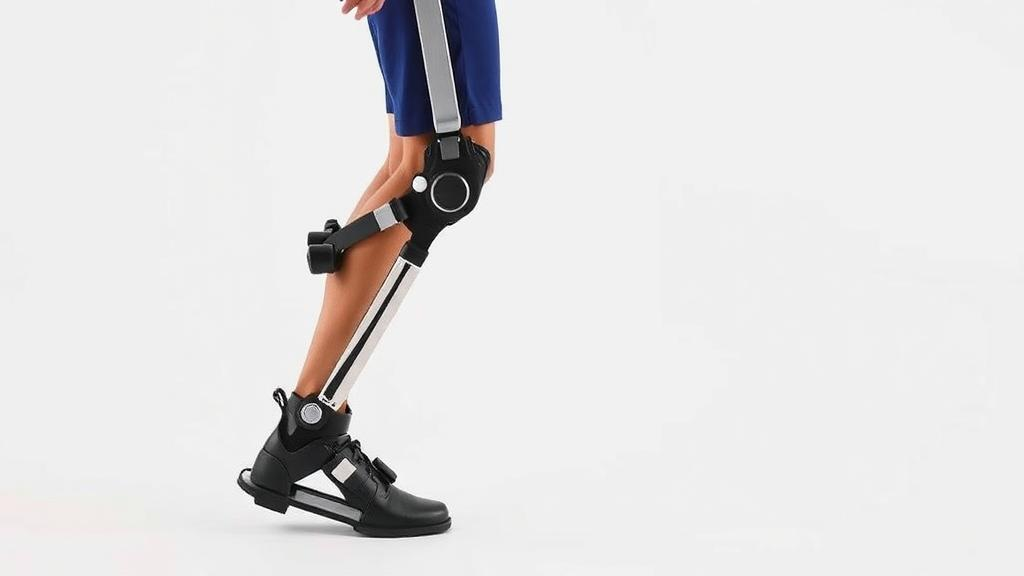
The reported mechanical specifications of the exoskeleton platform provide useful context for interpreting the sensing results. Each actuated joint module delivers a peak torque of 30 newton-meters, which is within the range of the assistance torques typically targeted for hip and knee support in powered lower limb orthotics, though well below the peak torques that healthy human joints can produce during vigorous activities like running or jumping from height. The total prototype mass of approximately 15 kilograms, distributed across a backpack and bilateral leg structures, is substantial compared with the human body mass it assists, and this mass itself alters the wearer’s gait dynamics. Any recognition system trained on data collected while wearing the exoskeleton will implicitly learn the motion patterns of exoskeleton-augmented walking rather than natural unassisted gait, which is why platform-specific validation, as emphasized in this study, is a necessary step before recognition results obtained on one platform can be assumed to transfer to another device with different mass distribution, joint stiffness, or actuation characteristics.
The distinction between offline and online recognition represents one of the most significant gaps between laboratory demonstration and deployable exoskeleton control. In the offline evaluation reported here, the entire signal stream is available for preprocessing, window segmentation, and classification, and there is no constraint on computation time. In an online closed-loop setting, the recognition pipeline must produce decisions within the control loop’s timing budget, typically on the order of tens of milliseconds, and errors have immediate physical consequences: a misclassified transition from level walking to stair descent could cause the exoskeleton to apply an assistance profile inappropriate for the actual movement, potentially destabilizing the wearer. Furthermore, online operation introduces latency between the onset of a new locomotion mode and the moment the classifier’s sliding window contains enough of the new activity to produce a confident decision. During this recognition delay, the controller must either maintain the previous assistance mode, which may be uncomfortable or unsafe, or adopt a neutral fallback strategy. Characterizing this delay, and designing transition-detection mechanisms that minimize it, remains an active area of research in powered lower limb assistance.
The restriction of the study cohort to ten healthy participants similarly bounds the generalizability of the findings. Healthy individuals typically exhibit relatively stereotyped and consistent gait patterns, whereas clinical populations such as stroke survivors, individuals with osteoarthritis, or older adults with age-related gait changes display substantially greater inter-trial variability, asymmetry, and compensatory movement strategies. A recognition model trained on healthy gait may encounter feature distributions during clinical deployment that fall outside its training distribution, leading to degraded accuracy or unpredictable behavior. Additionally, the mechanical coupling between the wearer and the exoskeleton means that gait deviations caused by impairment will interact with the device’s dynamics in ways that healthy-subject data cannot anticipate. Future validation with patient populations, and with larger cohorts that capture greater anthropometric diversity across the stated 160 to 180 centimeter height range, will be necessary to establish whether the reported recognition performance holds under the conditions where assistive exoskeletons are ultimately intended to operate.
The robustness evaluations conducted in the study, covering simulated orientation variation, measurement noise, and sensor failure, address practical concerns that arise in real-world deployment but are often omitted from idealized laboratory assessments. IMU orientation errors can accumulate from mounting misalignment, strap loosening during extended wear, or drift in the onboard attitude estimation, and even modest angular offsets can shift the input distribution away from what the network learned during training. Measurement noise arises from vibration transmitted through the exoskeleton structure, electromagnetic interference from the actuator motors, and the inherent limitations of microelectromechanical accelerometers and gyroscopes. Sensor failure, whether from wiring damage, connector fatigue, or component malfunction, is a realistic possibility in a wearable device subjected to repeated mechanical loading. Testing the recognition pipeline’s tolerance to these degradations provides an indication of how gracefully the system would fail in practice, and whether fallback strategies or redundant sensing might be needed to maintain safe operation when input quality deteriorates.
From a broader perspective, the systematic validation approach adopted in this work, encompassing baseline comparisons, architectural ablations, segmentation analyses, and sensor-location studies, contributes a template for how locomotion recognition research on specific assistive platforms can be conducted with methodological rigor. Because the contribution is framed as platform-level validation rather than architectural novelty, the findings are most directly relevant to researchers and engineers working with similar bilateral exoskeleton configurations, and the reported performance figures should be interpreted as conditional on the specific hardware, sensor placement, sampling parameters, and participant population described. As powered lower limb exoskeletons continue to mature toward rehabilitation clinics and industrial settings, studies of this kind, which carefully document the interaction between sensing configuration, evaluation protocol, and recognition performance on a concrete platform, accumulate the evidence base needed to establish which design choices are robust across platforms and which are contingent on particular implementation details.
Subject of Research: …
Article Title: IMU- and LSTM-CNN-based multi-gait recognition for a lower limb exoskeleton
Article References: Zheng, L., Ramli, R., Li, X., Mohd Ghazali, M. H., & Wang, M. (2026). IMU- and LSTM-CNN-based multi-gait recognition for a lower limb exoskeleton. Frontiers in Mechanical Engineering, 12, Article 1906456. https://doi.org/10.3389/fmech.2026.1906456
Image Credits: AI Generated
DOI: 10.3389/fmech.2026.1906456
Keywords: gait recognition, inertial measurement unit, lower limb exoskeleton, LSTM-CNN, motion intention recognition, wearable sensors, deep learning, biomechanical engineering, locomotion mode classification, rehabilitation robotics, IMU-, LSTM-CNN-based
Cite Scienmag News
Denise Maddox. (October 15, 2026). Wearable Sensors and Deep Learning Teach a Lower-Limb Exoskeleton to Read Its Wearer’s Gait. Scienmag. https://scienmag.com/wearable-sensors-and-deep-learning-teach-a-lower-limb-exoskeleton-to-read-its-wearers-gait/
Denise Maddox. "Wearable Sensors and Deep Learning Teach a Lower-Limb Exoskeleton to Read Its Wearer’s Gait." Scienmag, 15 October 2026, https://scienmag.com/wearable-sensors-and-deep-learning-teach-a-lower-limb-exoskeleton-to-read-its-wearers-gait/. Accessed 15 October 2026.
Denise Maddox. "Wearable Sensors and Deep Learning Teach a Lower-Limb Exoskeleton to Read Its Wearer’s Gait." Scienmag. October 15, 2026. https://scienmag.com/wearable-sensors-and-deep-learning-teach-a-lower-limb-exoskeleton-to-read-its-wearers-gait/


