


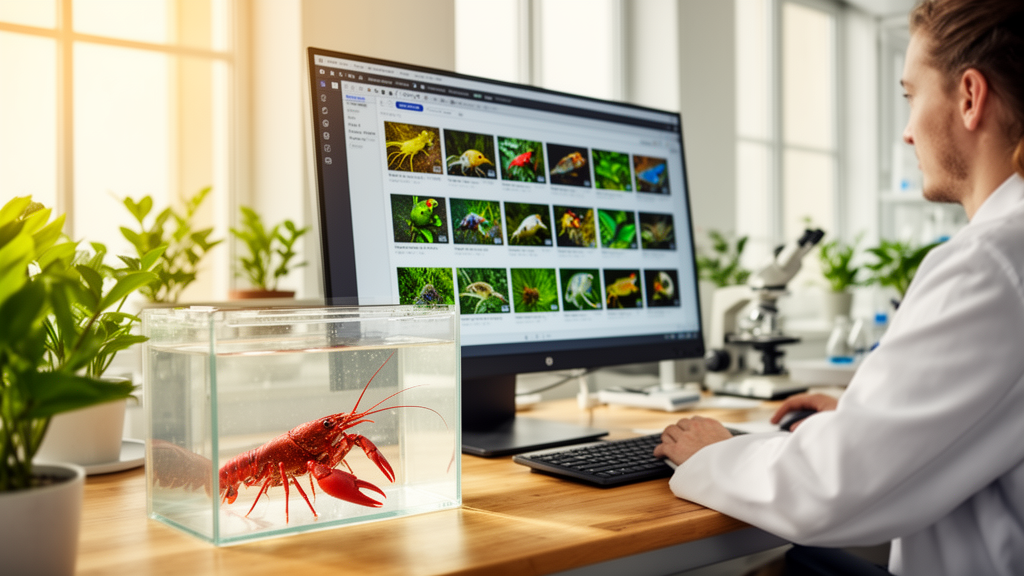
A quiet revolution is unfolding in freshwater conservation, and it is being built with some of the humblest tools in modern computing. The World of Crayfish platform, described in a new paper in Frontiers of Biogeography, takes more than 124,000 expert-validated occurrence records for 676 crayfish taxa and turns them into something most biodiversity databases never deliver: immediate, interpretable knowledge. Instead of forcing users to download sprawling datasets, clean them, run spatial analyses and interpret the results, the platform moves a visitor directly from selecting a species to a synthesised biogeographic account, complete with interactive maps, automated narrative summaries, ranked bibliographies and machine-readable exports. Its developers argue that the web interface itself is a substantive layer of biodiversity knowledge production, a claim that challenges how the field has long thought about the relationship between data infrastructure and the communities that depend on it.
The problem the platform addresses is one that anyone who has worked with occurrence data will recognise. Global aggregators such as the Global Biodiversity Information Facility and the Atlas of Living Australia have mobilised billions of records across the tree of life, standardising heterogeneous sources through shared standards like Darwin Core. Yet these infrastructures are horizontal by design, serving every organism group and therefore privileging none. Extracting ecological meaning from their outputs still demands considerable technical effort, which places a real barrier in front of conservation practitioners, environmental managers and students who are increasingly rich in data but still thirsty for synthesis. The deliberate separation of storage from analysis is often the responsible default for a general portal, but it leaves room for complementary vertical resources that accept a narrower scope in exchange for delivering interpretation directly.
Freshwater crayfish turn out to be an ideal test case for this argument. Following the current global classification, the group comprises the superfamilies Astacoidea and Parastacoidea, five families, 38 genera and 669 species, or 692 counting distinct subspecies. Crayfish act as keystone and ecosystem-engineering organisms in fresh waters, invasive species rank among the most damaging agents of freshwater biodiversity loss, and a substantial fraction of species are assessed as threatened. Accurate Red List assessments for many European species remain hampered by fragmented distribution data and unresolved taxonomy, and knowledge of crayfish distributions is dispersed across disparate databases, grey literature and peer-reviewed sources in many languages. Integrating that material into a coherent, community-facing knowledge system is a genuine challenge, and one that a general-purpose portal cannot be expected to solve for a single group.
The data foundation is deliberately curated rather than exhaustive. At the time of writing, the platform held 124,318 validated occurrence records for 676 accepted taxa in 34 genera and 99 countries, contributed by 110 registered contributors and spanning 8,565 occupied hexagonal cells. Records enter through only two routes: a structured template submission that passes through a pending queue and per-record administrative approval, and check-IN, an ingestion engine that combines AI-assisted extraction from published literature with geocoding, taxonomic checking and bibliographic enrichment. The disciplines governing that engine are strict. Coordinates may never be inferred; any proposed coordinate must be accompanied by the printed coordinate copied verbatim from the source. Claims of local extinction are held to stricter rules still, since hedged or range-wide wording is never accepted and a claim must name an exact site. AI assistance is never autonomous: the engine produces drafts that a human must complete, and every record passes the same approval gate as a manual submission.
Two design choices give the platform its distinctive analytical character. First, population origin is carried as a first-class attribute throughout, with indigenous and non-indigenous records routed through parallel branches that never silently pool, so that range metrics under IUCN criteria are restricted to the native range while the introduced range is preserved separately for invasion biology. Second, documented local extinction is encoded as positive information rather than as the mere absence of recent records, with each extirpation event carrying a year, a locality reference, a buffer radius and a provenance trail. This temporal awareness propagates into derived metrics, and because every product is versioned, the effect of an extinction claim is directly observable and reproducible from the archived snapshots. Raw records are processed through the cheCkOVER framework, which aggregates distributions to hydrographic basin units derived from HydroSHEDS, computes area of occupancy at two-kilometre resolution following IUCN guidelines, and derives extent of occurrence as a minimum convex polygon over verified localities.
Environmental context arrives through the GeoFRESH platform, which snaps each occurrence to a stream segment of the Hydrography90m global river network and inherits climate, soil, land-cover and topographic variables at both local-segment and upstream-catchment scales. This network-aware treatment matters because crayfish are confined to fresh water, making the drainage basin, not the landmass, the natural unit of range. Two basins may sit side by side on a map, separated only by a watershed divide, yet remain entirely disconnected as aquatic systems; for an obligate freshwater animal, that divide is an absolute barrier. Adjacency on land therefore carries no implication of connectivity in water, a counter-intuitive point for anyone accustomed to terrestrial organisms, and where molecular or historical evidence indicates arrival by human agency, a population is recorded as non-indigenous regardless of how close it lies to native territory.
The technical implementation is strikingly minimalist. The platform runs on vanilla HTML, CSS and JavaScript on the front end, with PHP 7.3 and SQLite on the back end, deployed on standard shared hosting with no build step, no container orchestration and no separate database server. The entire structured dataset lives in a single SQLite file of roughly 430 megabytes that can be backed up by downloading one file. The species pages were originally built as a React application exceeding one gigabyte in static assets; they were rebuilt from scratch as a framework-free set of files of roughly 50 kilobytes, which improved performance, made mobile responsiveness native and lowered the maintenance burden to the point where any collaborator with a text editor can contribute. This simplicity is presented not as a limitation but as a design choice that maximises portability and longevity for infrastructure intended to outlast the project and its builders.
Interoperability is handled with unusual candour. Each processed taxon ships a versioned Species Exposure Bundle, described as the smallest publishable, citable and machine-retrievable unit of biogeographic evidence, retrievable through a deterministic URL without authentication and released under a CC-BY-4.0 licence. A public, read-only API documented as an OpenAPI 3.1 specification covers 24 endpoints spanning platform statistics, the species catalogue, aggregated spatial coverage, biodiversity and risk services, and the bundles themselves, and it is discoverable automatically through standard service-description link relations at the site root. What is not open is the raw locality layer, and this is a policy rather than an unbuilt feature: several crayfish species are legally protected, and published point coordinates pose a real exploitation risk. Record-level data therefore move through a governed tier with contributor consent, structured across three confidentiality levels, while the knowledge tier remains openly and fully interoperable by design.
Data quality rests on a two-pillar model. Professional validation at the point of entry is the first pillar: registration requires institutional affiliation, an ORCID identifier and a statement of purpose, uploads pass through a sanitisation layer that flags probable taxonomic errors using edit-distance matching, and georeferencing quality is graded explicitly and travels with each record. The second pillar is community-driven correction after ingestion, through an editor role operating under a three-assent principle: the editor proposes, the original record owner accepts, and an administrator applies the change, with every transition written to an audit trail. The authors are equally candid about what remains untested. The user pathways that organise the interface, eight explicit threads running from newcomer orientation to programmatic access by AI agents, are design hypotheses authored from domain experience rather than the output of a formal needs assessment, and no usage data exist against which to validate them.
Perhaps the most unexpected element is the WoC Arcade, a suite of nine browser games whose content is drawn from the same validated knowledge base that feeds the research modules, consumed in read-only mode. Players name species from real distribution maps, wager on real platform metrics, manage a threatened species as a living metapopulation network whose nodes are its actual river-basin populations, and even identify crayfish depicted in works of art, contributing to a genuine cultural-heritage database. A virtual arcade currency draws against, but never spends, the contributor tokens that govern real data access, so the route to more play is more validated data. The developers position the platform not as a competitor to general aggregators but as a taxon-tailored layer sitting above them, and they argue that much of its skeleton, from the curation workflow to the versioned machine layer, is transferable to other organism groups. As biodiversity informatics enters a phase in which the binding constraint is no longer data mobilisation but knowledge accessibility, purpose-built interfaces of this kind may become a standard and necessary component of the field’s future.
Subject of Research: A taxon-tailored biodiversity knowledge platform for freshwater crayfish that converts curated occurrence data into accessible biogeographic synthesis
Article Title: Biodiversity knowledge through web design: the World of Crayfish ® platform
Article References: Pârvulescu, L. (2026). Biodiversity knowledge through web design: the World of Crayfish® platform. Frontiers of Biogeography, 19, Article e203618. https://doi.org/10.21425/fob.19.203618
Image Credits: AI Generated
Keywords: biodiversity informatics, freshwater crayfish, occurrence data, biogeography, FAIR principles, species distribution, conservation, web platform design, data curation, invasive species, hydrographic basins, open science
Cite Scienmag News
Margaret Porter. (October 15, 2026). From Data to Knowledge: A Crayfish Platform Redesigns Biodiversity Access. Scienmag. https://scienmag.com/from-data-to-knowledge-a-crayfish-platform-redesigns-biodiversity-access/
Margaret Porter. "From Data to Knowledge: A Crayfish Platform Redesigns Biodiversity Access." Scienmag, 15 October 2026, https://scienmag.com/from-data-to-knowledge-a-crayfish-platform-redesigns-biodiversity-access/. Accessed 15 October 2026.
Margaret Porter. "From Data to Knowledge: A Crayfish Platform Redesigns Biodiversity Access." Scienmag. October 15, 2026. https://scienmag.com/from-data-to-knowledge-a-crayfish-platform-redesigns-biodiversity-access/


