


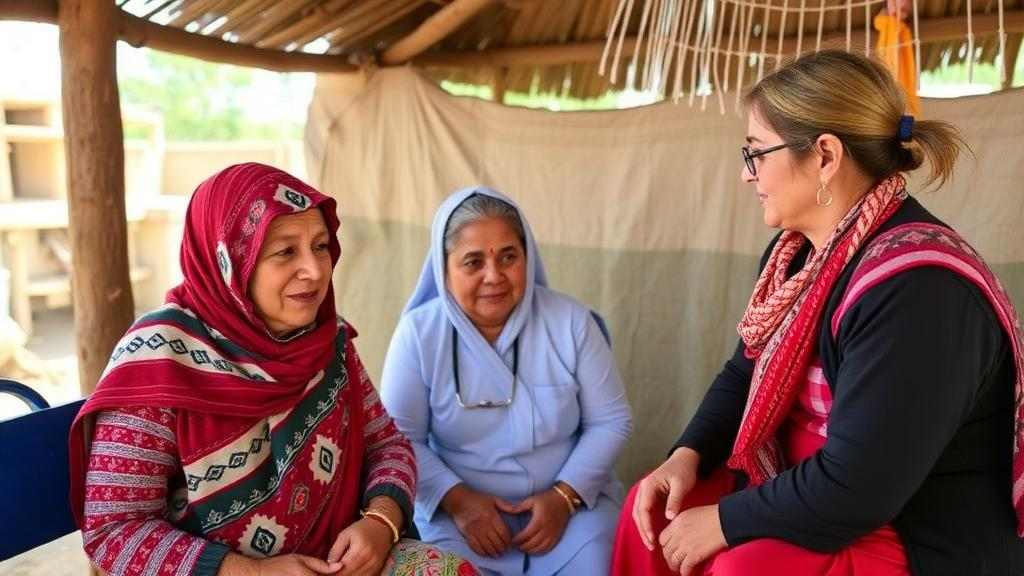
For roughly 46 million Americans living in rural areas, surviving a stroke is only the beginning of a longer struggle. New research published in Frontiers in Stroke suggests that the rehabilitation services these survivors most desperately need are often locked behind a wall of practical obstacles, and that the people best positioned to remove them, occupational therapists, are themselves working with one hand tied behind their backs. The study, led by Emily A. Stevens of The University of Texas Health Science Center at Houston together with colleagues at Rocky Mountain University of Health Professions, set out to map, for the first time, the specific barriers that stand between rural stroke survivors and outpatient occupational therapy, the post-hospital treatment widely credited with restoring function, reducing impairment, and improving quality of life after a stroke.
The technical logic behind the study was straightforward. Because no prior research had specifically explored barriers to outpatient occupational therapy access for rural populations, the team built a gap analysis survey grounded in the existing literature on rural healthcare access. The instrument gathered therapist demographics, practice characteristics, and ratings of potential barriers on a four-point Likert scale ranging from strongly disagree to strongly agree, with open text fields inviting respondents to describe supports and solutions. Recruitment ran from February to September 2024 through email lists, including the Certified Stroke Rehabilitation Specialist certification list, and through social media platforms, with recipients encouraged to share the survey within their professional networks. The survey was distributed to 1,072 individuals, although the researchers caution that because the lists spanned multiple disciplines in both rural and urban settings, the true number of eligible recipients is unknown.
Twenty-six occupational therapists from fifteen states ultimately completed the survey, a modest but geographically diverse sample. The respondents were, on average, 36.7 years old with 10.5 years of clinical experience, and most held master’s level qualifications. Notably, roughly two thirds treated fewer than ten stroke patients per week, reflecting the low caseloads that characterize rural practice. Responses were analyzed with descriptive statistics, with Likert results collapsed into agreement and disagreement categories because of the sample size, and open comments were thematically summarized.
The findings on patient-side barriers were striking for their unanimity. Every single respondent, 100 percent, agreed that financial constraints, such as inability to afford co-pays or time off work, and transportation problems, including the absence of public transit or a personal vehicle, barred rural stroke survivors from outpatient occupational therapy. Insurance coverage followed at 96 percent, with distance to clinic at 92 percent. Health literacy was endorsed by 80 percent of therapists, and family or caregiver support and competing roles and responsibilities, such as being unable to leave work or serving as a primary caregiver, each at 73 percent. Interestingly, most respondents did not view stroke survivors’ distrust of the healthcare system as a barrier, a point the authors interrogate carefully in their discussion.
Open comments brought these statistics to life. One therapist wrote that true rural clients do not live close to an outpatient clinic and must travel many miles to reach one, while another observed that resources for stroke survivors are severely limited or poorly advertised and accessible, or both. The transportation problem is compounded by the nature of stroke itself: residual symptoms such as hemiparesis can make entering and exiting a vehicle physically difficult even when a ride exists, and rural infrastructure rarely offers public transportation or ride-share coverage. Previous research cited by the authors shows that patients are often encouraged to drive into larger cities to reach certified specialists, a journey that taxes both exhausted patients and stretched support systems.
But the study’s most provocative finding concerns the therapists themselves. When asked what prevented them from adequately treating rural stroke survivors, the most frequently cited barrier, reported by 69 percent of respondents, was the lack of appropriate clinic equipment for neuro-specific interventions. This is not simply a matter of missing high-end gadgets. As the authors explain, evidence-based neuro-rehabilitation relies on equipment ranging from robotics, neuromuscular electrical stimulation, and functional electrical stimulation bikes to low-tech and no-tech essentials such as appropriately sized therapy plinths wide enough for neuro-facilitatory positions like quadruped, hand paddles, air casts, and mobile arm supports that position a hypertonic upper extremity for functional tasks. A single narrow plinth table cannot safely accommodate a therapist working on a mat with a patient, and improvisation, however creative, has limits when outcomes are at stake.
Further down the list of therapist-side barriers came limited opportunities for direct mentorship or case discussion with colleagues, at 58 percent, followed by lack of facility-sponsored research resources such as librarians or funded continuing education at 54 percent, limited supported time to research best practice at 54 percent, inadequate staffing at 50 percent, and infrequent exposure to stroke cases at 46 percent. These figures resonate with earlier evidence-based practice research: a 2020 survey of 578 occupational therapists cited in the paper found that 42 percent reported zero minutes per week of supported time to search for, appraise, or discuss research relevant to their patients. In clinics where stroke cases are rare and colleagues are few, the machinery of professional learning simply stalls.
The respondents did not stop at cataloguing problems; they proposed solutions that read like a blueprint for rural neuro-rehabilitation. Recommendations clustered around telerehabilitation and remote or mobile therapy sessions delivered in the home, self-management resources such as video training that patients and caregivers could access at any time, expanded caregiver training both during hospitalization and afterward through community support groups, clinic or charity funded transportation, and the addition of outpatient case managers to multidisciplinary teams. One respondent argued that the field must move beyond assuming a therapist must be physically present for therapy to occur, since stroke survivors need to perform therapeutic activities daily rather than a few times a week. The scientific literature offers support for this direction: telerehabilitation and caregiver-led rehabilitation have been extensively studied, and a low-cost hybrid program using telephone calls and text messages showed improvements in physical function, participation, and quality of life immediately after intervention, although effects were not sustained six months later, a signal that longitudinal support models deserve further testing.
The authors are appropriately cautious about their own work. They acknowledge the small sample size, the low response rate, and the untested survey instrument, and they note that surveys carry inherent risks of non-response bias. More fundamentally, the study captured only the therapist’s lens; barriers identified by clinicians may not match those experienced by stroke survivors and caregivers themselves, and therapists may only ever see patients who trust the system enough to seek care. The disagreement among respondents about healthcare system trust illustrates this blind spot: previous work reporting distrust as a barrier drew on people with lived experience, including rural traumatic brain injury survivors who described difficulty finding specialty care and a lack of advocacy and confidence in providers. The authors’ stated long-term goal is to expand this research with larger, more diverse stakeholder groups, using rural community engagement techniques such as targeted recruitment through places of worship, senior centers, primary care offices, and rural therapy clinics.
Still, the study delivers a clear and quantified message at a moment when telehealth reimbursement in the United States hangs on provisional approvals from the Centers for Medicare and Medicaid Services. Money, wheels, and miles stand between rural stroke survivors and the therapy that rebuilds their lives, unanimously according to the surveyed therapists, while those same therapists confront clinics stripped of the equipment and research support that evidence-based neuro-rehabilitation demands. The costs of inaction are not abstract: preventable secondary complications such as falls, skin breakdown, and contractures drive healthcare spending upward while patients deteriorate. Closing the gap, the authors argue, will require research that centers the voices of survivors themselves, sustained investment in equipment and mentorship for rural clinicians, and a willingness to rethink where and how therapy happens, whether through mobile outpatient services, hybrid telerehabilitation built on everyday cell phones, or caregiver training that turns living rooms into recovery spaces.
Subject of Research: Barriers to outpatient occupational therapy access for rural stroke survivors as perceived by occupational therapists in the United States
Article Title: Outpatient occupational therapy access for rural stroke survivors: barriers as perceived by therapists
Article References: Stevens, E. A., Pfeifer, L. J., & Malcolm, M. P. (2026). Outpatient occupational therapy access for rural stroke survivors: barriers as perceived by therapists. Frontiers in Stroke, 5, Article 1850977. https://doi.org/10.3389/fstro.2026.1850977
Image Credits: AI Generated
DOI: 10.3389/fstro.2026.1850977
Keywords: stroke, stroke rehabilitation, occupational therapy, rural health, healthcare access, telerehabilitation, health disparities, transportation barriers, caregiver support, health literacy, neurorehabilitation, survey research
Cite Scienmag News
Cassandra Pierce. (October 15, 2026). Rural Stroke Survivors Face Steep Barriers to Rehabilitation, Therapists Warn. Scienmag. https://scienmag.com/rural-stroke-survivors-face-steep-barriers-to-rehabilitation-therapists-warn/
Cassandra Pierce. "Rural Stroke Survivors Face Steep Barriers to Rehabilitation, Therapists Warn." Scienmag, 15 October 2026, https://scienmag.com/rural-stroke-survivors-face-steep-barriers-to-rehabilitation-therapists-warn/. Accessed 15 October 2026.
Cassandra Pierce. "Rural Stroke Survivors Face Steep Barriers to Rehabilitation, Therapists Warn." Scienmag. October 15, 2026. https://scienmag.com/rural-stroke-survivors-face-steep-barriers-to-rehabilitation-therapists-warn/


