


The race to decarbonize global shipping has hit a hard wall of economics, engineering, and geopolitics, and a new study argues that the International Maritime Organization’s flagship climate framework is partly to blame. Writing in Frontiers in Marine Science, researchers from Shanghai Maritime University and the University of Glasgow examine the 2023 IMO Greenhouse Gas Strategy and its 2025 Draft Net-Zero Framework through a lens they call climate realism, and their conclusion is blunt: the governance architecture rests on idealized assumptions that collide with how ships are actually built, financed, fueled, and protected.
The stakes are enormous. The 2023 Strategy requires the carbon intensity of international shipping to fall by at least 40 percent by 2030 compared with 2008, with zero or near-zero emission fuels accounting for at least 5 percent of the energy mix, and net-zero greenhouse gas emissions achieved by or around 2050. Interim checkpoints call for emissions cuts of at least 20 percent by 2030 and at least 70 percent by 2040. The Net-Zero Framework, reviewed at the IMO’s Marine Environment Protection Committee in April 2025, was meant to lock these ambitions into MARPOL Annex VI through a combination of global fuel standards and carbon pricing. Instead, the process fractured: the October 2025 special session failed to reach a voteable consensus, negotiations slipped by twelve months, and momentum only partially recovered at MEPC 84 in 2026, with a decisive vote now rescheduled for December 2026.
At the heart of the deadlock, the authors argue, is a mismatch between top-down targets and bottom-up industrial physics. Commercial ships operate for 25 to 30 years, which means roughly 70 percent of the global fleet will already have been built to designs finalized by 2030. There is simply little room for short-term fleet renewal or deep retrofits. Meanwhile, green methanol and liquid ammonia cost far more than conventional heavy fuel oil, and most ports worldwide lack the bunkering infrastructure to supply alternative fuels at scale. The researchers contend that a uniform, aggressive timetable detached from these asset cycles, technological bottlenecks, and cross-country disparities triggered the very opposition it was designed to overcome.
To explain why the framework stalled, the study assembles a three-layer analytical framework. Legal realism, tracing back to Oliver Wendell Holmes’s insight that the life of the law is experience rather than logic, explains why rules detached from socioeconomic conditions and market realities tend toward evasion, inconsistent enforcement, and nominal compliance. Resource dependence theory, drawing on Pfeffer and Salancik’s classic 1978 formulation, illuminates how nations’ dependence on marine fuels, green energy, and low-carbon technologies shapes their negotiating positions. Securitization theory from the Copenhagen School completes the picture, explaining why security concerns, particularly after the 2022 Nord Stream pipeline explosions, can override environmental priorities and freeze green investment.
The economic numbers are sobering. Estimates cited in the study suggest USD 1 to 1.4 trillion of investment is needed between 2030 and 2050 merely to halve shipping emissions, with full decarbonization demanding roughly USD 1.4 to 1.9 trillion. Methanol-powered bulk carriers cost about 47 percent more than conventional vessels, and LNG dual-fuel options run 125 to 155 percent higher. A container ship on transpacific routes could face USD 20 to 30 million in additional annual operating costs by 2030, most of it fuel, translating into USD 150 to 450 per TEU. With clean energy costing more than three times as much as fossil marine fuel, spontaneous market adoption remains a distant prospect for an industry that operates on thin, cyclical margins.
Technology presents equally stubborn constraints. Methanol’s low energy density requires roughly double the storage volume of fossil fuels, along with significant engine modification and stringent handling because of its toxicity. Ammonia is corrosive, demands specialized materials, and its combustion technology remains immature, while nitrogen oxide emissions partially offset its climate benefit. Hydrogen storage on ships is bulky and safety-intensive. Fuel cell catalysts and proton exchange membranes are expensive, and battery-electric solutions, viable for coastal routes, cannot scale to ocean crossings given their energy density, weight, and charging limitations. The study even invokes history: Britain’s transition from sail to steam began around 1815 and took roughly 75 years to complete, a reminder that even accelerated twenty-first-century energy transitions follow long cycles of piloting, cost reduction, infrastructure buildout, and diffusion.
Carbon pricing fairness emerges as the sharpest political fault line. The study argues that a uniform carbon tax is regressive because it ignores development disparities: for small island states with import dependence above 90 percent and shipping costs at 8 to 15 percent of GDP, a USD 100 per ton carbon tax could cut GDP by 2.3 percent, versus just 0.2 percent for developed economies. Ships flagged in developing countries generate 74 percent of global shipping CO2 emissions, and a 20 percent reduction target would impose USD 17.586 billion in compliance costs on those economies. In January 2025, fifteen developing countries led by China and Brazil proposed flexible compliance mechanisms in place of a rigid tax, and in July 2026 six Pacific island states demanded that at least 51 percent of Net-Zero Fund revenue be reserved for just and equitable transition support with minimum allocations for small island developing states and least developed countries.
The study’s comparative case study of Norway and China demonstrates how differently positioned nations respond to the same realist constraints. Norway, drawing on nearly 98 percent renewable electricity and fossil export revenues, channels traditional energy income into green shipping through its state-owned Enova agency, which has allocated roughly USD 75.5 million across hydrogen and ammonia vessel projects, while pioneering offshore carbon capture and storage with more than 25 million tons of CO2 stored at Sleipner and Snøhvit since 1996. China, by contrast, pursues a tiered strategy: short-term energy efficiency upgrades, medium-term reliance on LNG and methanol as transition fuels, and long-term development of green methanol and ammonia supply chains, supported by 25 international green shipping corridor initiatives centered on Shanghai, Ningbo-Zhoushan, and Qingdao. Both models reject one-size-fits-all mandates, yet both face their own bottlenecks, from Norway’s immature hydrogen refueling chains to China’s lagging port infrastructure and dependence on imported LNG technology.
Perhaps the study’s most original contribution is its treatment of infrastructure security. The 2022 Nord Stream blasts redefined green bunkering stations, offshore wind farms, and subsea CO2 pipelines as strategic vulnerabilities in what analysts now call the post-Nord Stream era. Unlike centralized fossil infrastructure with mature protection systems, the green shipping network is highly decentralized and difficult to defend, and the ISPS Code covers only ships and port facilities, leaving offshore wind, green bunkering, and subsea storage outside mandatory regulation. Even the perception of risk, securitization theory predicts, can suppress investment: operators hesitate to fund security upgrades without government guarantees, while governments fear that public warnings will further erode investor confidence, creating a self-reinforcing investment deadlock.
The authors propose a reconciliation rather than a retreat. Climate ambition should remain anchored to net zero, they argue, but implementation must rest on four practical foundations: mature low-carbon propulsion technology, stable and controllable clean fuel supply, complete port bunkering infrastructure, and market-competitive fuel pricing. Governance should adopt dynamic adjustment mechanisms tied to technological maturity, differentiated carbon pricing that honors the principle of common but differentiated responsibilities, flexible compliance pathways under performance benchmarks, and a transnational risk-sharing system for green infrastructure security. Whether the IMO’s December 2026 vote can absorb these lessons remains uncertain, but the study’s central message is clear: decarbonization that ignores asset cycles, technological readiness, development equity, and geopolitical security will not merely fail on paper, it will fail at sea.
Subject of Research: Global shipping decarbonization governance and the feasibility limits of the IMO Net-Zero Framework
Article Title: Reconsidering pathways to global shipping decarbonization: idealism vs. realism
Article References: Li, W., Sun, Y., & Hu, Z. (2026). Reconsidering pathways to global shipping decarbonization: idealism vs. realism. Frontiers in Marine Science, 13, Article 1988578. https://doi.org/10.3389/fmars.2026.1988578
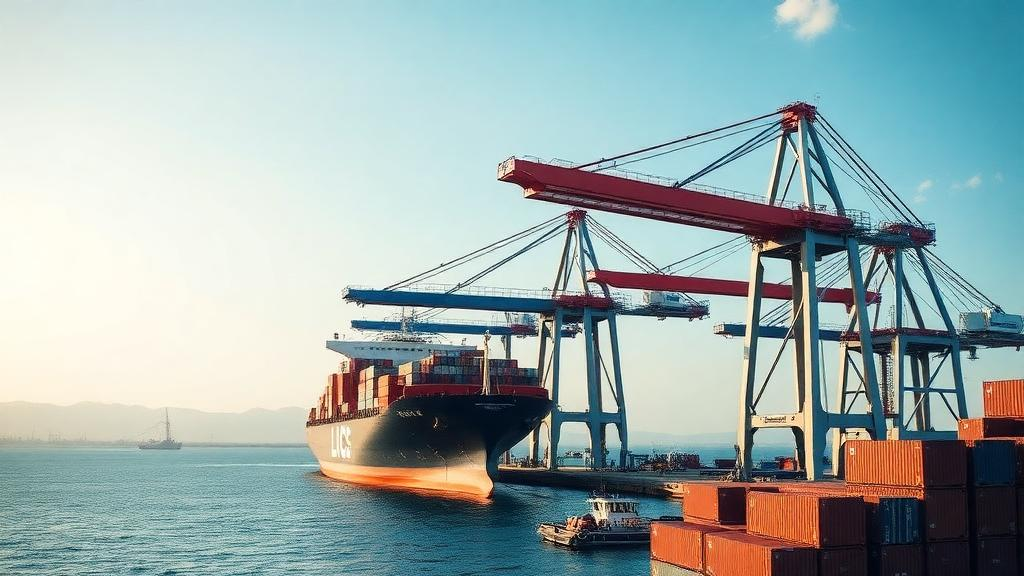
Image Credits: AI Generated
DOI: 10.3389/fmars.2026.1988578
Keywords: shipping decarbonization, IMO, Net-Zero Framework, climate realism, green methanol, ammonia fuel, carbon pricing, MARPOL, Norway, China, maritime infrastructure security, securitization theory
Cite Scienmag News
Violet Maxwell. (October 15, 2026). Why the Global Shipping Net-Zero Plan Collided With Industrial Reality. Scienmag. https://scienmag.com/why-the-global-shipping-net-zero-plan-collided-with-industrial-reality/
Violet Maxwell. "Why the Global Shipping Net-Zero Plan Collided With Industrial Reality." Scienmag, 15 October 2026, https://scienmag.com/why-the-global-shipping-net-zero-plan-collided-with-industrial-reality/. Accessed 15 October 2026.
Violet Maxwell. "Why the Global Shipping Net-Zero Plan Collided With Industrial Reality." Scienmag. October 15, 2026. https://scienmag.com/why-the-global-shipping-net-zero-plan-collided-with-industrial-reality/


