


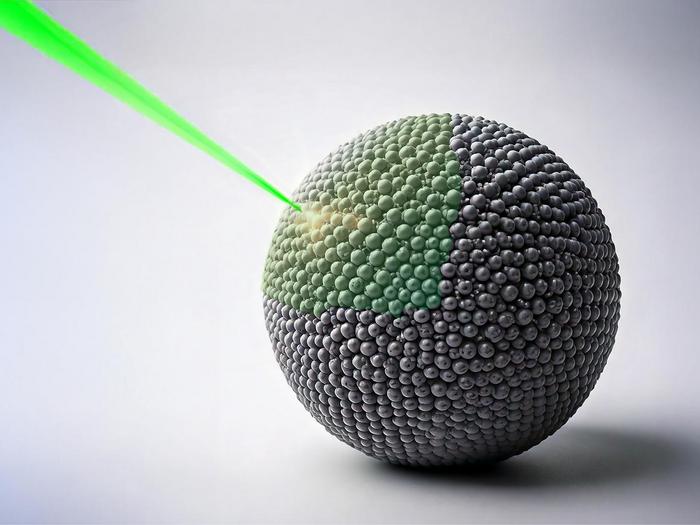
In a groundbreaking study published in Nature Communications, researchers at the University of Geneva (UNIGE) have developed an innovative tool that harnesses the power of light to precisely control the activation of molecules within living organisms. This advancement holds promise for enhancing medical treatments while minimizing unwanted side effects, addressing a critical challenge in the field of medicine. The team, led by Professor Monica Gotta and Professor Nicolas Winssinger, engineered a novel system that allows for targeted molecule activation using a brief pulse of light lasting only a few seconds.
The research tackles a persistent problem in medical therapy: the non-specific effects of drugs. When medications are administered, they often impact a broad range of tissues, leading to systemic effects that can result in serious side effects. For instance, thousands of individuals in Switzerland alone suffer from severe drug-related reactions every year. The ability to activate treatments solely at their intended sites could revolutionize therapeutic approaches, particularly in treating diseases such as skin cancer.
The breakthrough technique that emerged from this research focuses on the activation of a specific protein involved in cell division, known as Plk1. Gotta and Winssinger aimed to cultivate a method that permits researchers to inhibit this protein selectively, facilitating a deeper understanding of its role in developmental biology. Their innovative strategy combines methods from both chemistry and biology to create a light-activated Plk1 inhibitor.
To achieve this, the researchers modified an existing Plk1 inhibitor molecule so that it became responsive to light. They incorporated a coumarin derivative—a compound found in certain plants— into the inhibitor, which effectively blocked the active site. The unique aspect of this design is that the inhibitor could be released from the coumarin’s hold with a straightforward light pulse. Thus, a simple flash of light could control the inhibitor’s activity at the desired location without affecting surrounding cells.
Yet another critical challenge was to ensure that the inhibitor remained fixed at the target location within the body. To address this, the researchers further modified the molecule by introducing a molecular anchor. This anchor is designed to detach only when exposed to light, allowing for precise spatial control. Consequently, the same light pulse could both activate and anchor the inhibitor to deactivate Plk1, halting cell division exactly where needed.
The ramifications of this research extend far beyond just understanding cell division. The developed system can potentially adapt to various other drug molecules, creating the possibility of activating treatments precisely where they are required in the body. The researchers envision that in the future, a simple laser could target diseased tissues, sparing healthy cells and limiting potential side effects. This level of precision would mark a significant leap forward in the quest for more effective and safer medical treatments.
As the scientific community further explores this technology, the potential applications appear to be limitless. Ultimately, the innovative control of molecule activity could lead to substantial advancements in both basic research and applied medical treatments. It might open new pathways for the development of therapies that are tailored to deactivate problematic proteins only when and where they are needed. Utilizing light as a control mechanism provides an elegant solution to the issue of systemic medication effects.
The interdisciplinary collaboration between chemists and biologists at UNIGE exemplifies the importance of cross-disciplinary research in addressing contemporary health challenges. As noted by Gotta, the research initiated from a method-driven question, focusing on how to specifically inhibit Plk1 to better discern its functional role within an organism. This interdisciplinary approach rich in collaboration and practical testing has yielded results that have the potential to influence numerous fields, including pharmacology, genetics, and cellular biology.
This research not only highlights the capabilities of sophisticated light-based control systems but also prompts a reevaluation of conventional drug delivery methods. The implications of achieving precise molecular modulation could reshape our understanding of interactions at the cellular level, ultimately paving the way for next-generation therapies with reduced side effects.
Indeed, this research showcases the significant advancements being made within the life sciences, encouraging scientists to seek further innovations that can enhance our control over biological systems. As researchers continue to refine and expand the system’s applications, the hope is that we will soon witness tangible improvements in clinical strategies that lead to better patient outcomes across various therapeutic areas.
In conclusion, the work of the UNIGE team represents a significant milestone in the quest for precise and effective medical treatments. By seamlessly merging the disciplines of chemistry and biology, they have opened a new frontier in our capacity to control molecular activity with unparalleled accuracy using light. This pioneering approach could redefine how treatments are developed and administered in the realm of medicine, potentially revolutionizing how we address complex biological challenges in the future.
Keywords
Light-activated drugs, Plk1 inhibitor, University of Geneva, medical treatments, targeted therapy, cellular biology, precise activation, side effects reduction, interdisciplinary research
Cite Scienmag News
Bethany Barker. (February 19, 2025). Harnessing Light to Precisely Activate Treatments at Targeted Locations. Scienmag. https://scienmag.com/harnessing-light-to-precisely-activate-treatments-at-targeted-locations/
Bethany Barker. "Harnessing Light to Precisely Activate Treatments at Targeted Locations." Scienmag, 19 February 2025, https://scienmag.com/harnessing-light-to-precisely-activate-treatments-at-targeted-locations/. Accessed 4 September 2026.
Bethany Barker. "Harnessing Light to Precisely Activate Treatments at Targeted Locations." Scienmag. February 19, 2025. https://scienmag.com/harnessing-light-to-precisely-activate-treatments-at-targeted-locations/


