


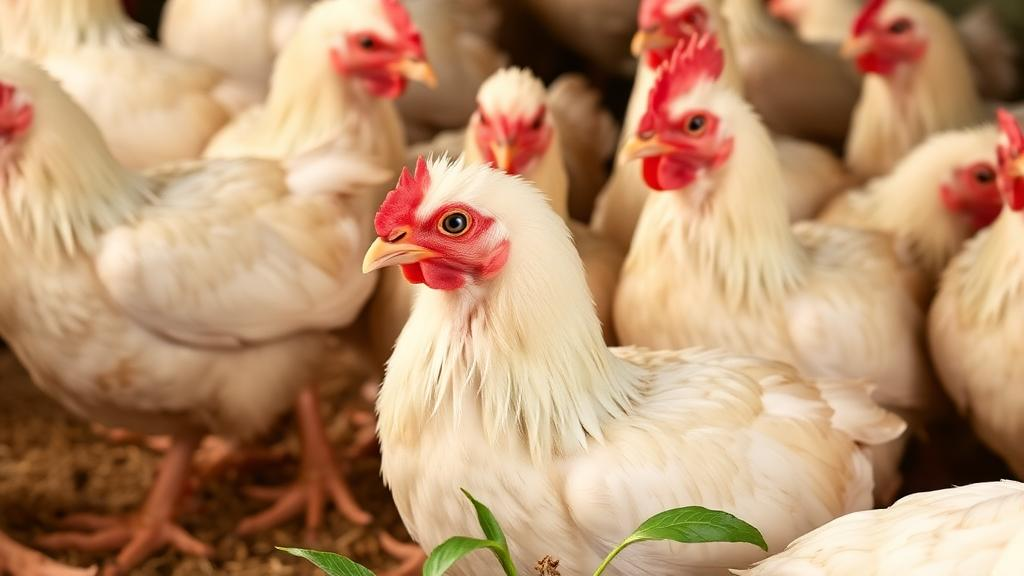
Necrotic enteritis is one of the most economically punishing enteric diseases in modern poultry production, costing the global industry an estimated $6 billion annually. Caused by the anaerobic, Gram-positive bacterium Clostridium perfringens, the disease strikes broiler chickens most severely between two and five weeks of age, when the pathogen proliferates rapidly in the small intestine and releases potent toxins that trigger extensive intestinal necrosis and inflammation. In its clinical form, mortality can climb to 50 percent of a flock; in its subclinical form, subtle intestinal damage quietly erodes growth performance and feed efficiency. With antimicrobial growth promoters banned in many production systems over concerns about multidrug resistance and residues in animal-derived foods, researchers have intensified the search for effective bioactive plant extracts that can fill the antibiotic void.
A new study published in Frontiers in Animal Science offers compelling evidence that green tea extract, a polyphenol-rich supplement derived from dried Camellia sinensis leaves, may serve as exactly that alternative. The research, led by Tunde E. Ogundare and colleagues at North Carolina A&T State University in collaboration with North Carolina State University, investigated how varying dietary concentrations of green tea extract modulate growth performance, C. perfringens colonization, intestinal health, and oxidative status in broiler chickens during a necrotic enteritis challenge. The findings suggest that supplementation at up to 500 mg/kg can mitigate the characteristic growth depression, reduce intestinal damage, and enhance the host antioxidant defense in affected birds.
The experimental design was rigorous. A total of 600 one-day-old Ross 708 male broiler chicks were randomly allocated to six dietary treatment groups, each replicated five times with 20 birds per replicate in a completely randomized design. The treatments included an unchallenged negative control receiving a corn-soybean meal basal diet without additives; a necrotic enteritis-challenged positive control on the same basal diet; an antibiotic-supplemented group receiving 55 mg/kg bacitracin methylene disalicylate alongside the challenge; and three green tea extract groups supplemented at 250, 500, or 1000 mg/kg, all subjected to the same challenge. Except for the negative control, all groups received a 10× dose coccidiosis vaccine containing live oocysts of Eimeria acervulina, Eimeria maxima, and Eimeria tenella on day 13, followed by oral gavage with 3.2 × 10⁸ colony-forming units per milliliter of C. perfringens on days 18 and 19. This dual-hit model, combining coccidia-induced epithelial damage with C. perfringens overgrowth, reliably reproduces the multifactorial pathogenesis of necrotic enteritis in commercial settings.
The green tea extract used was produced through methanolic extraction of dried tea leaves and obtained from Sabinsa Corporation. Liquid chromatography-mass spectrometry analysis confirmed a rich catechin profile, with epigallocatechin gallate (EGCG) as the most abundant constituent at 70,028.73 µg/g, followed by epicatechin gallate at 36,437.07 µg/g and epigallocatechin at 33,193.41 µg/g. EGCG is recognized as the most biologically active catechin, contributing significantly to the robust antioxidant properties of green tea. The researchers verified that polyphenol concentrations increased proportionally in all supplemented diets, with EGCG and epicatechin gallate emerging as the major polyphenol constituents across starter and grower rations.
By the end of the 28-day feeding trial, the necrotic enteritis challenge had taken a measurable toll. Challenged birds without any dietary intervention exhibited significantly reduced average body weight and weight gain compared to the unchallenged control, along with a markedly poorer feed conversion ratio. However, green tea extract supplementation at 250 mg/kg tended to produce the highest body weight and weight gain among all challenged treatments, while all green tea extract groups and the antibiotic group showed improved feed conversion ratios relative to the challenged control. Feed intake did not differ significantly across treatments, indicating that the performance benefits arose from improved intestinal function rather than increased consumption.
Intestinal lesion scoring revealed the extent of mucosal damage during peak infection on day 20. The challenged control group showed severe lesions across the duodenum, jejunum, and ileum, with scores approaching the maximum on the 0-to-6 scale. In contrast, all supplemented groups, whether receiving the antibiotic or green tea extract at any concentration, showed significantly lower lesion scores in all three intestinal segments. By day 26, as the disease progressed into its later phase, the 500 and 1000 mg/kg green tea extract groups maintained significantly lower lesion scores across all segments compared to the challenged control, while the 250 mg/kg group showed significant reductions in the jejunum and ileum. C. perfringens colonization in the ileo-jejunal segment was significantly higher in all challenged treatments than in the unchallenged control during peak infection, though the 1000 mg/kg green tea extract group showed the lowest colonization among challenged groups at that time point. By day 26, the antibiotic group significantly lowered intestinal C. perfringens counts relative to the challenged control, with the 250 mg/kg green tea extract group showing a similar tendency.
Jejunal histomorphometry on day 20 provided structural evidence of the protective effects. The challenge significantly reduced villus height in the untreated challenged group, a hallmark of necrotic enteritis that impairs nutrient absorptive capacity. All supplemented groups tended to improve villus height relative to the challenged control, with the 1000 mg/kg group reaching 610.77 µm compared to 388.85 µm in the challenged control. The villus height-to-crypt depth ratio, a key indicator of intestinal integrity and absorptive function, was similarly depressed in the challenged control but tended to recover in all supplemented groups. Goblet cell density, which reflects the population of mucus-secreting cells critical for maintaining the protective mucus layer over the epithelium, was significantly lowest in the challenged control. The 500 mg/kg green tea extract group showed the highest goblet cell density of all treatments at 698.07 cells per square millimeter, suggesting enhanced mucosal barrier maintenance. Conversely, intraepithelial leukocyte density, a marker of mucosal inflammation and cytotoxic immune activity within the epithelial layer, was significantly highest in the challenged control and significantly lowest in the 500 mg/kg green tea extract group.
The molecular analysis focused on select antioxidant and mucin genes measured by quantitative real-time PCR. The mRNA abundance of catalase (CAT), superoxide dismutase 1 (SOD1), and nuclear factor erythroid 2–related factor 2 (NRF2) were generally lower in the challenged control compared to the unchallenged control during peak infection, reflecting a compromised antioxidant defense system. Green tea extract treatments showed a tendency to increase CAT expression relative to the challenged control on day 20, while the 500 and 1000 mg/kg groups demonstrated significantly higher SOD1 expression at both sampling time points. NRF2, the central transcription factor that orchestrates the expression of cytoprotective genes including SOD1 and CAT in response to oxidative stress, was significantly higher in all green tea extract groups compared to the challenged control during peak infection. Mucin 2 (MUC2) gene expression was generally lower in all challenged treatments, mirroring the severity of intestinal C. perfringens colonization, though the 1000 mg/kg group showed a tendency toward increased MUC2 expression by day 26.
Serum nitric oxide concentrations, measured using the Griess reagent system, provided a systemic readout of the oxidative and nitrosative stress burden. The challenged control group exhibited significantly elevated serum nitric oxide compared to all other treatments on both day 20 and day 26, consistent with dysregulated inducible nitric oxide synthase activity and excessive nitrosative stress during the disease. In contrast, birds receiving either the antibiotic or green tea extract supplementation showed reduced serum nitric oxide levels, indicating that the polyphenol-rich supplement helped restore redox balance and limit the reactive nitrogen species that can react with cellular components and promote tissue damage.
Collectively, these findings highlight the potential of green tea extract as a promising natural antioxidant and viable alternative to in-feed antibiotics for mitigating the effects of necrotic enteritis in poultry. The researchers suggest that supplementation at up to 500 mg/kg of broiler diet can mitigate intestinal damage and enhance gut health in affected birds by modulating the host oxidative status through the NRF2 signaling pathway and associated antioxidant genes. The dual antimicrobial and antioxidant activities of the catechins, particularly EGCG, appear to work in concert to reduce pathogen proliferation, protect epithelial integrity, and strengthen the enzymatic antioxidant defense. Future studies assaying antioxidant enzyme activities directly in chicks fed green tea extract during necrotic enteritis could further establish the full scope of the supplement’s effects on oxidative status, but the current evidence positions this polyphenol-rich extract as a compelling candidate for antibiotic-free poultry production systems grappling with one of the industry’s most persistent enteric challenges.
Subject of Research: Animal Science
Article Title: Modulation of intestinal health and oxidative status by dietary green tea extract in broilers chickens challenged with necrotic enteritis
Article References: Ogundare, T. E., Kulkarni, R. R., Apalowo, O. O., Wang, W., Sang, S., & Fasina, Y. O. (2026). Modulation of intestinal health and oxidative status by dietary green tea extract in broilers chickens challenged with necrotic enteritis. Frontiers in Animal Science, 7, Article 1975012. https://doi.org/10.3389/fanim.2026.1975012
Image Credits: AI Generated
DOI: 10.3389/fanim.2026.1975012
Keywords: green tea extract, necrotic enteritis, Clostridium perfringens, broiler chickens, antioxidant defense, poultry health, Nrf2 pathway, antibiotic alternatives, Modulation, intestinal, health, oxidative
Cite Scienmag News
Drew Townsend. (October 15, 2026). Green Tea Extract Shields Broiler Chickens From Necrotic Enteritis Damage. Scienmag. https://scienmag.com/green-tea-extract-shields-broiler-chickens-from-necrotic-enteritis-damage/
Drew Townsend. "Green Tea Extract Shields Broiler Chickens From Necrotic Enteritis Damage." Scienmag, 15 October 2026, https://scienmag.com/green-tea-extract-shields-broiler-chickens-from-necrotic-enteritis-damage/. Accessed 15 October 2026.
Drew Townsend. "Green Tea Extract Shields Broiler Chickens From Necrotic Enteritis Damage." Scienmag. October 15, 2026. https://scienmag.com/green-tea-extract-shields-broiler-chickens-from-necrotic-enteritis-damage/


