


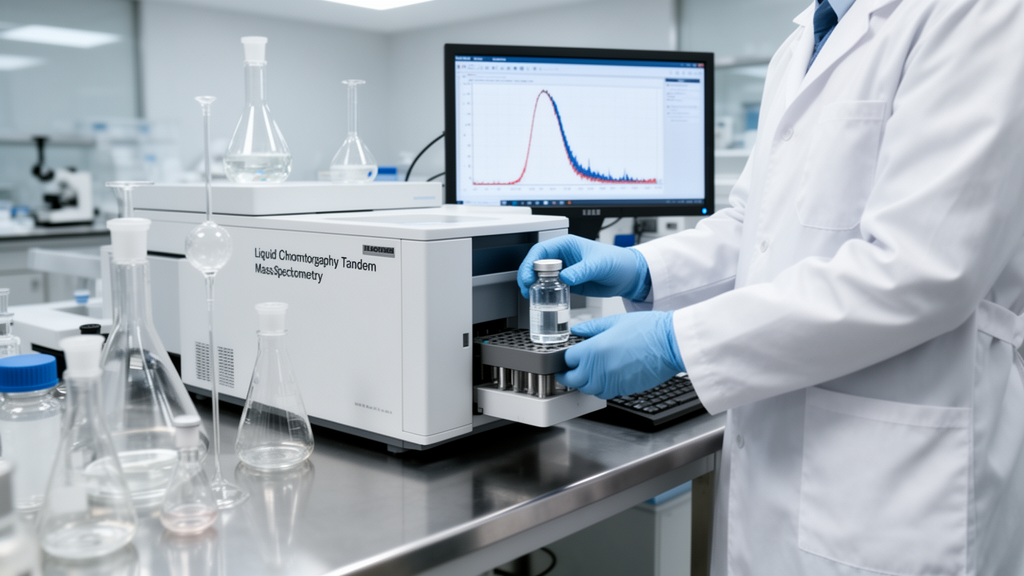
Since 2018, when N-nitrosamines were first detected in widely used medicines such as valsartan, these mutagenic and carcinogenic impurities have become one of the most consequential quality problems in modern pharmaceutical manufacturing. Now, a team at the University of Liege in Belgium has published a rare, end-to-end case study showing exactly how a marketed drug was investigated for these contaminants — from validated ultra-sensitive analytical methods all the way to a final risk mitigation decision. The work, published in Frontiers in Analytical Science, offers the pharmaceutical industry a practical blueprint for meeting one of the toughest regulatory challenges of the past decade.
N-nitrosamines are organic compounds bearing a nitroso functional group, and the majority have been identified as mutagenic and carcinogenic in animal studies, making them potentially carcinogenic to humans. Interestingly, roughly 18 percent are considered non-carcinogenic, but the class as a whole demands rigorous control. These compounds can form during manufacturing when amines interact with nitrosating agents such as nitrite, which can originate from contaminated solvents, reagents, raw materials — and, notably, from excipients themselves. Cellulose derivatives, lactose, povidone, and magnesium stearate have all been identified as potential nitrite sources. When nitrite from excipients nitrosates the active pharmaceutical ingredient or its related substances, a distinct subclass forms: N-nitrosamine drug substance-related impurities, or NDSRIs, which now account for approximately 90 percent of reported cases.
The most infamous example remains N-nitroso-varenicline, the first NDSRI ever identified, detected in the smoking cessation drug Chantix (Champix in Europe) at levels exceeding the established safety threshold. The product was recalled and withdrawn from the market in 2021. Crucially, N-nitroso-varenicline is absent from the varenicline raw material — it forms in the finished product through nitrosation at the secondary amine functional group in the presence of nitrite from excipients. This case demonstrated that even a perfectly pure API can become contaminated during storage, fundamentally changing how the industry thinks about drug quality.
In response, the European Medicines Agency launched its “Call for review,” mandating that marketing authorization holders systematically investigate their products through a three-step procedure. Step 1 requires a comprehensive documentary risk evaluation for each API or finished product. Step 2 demands confirmatory testing if any risk is identified. Step 3 calls for risk mitigation measures and a variation to the marketing authorization if N-nitrosamines are confirmed. The Liege team’s case study centers on an oral solid dosage form — uncoated tablets — where the documentary risk analysis flagged excipients as potential nitrite sources, triggering the need for confirmatory testing. Because the API lacks secondary amine functional groups, the investigation focused exclusively on small-molecule N-nitrosamines rather than NDSRIs.
The analytical challenge is formidable. Regulatory sensitivity requirements are determined by the acceptable limit for each N-nitrosamine in a specific product, calculated by dividing the acceptable intake (in nanograms per day) by the maximum daily dose (in milligrams per day). For this product, the maximum daily dose is 16 milligrams per day, meaning some N-nitrosamines must be detectable at parts-per-billion levels. Both the EMA and the FDA establish acceptable intake values using the carcinogenic potency categorization approach, which classifies N-nitrosamines into five categories based on chemical structure. Novartis has even developed an automated tool that assigns the category and corresponding acceptable intake value for NDSRIs based solely on SMILES-encoded structural information.
Building on a previously developed Quantitative Structure Retention Relationship approach, the team proposed and validated three complementary LC-MS/MS methods under the ICH Q2 (R2) guidelines. The methods employ a three-level limit test approach — calibrating at 10, 30, and 100 percent of each N-nitrosamine’s acceptable limit — and together enable detection of up to 17 small-molecule N-nitrosamines within a single-sequence analysis. The 17 target compounds span a wide structural range, from N-nitrosodimethylamine (NDMA) and N-nitrosodiethylamine (NDEA) to N-nitrosomorpholine (NMOR), N-nitrosodiphenylamine (NDPhA), and N-nitroso-diethanolamine (NDELA). The methods differ only in mobile phase composition or APCI probe temperature: Method 1 operates at pH 2.7 with a 250 °C probe for thermally robust compounds, Method 2 at pH 2.7 with a 150 °C probe for thermolabile analytes, and Method 3 at pH 5.0 with a 150 °C probe to resolve co-elution issues with the API observed at lower pH.
Sample preparation involved crushing uncoated tablets into fine powder, adding stable isotope-labeled internal standards, and extracting with methanol under ultrasonication followed by centrifugation. A second extraction step with 1 percent formic acid solution removed residual water-soluble excipients. All preparations were conducted under light-protected conditions due to the photosensitivity of N-nitroso compounds. Validation across four independent series with two operators demonstrated high selectivity, adequate sensitivity with detection limits below 10 percent of the acceptable limit for all compounds, and acceptable recovery within the 85–115 percent range. One persistent analytical challenge emerged: a consistent carry-over related to NDBA (N-nitrosodi-n-butylamine) was traced to the equipment itself rather than solvents or contamination events, and was managed through a dedicated system suitability test ensuring the carry-over peak never exceeded 10 percent of the NDBA signal at the lowest calibration level.
Confirmatory testing was then applied to 12 batches manufactured between 2021 and 2024 — three newly produced batches and nine retained samples stored under controlled stability conditions of 25 °C and 60 percent relative humidity. The results were striking: most N-nitrosamines were not detected at all throughout the product’s shelf life, supporting the omission of their specifications and eliminating the need for further testing. One impurity, N-nitrosamine 12, was detected in 6 of 12 batches but consistently remained below 10 percent of its acceptable limit, so it too requires no further testing. However, one impurity — N-nitrosamine 6 — told a different story. At release, its content remained below 10 percent of the acceptable limit. By 12 months, it exceeded 10 percent but stayed below 30 percent. By 24 months, it consistently surpassed 30 percent, though it remained strictly below the acceptable limit even at 36 months.
This evolving profile suggests N-nitrosamine 6 originates from API degradation during storage. The product remains compliant with its specification at the end of shelf life, so risk mitigation measures are not required — but quantitative routine analysis remains necessary. The team outlined potential strategies to enable skip testing: using low-nitrite excipients (though this may increase manufacturing costs), lowering the storage temperature from 25 °C to 5 °C to slow degradation kinetics, or redesigning packaging — for example, replacing primary packaging with a nitrocellulose-free lidding foil for blister packs. The case study demonstrates that controlling N-nitrosamines is not a one-time exercise but an ongoing surveillance commitment, particularly for impurities that emerge from degradation over time. As the industry continues to grapple with these genotoxic contaminants, platform methods like those developed at Liege could help centralize analytical efforts and facilitate testing across diverse products — a critical step toward safeguarding public health.
Subject of Research: Pharmaceutical analysis
Article Title: A case study on N-nitrosamine investigation in a marketed drug: from analytical procedure validation to risk mitigation decision
Article References: Zhang, Y., Houari, S., Van Laethem, T., Kumari, P., Ziemons, E., Hubert, P., & Hubert, C. (2026). A case study on N-nitrosamine investigation in a marketed drug: from analytical procedure validation to risk mitigation decision. Frontiers in Analytical Science, 6, Article 1772719. https://doi.org/10.3389/frans.2026.1772719
Image Credits: AI Generated
DOI: 10.3389/frans.2026.1772719
Keywords: N-nitrosamines, LC-MS/MS, pharmaceutical impurities, ICH Q2 (R2), drug safety, confirmatory testing, risk mitigation, Frontiers in Analytical Science, case, N-nitrosamine, investigation, marketed
Cite Scienmag News
Louis Brooks. (October 15, 2026). N-nitrosamine investigation in a marketed drug: validated LC-MS/MS methods trace one rising impurity below its acceptable limit. Scienmag. https://scienmag.com/n-nitrosamine-investigation-in-a-marketed-drug-validated-lc-ms-ms-methods-trace-one-rising-impurity-below-its-acceptable-limit/
Louis Brooks. "N-nitrosamine investigation in a marketed drug: validated LC-MS/MS methods trace one rising impurity below its acceptable limit." Scienmag, 15 October 2026, https://scienmag.com/n-nitrosamine-investigation-in-a-marketed-drug-validated-lc-ms-ms-methods-trace-one-rising-impurity-below-its-acceptable-limit/. Accessed 15 October 2026.
Louis Brooks. "N-nitrosamine investigation in a marketed drug: validated LC-MS/MS methods trace one rising impurity below its acceptable limit." Scienmag. October 15, 2026. https://scienmag.com/n-nitrosamine-investigation-in-a-marketed-drug-validated-lc-ms-ms-methods-trace-one-rising-impurity-below-its-acceptable-limit/


