


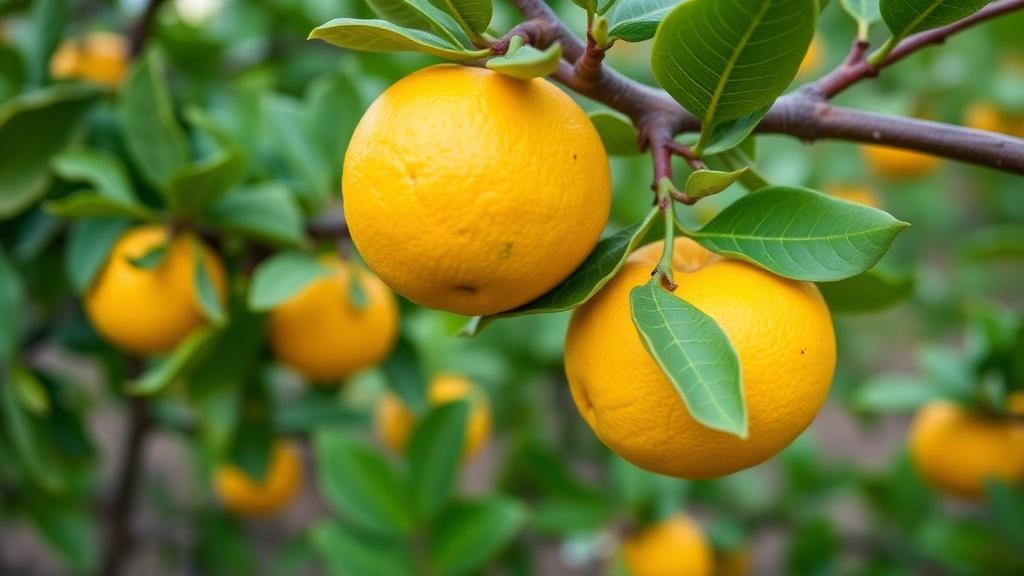
Citrus is one of the world’s most valuable fruit crops, grown across roughly 10 million hectares with a global production of about 159 million megagrams and an average productivity of 16 megagrams per hectare. Yet the future of the citrus industry will depend less on simply pushing yields higher and more on producing fruit sustainably through improved input use efficiency. In commercial orchards around the world, flood or basin irrigation paired with broadcast fertilizer application remains the dominant practice, and blanket recommendations of uniform water and nutrient doses continue to be the most preferred choice. Such practices are frequently associated with excessive leaching of nutrients, lower water and nutrient use efficiency, high production costs, and disturbance in soil ecology that undermines soil fertility.
A new four-year field experiment conducted by researchers at the Indian Council of Agricultural Research-Central Citrus Research Institute in Nagpur, Maharashtra, together with collaborators from institutions in India, China, and Iran, offers a compelling alternative. Published in Frontiers in Horticulture, the study demonstrates that dividing an orchard into management zones based on tree canopy volume, and then tailoring irrigation and fertilization to each zone, can dramatically improve both water use efficiency and nutrient use efficiency without sacrificing yield or fruit quality. The work was carried out on Typic Ustochrept soil, an Inceptisol characteristic of the hot subhumid tropical climate of central India, in a four-year-old Nagpur mandarin orchard with trees of Citrus reticulata Blanco budded on rough lemon rootstock, Citrus jambhiri Lush.
The experimental plot consisted of 144 Nagpur mandarin plants spaced 6 meters apart in both directions, representing a planting density of 277 plants per hectare. The clay-textured soil had a pH of 7.4, an electrical conductivity of 0.24 dS per meter, and an organic carbon content of 0.67 percent. All 144 plants were treated as georeferenced points for soil fertility evaluation, with initial plant available nutrients varying considerably across the site. KMnO4-extractable nitrogen ranged from 109.3 to 134.6 milligrams per kilogram, Olsen-P from 7.1 to 11.8, and NH4OAc-extractable potassium from 118.4 to 176.3, while DTPA-extractable micronutrients including iron, manganese, copper, and zinc also displayed notable spatial variation.
Rather than relying on soil properties alone, the researchers used tree canopy volume as the decision support metric for delineating management zones. Using GPS and QGIS Version 3.5 combined tools, they developed a canopy-based variogram with canopy volumes ranging from 1.30 to 9.64 cubic meters and a coefficient of variation of 22.3 to 34.8 percent. The median canopy volume of 4.2 cubic meters served as a stable metric for mapping spatial variability, and three contrastingly different management zones were delineated as a manageable spatial grid. The high production management zone included trees with canopy volume greater than 5 cubic meters, the medium production management zone covered trees between 3 and 5 cubic meters, and the low production management zone included trees below 3 cubic meters.
Based on these zones, three treatment modules were fixed. The high production management zone received 60 percent of the recommended dose of fertilizer combined with 80 percent of the irrigation requirement, the medium production management zone received 80 percent of the recommended fertilizer dose with 90 percent of the irrigation requirement, and the low production management zone received the full 100 percent of both. The recommended fertilizer dose for mature Nagpur mandarin trees was previously established as 600 grams of nitrogen, 200 grams of P2O5, and 300 grams of K2O per tree per year. Irrigation was scheduled through a drip system with 8 liters per hour drippers, three per plant, and fertigation was administered using a venturi-based liquid fertilizer injector. Uniform foliar sprays of 0.50 percent FeSO4, 0.50 percent MnSO4, and 0.50 percent ZnSO4 were applied thrice during each season, beginning at fruit set and repeated at 45-day intervals during fruit development.
The irrigation requirement was computed daily using the Penman-Monteith method for reference crop evapotranspiration, combined with phenological stage-wise crop coefficients derived from the shaded area technique and a wetted area factor representing the proportion of the effective root zone. Over the four-year study, the average reference crop evapotranspiration was 1,925.90 millimeters, with daily values ranging from 2.89 to 9.40 millimeters and peaking in May. During that peak summer month, the irrigation requirement reached 165 liters per day per tree. The total quantities of irrigation applied under the high, medium, and low production zones, each based on 48 plants, were computed as 73.38, 82.55, and 91.72 thousand liters per day respectively, with the crop evapotranspiration varying between 2.53 and 5.59 millimeters per day during the corresponding period.
The results following four annual cycles of treatment were striking. Tree canopy volume reached 8.08, 6.28, and 5.88 cubic meters in the high, medium, and low production management zones respectively, with corresponding fruit yields of 35.53, 28.15, and 24.26 kilograms per tree. Expressed per unit of canopy, these yields translated to 4.39, 4.08, and 4.12 kilograms per cubic meter of canopy, with coefficients of variation of 12.6 to 15.5 percent within zones and 11.8 to 13.1 percent across zones. Most remarkably, water use efficiency in the high production management zone, which received only 80 percent of the irrigation requirement, was 1.83-fold higher than in the low production management zone receiving the full irrigation dose. Nutrient use efficiency was even more dramatic, reaching 2.44-fold higher in the high production zone at 592.14 kilograms per kilogram compared with 242.59 kilograms per kilogram in the low production zone, despite the latter receiving 40 percent more fertilizer.
These efficiency gains did not come at the expense of fruit quality. Juice content varied from 41.2 to 44.8 percent, total soluble solids ranged from 9.3 to 10.5 degrees Brix, and juice acidity spanned 0.57 to 0.85 percent, with coefficients of variation of 10.2 to 14.3 percent. The low production zone showed marginally higher juice content and acidity than the high production zone, while total soluble solids showed no discernible changes between zones, indicating more or less uniform fruit quality development despite the differential input regimes. Fruit size distribution, a critical determinant of market returns for Nagpur mandarin sold as fresh fruit, showed a clear gradient across zones, with the high production management zone registering the maximum proportion of A-grade fruits exceeding 75 millimeters, followed by the medium and low production zones in decreasing order.
Soil fertility responses corroborated the agronomic outcomes. Plant available nitrogen, phosphorus, and potassium in the soil varied from 119.4 to 212.4, 9.5 to 16.2, and 138.7 to 207.5 milligrams per kilogram respectively, with the high production management zone continuing to record significantly higher available macronutrients than the other two zones even after four years of continuous variable treatments. Pearson correlation analysis revealed that plant available nutrients within the high production management zone were highly correlated with fruit yield, with correlation coefficients reaching 0.99 for available nitrogen, 0.94 for available phosphorus, and 0.94 for available potassium, compared with weaker or non-significant relationships within the medium and low production zones. These coefficients of variation for soil nutrients ranged from 10.0 to 17.1 percent, and the gradual decline in variation with each fruiting season suggested that the orchard was progressively transforming into a more homogeneous production grid.
The study provides a conceptual basis for rationalizing input use in citriculture by exploiting spatial variability in soil properties rather than applying blanket recommendations across an entire orchard. By delineating management zones through canopy volume-based variograms and treating each zone as a statistically homogeneous production unit, the researchers demonstrated that variable rate application of irrigation and fertilizers can squeeze field spatial variability to the advantage of orchard productivity. The findings arrive at a moment when climate variability, regulatory nutrient management, water conservation policies, and declining water availability compound the challenges facing irrigated crop production worldwide. For citrus growers, the message is clear: over-optimization of irrigation and fertilizer inputs is not only wasteful but counterproductive, and precision zoning offers a practical pathway toward more sustainable and economical citrus production.
Subject of Research: Variable-rate irrigation and fertilization across canopy-based management zones in a Nagpur mandarin orchard on Indian Inceptisol
Article Title: Rationale behind the integrated use of irrigation and fertilization in optimizing citrus production on Indian Inceptisol
Article References: Srivastava, A. K., Shigure, P. S., Meshram, D. T., Huchche, A. D., Utkhede, A., Priyamvada, M., Wu, Q.-S., Mousavi, S. M., Rymbai, H., Baishya, L. K., & Jagannadham, P. T. K. (2026). Rationale behind the integrated use of irrigation and fertilization in optimizing citrus production on Indian Inceptisol. Frontiers in Horticulture, 5, Article 1941837. https://doi.org/10.3389/fhort.2026.1941837
Image Credits: AI Generated
DOI: 10.3389/fhort.2026.1941837
Keywords: citrus, Nagpur mandarin, irrigation, fertilization, management zones, water use efficiency, nutrient use efficiency, precision agriculture, Inceptisol, drip fertigation, canopy volume, fruit quality
Cite Scienmag News
Alan Morgan. (October 15, 2026). Precision Irrigation and Fertilization Boost Citrus Yields on Indian Inceptisol. Scienmag. https://scienmag.com/precision-irrigation-and-fertilization-boost-citrus-yields-on-indian-inceptisol/
Alan Morgan. "Precision Irrigation and Fertilization Boost Citrus Yields on Indian Inceptisol." Scienmag, 15 October 2026, https://scienmag.com/precision-irrigation-and-fertilization-boost-citrus-yields-on-indian-inceptisol/. Accessed 15 October 2026.
Alan Morgan. "Precision Irrigation and Fertilization Boost Citrus Yields on Indian Inceptisol." Scienmag. October 15, 2026. https://scienmag.com/precision-irrigation-and-fertilization-boost-citrus-yields-on-indian-inceptisol/


