


Every night, as the brain slides from wakefulness into sleep, it hosts a remarkable spectrum of subjective experiences. Some are fleeting: hypnagogic images, half-formed thoughts, fragments of sensation. Others are vivid, elaborate dreams that unfold across entire sleep cycles, and in some cases the dreamer wakes inside the dream itself, aware that they are dreaming. For a field long dominated by correlational observations and anecdotal reports, a new collection of studies published in Frontiers in Sleep marks a turning point. The research topic, curated by an editorial team spanning the University of Modena and Reggio-Emilia, the Paris Brain Institute, the IMT School for Advanced Studies Lucca and the University of Salzburg, brings together novel methodological and conceptual approaches that treat conscious experiences during sleep as phenomena that can be systematically characterized, computationally modeled and, in some cases, deliberately manipulated.
The editorial, authored by Adriana Michalak, Claudia Picard-Deland, Giulio Bernardi and Mohamed S. Ameen, frames four contributions that together map the field’s trajectory. They range from the clinical challenge of studying dreaming in stroke patients, through the philosophical puzzle of how to define altered states of consciousness, to the use of artificial intelligence for analyzing dream reports and the emerging practice of dream engineering, in which researchers attempt to steer the content of dreams themselves. Each contribution addresses a different layer of the same fundamental question: how can subjective experiences, which by their nature are private and difficult to verify, be studied with the rigor that modern neuroscience demands?
One of the most technically instructive studies in the collection tackles the problem of causality in dream research. Fischmann and colleagues set out to recruit patients with ischemic stroke of the posterior cerebral artery, a vascular territory that supplies the parieto-occipital regions of the brain. Previous work, including a landmark 2017 study by Siclari and colleagues published in Nature Neuroscience, had identified neural correlates of dreaming largely through correlational methods. If patients with parieto-occipital lesions were to lose the capacity to dream, that cessation would provide causal evidence for the role of these regions in generating dream experiences, moving the field beyond association toward mechanism. The study aimed to compare patients who had lost the ability to dream with those who retained it, investigating whether the loss of dreaming affects sleep quality and memory consolidation.
The recruitment effort, however, revealed the clinical complexity of this approach. Out of 255 patients screened, only 14, or 5.5 percent, met the inclusion criteria, and just six completed the study. Importantly, the participants who completed the study were generally younger, had milder strokes and better functional outcomes than those who dropped out. This recruitment pitfall alone provides a valuable insight, illustrating the multimorbidity and rarity of isolated posterior cerebral artery lesions that make this population so difficult to study in the context of dream research. The authors suggest that future investigations could instead use transcranial alternating current stimulation, or tACS, in healthy volunteers to create temporary functional lesions, overcoming some of the challenges inherent to pathological models. It is a striking example of how negative and null findings, when reported systematically, can yield methodological insights that shape the design of future experiments.
Beyond recruitment choices, another challenge lies in how conscious sleep experiences are defined in the first place. Conscious experiences are inherently subjective, which requires precise language and definitions to make findings comparable across studies. Weiler and colleagues examine the phenomenological boundaries between out-of-body experiences and lucid dreaming, asking whether these represent distinct categories or variations of the same underlying experience. The authors reviewed experiential features previously proposed to differentiate out-of-body experiences from lucid dreams, examining both the phenomenological characteristics and the interpretive frameworks used to categorize these states. Their proposal is that disembodiment, the subjective experience of being detached from the physical body, should serve as the primary distinguishing feature of out-of-body experiences, regardless of other phenomenological features that may not be unique to or consistently reported in them. This work aims to provide a more standardized classification strategy, a foundational step for a field in which terminological ambiguity has long hampered cross-study comparison.
Once experiences are characterized, the question becomes how to analyze large corpora of subjective experience reports. Natural language processing and artificial intelligence tools are of considerable interest here, as they allow reproducible and automated extraction of quantitative metrics from narrative dream reports. Manual content annotation is time-consuming, can be subject to cognitive bias and is prone to high inter-rater variability. AI-based approaches can accelerate and standardize linguistic-level analysis, thereby increasing scalability. Yet skeptics have argued that these tools might be poorly suited for modeling dream reports because of their unusual and bizarre content. Bertolini and colleagues tested this claim directly, using perplexity, a standard AI metric that estimates model uncertainty. By comparing the perplexity of large language models on dream reports from the DreamBank archive with that of Wikipedia articles, the authors showed that dream content can be as predictable as Wikipedia entries. Intriguingly, perplexity scores also reflected previously observed group differences in dream reports, such as those related to gender, visual impairment and clinical status. These findings challenge the view that dream reports are inherently more bizarre or unpredictable than standard texts and offer evidence in support of AI tools for dream analysis.
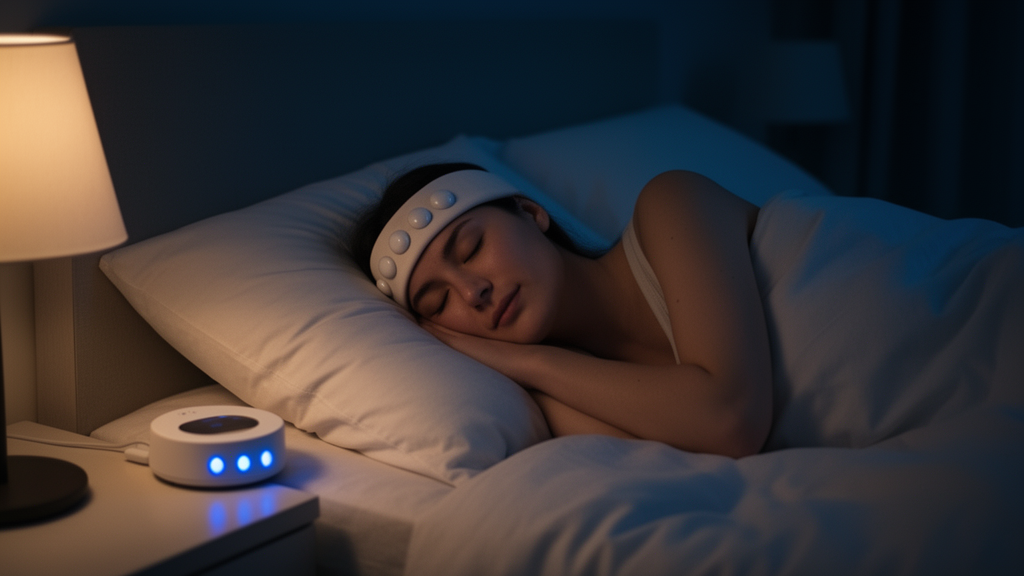
While computational approaches automate the analysis of dream content, dream engineering aims to manipulate and track the content of the experience itself, offering a systematic approach to investigating dreams despite their considerable variability. In addition to standardizing the definitions and methods used to study dreams, researchers are beginning to explore ways of standardizing dreams themselves. Haar Horowitz and colleagues used a targeted dream incubation technique involving verbal prompts and serial awakenings, both at sleep onset and after entry into REM sleep, to evoke dreams about a specific topic, in this case a tree. The experimental setup used the Dormio system, designed specifically to facilitate targeted dream incubation by detecting sleep onset based on physiological proxies and delivering the verbal prompt: Remember to think of a tree.
The results were striking. All 11 participants successfully incorporated the target tree theme into their sleep-onset dreams. Additionally, the authors provide preliminary evidence that targeted dream incubation may extend beyond the hypnagogic state and influence dream experiences in subsequent REM sleep. The technique is promising for investigating how dreams are generated and how they evolve across sleep stages. Perhaps most interestingly, the ability to steer dream content opens the possibility of experimentally testing hypotheses about the functions of dreams, for example whether inducing positive dream content improves next-day mood, or whether dreaming about a desired object changes waking desire for it. These are questions that have resisted direct experimental test for decades, and targeted dream incubation offers a tractable paradigm for answering them.
Several key directions for future research emerge from this research topic. The most foundational is terminological: establishing clearer definitions and categories of conscious sleep experiences will allow studies to consistently identify and compare the phenomena they investigate. Negative and null findings should be reported systematically, as the stroke study demonstrates, because recruitment challenges alone can yield valuable methodological insights. Finally, progress in dream engineering will require improving success rates, determining the extent and limits of control over dream content, and more directly assessing its possible applications and potential side effects.
Together, this multidisciplinary research topic outlines how the field is moving from simply analyzing dreams toward treating conscious sleep experiences as phenomena that can be systematically characterized, computationally modeled and potentially manipulated. As these technological approaches advance in capability, particularly in the ability to actively shape dream content, ethical frameworks in consciousness research must evolve alongside them, or ideally stay one step ahead, guarding dreams as dreams guard our sleep.
Subject of Research: Conscious experiences and dreaming during sleep, including dream analysis and dream incubation
Article Title: Editorial: Understanding conscious experiences during sleep
Article References: Editorial: Understanding conscious experiences during sleep. (n.d.). https://doi.org/10.3389/frsle.2026.1985086
Image Credits: AI Generated
DOI: 10.3389/frsle.2026.1985086
Keywords: dreaming, consciousness, sleep, lucid dreaming, dream engineering, artificial intelligence, natural language processing, out-of-body experience, phenomenology, stroke, targeted dream incubation, REM sleep
Cite Scienmag News
Cassandra Pierce. (October 15, 2026). How Science Is Learning to Read, Classify and Steer Our Dreams. Scienmag. https://scienmag.com/how-science-is-learning-to-read-classify-and-steer-our-dreams/
Cassandra Pierce. "How Science Is Learning to Read, Classify and Steer Our Dreams." Scienmag, 15 October 2026, https://scienmag.com/how-science-is-learning-to-read-classify-and-steer-our-dreams/. Accessed 15 October 2026.
Cassandra Pierce. "How Science Is Learning to Read, Classify and Steer Our Dreams." Scienmag. October 15, 2026. https://scienmag.com/how-science-is-learning-to-read-classify-and-steer-our-dreams/


