


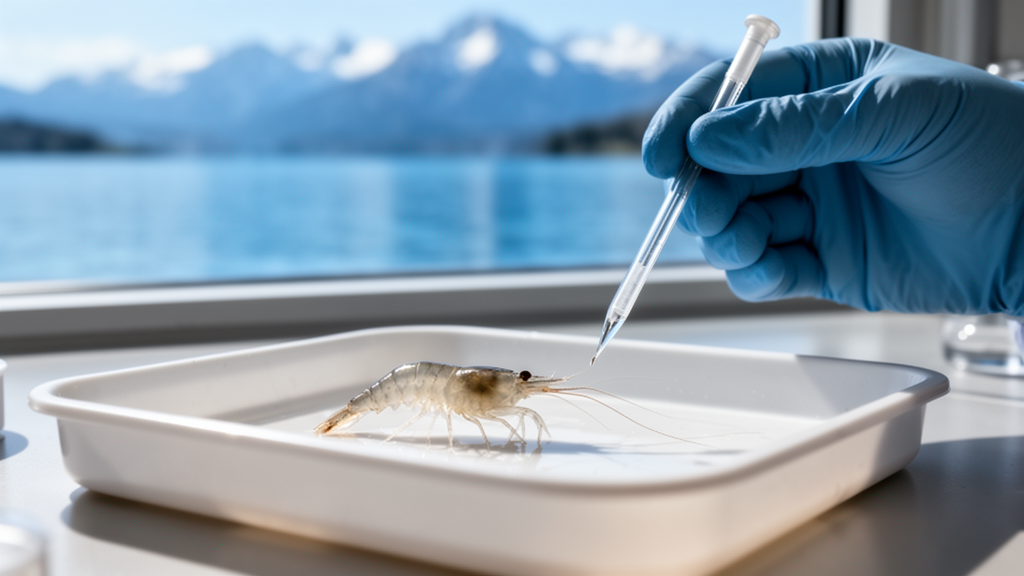
A small crustacean with a big reputation has quietly slipped into one of Europe’s most iconic alpine lakes. Scientists have recorded the Ponto-Caspian amphipod Chaetogammarus trichiatus in Lake Geneva for the first time, a detection that says as much about the hidden plumbing of European invasions as it does about the biology of this remarkably adaptable animal. The find, published in Alpine Entomology, was confirmed through both painstaking morphological examination and independent DNA barcoding, leaving little doubt that a species previously associated almost exclusively with large rivers has now taken up residence in a deep, peri-alpine lake.
The story begins on 12 August 2024, when researchers sampling along the French shoreline at Evian-les-Bains collected multiple samples representing different lake substrates using a Surber net with a 500 micrometre mesh and a 20 by 25 centimetre aperture. The site itself is a study in human-modified shorelines: a vertical quay wall runs along the water’s edge, the substrate is composed primarily of boulders and cobbles partially covered by quagga mussels, zebra mussels and bryophytes, and short sections of riprap intermittently reinforce the bank. Water depth at the base of the shoreline ranges from roughly one to 1.5 metres, and the lakebed slopes moderately for about 80 metres offshore, where it reaches six to seven metres before dropping away steeply.
Crucially, the two amphipod specimens that would make history were not dredged from deep soft sediments but plucked from a bryophyte sample growing on rocks at a water depth of just 0.2 metres, within the wave-splash zone where riparian bryophytes typically occur in Lake Geneva. These mosses, such as Orthotrichum species, are essentially riparian plants that tolerate periodic submersion rather than truly aquatic species like Fontinalis, and their development is generally absent or very limited below the wave-splash zone. This narrow, mossy ribbon along the shore turned out to be exactly the kind of habitat C. trichiatus finds congenial, a detail that may reshape how biologists think about where alien amphipods hide in lakes.
Identifying amphipods is notoriously fiddly work, and the researchers leaned on precise anatomical characters to separate their specimens from the lake’s other crustacean residents. The genus Chaetogammarus can easily be distinguished from Gammarus and Dikerogammarus by the morphology of the third uropod and the first and second urosome segments. In both Dikerogammarus and Chaetogammarus, the inner ramus of the third uropod is very short, whereas it is well developed in Gammarus. Furthermore, Chaetogammarus and Gammarus lack the paired dorsal protuberances bearing spines on the first and second urosome segments, a characteristic feature of Dikerogammarus species. Among Chaetogammarus species, C. trichiatus is characterized by a third uropod densely covered with recurved setae, and even in females these recurved setae are at least densely developed at the apex of the third uropod, separating it from the related C. ischnus.
Because morphological identification alone left some uncertainty, the two specimens were checked with molecular techniques in 2025. Total genomic DNA was extracted using a BioSprint 96 extraction robot following a non-destructive protocol that enables post-extraction morphological study of the specimens. A 181 base-pair portion of the mitochondrial cytochrome c oxidase subunit I gene, the workhorse barcode for animal identification, was amplified using the LCO1490 and CO1-CFMRb primers. The polymerase chain reaction mix, prepared in 25 microlitre volumes, included template DNA, both primers, dNTP solution, buffer containing magnesium chloride, bovine serum albumin, GoTaq G2 DNA Polymerase and sterile water. Optimized conditions involved an initial denaturation at 95 degrees Celsius for five minutes, followed by five cycles with annealing at 45 degrees and 35 cycles with annealing at 50 degrees, each with 30-second denaturation and 45-second extension steps, and a final extension at 72 degrees for seven minutes. Purification and Sanger sequencing were carried out commercially.
The molecular verdict was unambiguous. Both sequences were identified as C. trichiatus, clustering in a single clade with reference sequences of the species from the Barcode of Life Data System with 100 percent support. The two specimens, bearing GBIF codes GBIFCH00967050 and GBIFCH00967051, are now housed in the Department of Zoology of the Naturéum in Lausanne, Switzerland, their exoskeletons well preserved after the soft tissues were used for sequencing. Morphology and molecules had spoken with one voice: a new alien species had been documented in Lake Geneva.
The native distribution of C. trichiatus extends across the Ponto-Caspian region, including the lagoons and estuarine habitats of the northwestern Black Sea, as well as the Azov Sea, their deltas and the coastal lakes of Bulgaria and Romania. The species was first reported as an alien in Germany in 1996 and has since spread throughout the Danube basin and several catchments in northeastern France, probably via the Main-Danube Canal. In Switzerland it has been recorded in the Rhine basin since 2003 and, more recently, in the Aare basin in 2025. It has also turned up in the upper Dnieper River in Belarus and the Oder catchment in Central Europe. What makes the animal such a successful colonizer is a potent biological toolkit: a relatively short life cycle and generation time, brood protection, an omnivorous feeding strategy and high ecological plasticity, including the ability to tolerate broad salinity gradients.
Yet the species is only infrequently recorded in lake environments and is generally considered more closely associated with large rivers, where it occupies habitats ranging from artificial riprap structures to gravel banks, mud, roots and stony substrates. Records from the lower and middle French Rhone River suggest an ongoing expansion, with occurrences reported downstream of Lyon at several sites between 2017 and 2022 in the main river channel and two active secondary channels, indicating a slow and progressive upstream colonization of the Rhone basin prior to the Lake Geneva detection. Nevertheless, because the species has not been recorded in the French Upper Rhone, it is unlikely that its arrival in the lake originated from upstream dispersal through the French Rhone corridor. The absence of records from the littoral zone of the lake’s western basin, despite more than ten years of regular monitoring, further supports this. According to earlier research, proximity to ports is a key predictor of the distribution of several Ponto-Caspian invasive species, including C. trichiatus, making human-mediated transport, perhaps via recreational boats, the most plausible explanation.
The finding also carries a warning for the lake’s existing community. In Lake Geneva, non-native crustaceans now constitute almost the entire amphipod fauna, with native Gammarus pulex and Gammarus fossarum progressively displaced by the killer shrimp Dikerogammarus villosus and only rarely found in surveys. The present detection suggests that C. trichiatus can coexist with related crustaceans already present in the lake, such as D. villosus and Chelicorophium curvispinum, but its establishment may lead to future changes in community structure. Competitive interactions are likely within the bryophyte mats covering riprap and cobble habitats, potentially affecting populations of C. curvispinum and Dikerogammarus species, as well as other bryophyte-associated macroinvertebrates like insect larvae and small gastropods. Those deeper soft substrates and macrophytes where the other species also occur, generally in lower numbers, may provide alternative refuges that limit the impact of competition. Beyond Lake Geneva, the record raises the possibility of further colonization of other peri-alpine and mountain lakes, a particular concern for alpine lakes supporting glacial relict populations of the native amphipod Gammarus lacustris, where introduced species could threaten conservation-important populations.
Practically speaking, the discovery should change how surveys are interpreted and conducted. Small individuals of C. trichiatus may easily be mistaken for Gammarus species when examined only in lateral view, particularly during routine sorting of lake samples, so careful examination of the third uropod is essential, while the dense recurved setae on that appendage allow separation from C. ischnus. Re-examination of preserved material could determine whether the species had been present in Lake Geneva before its first detection in 2024, and targeted monitoring near the lake’s major ports may prove especially valuable for early detection of newly introduced exotics. The identification key provided by the authors should facilitate routine recognition during macroinvertebrate surveys and reduce the risk of future misidentifications. For now, a mossy strip of shoreline at Evian-les-Bains has delivered a reminder that Europe’s invasion frontiers run not only down its great rivers but across its treasured lakes, one small crustacean at a time.
Subject of Research: First record of the Ponto-Caspian amphipod Chaetogammarus trichiatus in Lake Geneva
Article Title: First record of the Ponto-Caspian amphipod Chaetogammarus trichiatus (Martynov, 1932) (= Echinogammarus trichiatus ) ( Crustacea , Gammaridae ) in Lake Geneva
Article References: Marle, P., Stoffel, C., & Renahy, S. (2026). First record of the Ponto-Caspian amphipod Chaetogammarus trichiatus (Martynov, 1932) (= Echinogammarus trichiatus) (Crustacea, Gammaridae) in Lake Geneva. Alpine Entomology, 10, 163-168. https://doi.org/10.3897/alpento.10.207817
Image Credits: AI Generated
DOI: 10.3897/alpento.10.207817
Keywords: invasive species, amphipods, Lake Geneva, Ponto-Caspian, DNA barcoding, freshwater ecology, biodiversity, First, record, amphipod, Chaetogammarus, trichiatus
Cite Scienmag News
Gavin Prescott. (October 15, 2026). Ponto-Caspian invader amphipod detected for the first time in Lake Geneva. Scienmag. https://scienmag.com/ponto-caspian-invader-amphipod-detected-for-the-first-time-in-lake-geneva/
Gavin Prescott. "Ponto-Caspian invader amphipod detected for the first time in Lake Geneva." Scienmag, 15 October 2026, https://scienmag.com/ponto-caspian-invader-amphipod-detected-for-the-first-time-in-lake-geneva/. Accessed 15 October 2026.
Gavin Prescott. "Ponto-Caspian invader amphipod detected for the first time in Lake Geneva." Scienmag. October 15, 2026. https://scienmag.com/ponto-caspian-invader-amphipod-detected-for-the-first-time-in-lake-geneva/


