


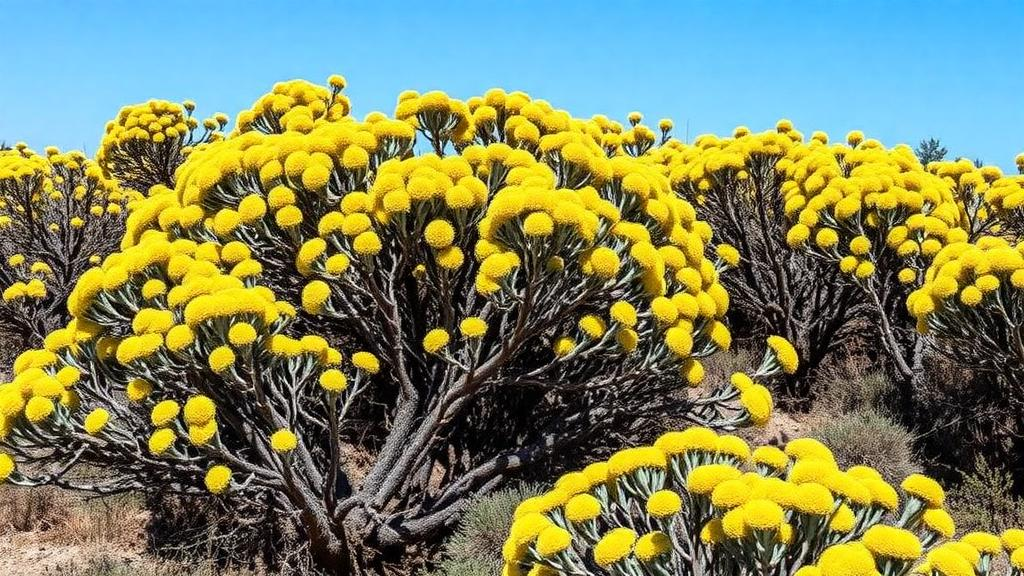
High on the windswept ridges of northern Sicily, dense thickets of broom paint the mountainsides in yellow each spring. These shrublands, long treated as botanical afterthoughts at the edge of their range, have now been systematically reclassified by an Italian research team, revealing several vegetation types new to science and forcing a rethink of how Mediterranean scrub communities are organized. The study, published in the journal Vegetation Classification and Survey, documents the broom-dominated shrublands of the Nebrodi and Peloritani mountains, the south-easternmost stronghold of a vegetation class whose heartland lies thousands of kilometres away in the Iberian Peninsula.
The vegetation in question belongs to the class Cytisetea scopario-striati, communities dominated by woody members of the pea family such as Cytisus, Genista, Adenocarpus and Spartium. These shrubs share a distinctive strategy: reduced leaves and flexible, green photosynthetic branches that allow rapid growth on nutrient-poor, acidic soils. Thanks to their symbiosis with nitrogen-fixing bacteria, brooms enrich the soil and accelerate ecosystem recovery, typically marking successional stages on the way to oak, chestnut or beech forests. Their optimal distribution spans the thermo- to supramediterranean bioclimatic belts under subhumid to humid conditions, with the Iberian Peninsula hosting the greatest concentration of these communities.
Northwards, winter cold progressively strips these shrublands of their characteristic species, confining them to a narrow Atlantic coastal strip. South-eastwards, their post-glacial expansion followed a Mediterranean corridor through southern France and the Tyrrhenian slopes of the Apennines, with Sicily representing the south-western limit of their establishment. In Sicily, they occur mainly in the north-eastern mountains on acidic soils derived from metamorphic siliceous rocks, quartz sandstones or volcanic scoriae, becoming increasingly sporadic towards the west of the island.
The research team, led by Gianguzzi and Guarino, sampled 207 vegetation plots across the Tyrrhenian ridge of northern Sicily, recording 398 vascular plant species using the classical Braun-Blanquet phytosociological method. Between May and June 2019, they sampled 50 new plots, adding them to 78 unpublished surveys conducted between 1996 and 2018, plus 79 relevés from the literature covering related communities in Calabria. Plot sizes ranged from 50 to 150 square metres, with canopy heights between 0.7 and 2.8 metres and ground cover between 80 and 100 percent.
The classification relied on a modified TWINSPAN algorithm, a two-way indicator species analysis that divides plots based on floristic similarity. Species fidelity was evaluated using the standardized phi coefficient, with diagnostic species defined as those showing a phi coefficient of at least 0.25 and a probability of occurrence under random expectation below 0.05. Non-metric multidimensional scaling (NMDS) based on Bray-Curtis dissimilarity was then used to visualize the main compositional gradients, while ecological indicator values from the EIVE 1.0 database helped infer site conditions difficult to measure directly in the field.
The analysis revealed a fundamental split. The first group comprises shrublands developing under harsh ecological conditions between 1,000 and 1,500 metres on exposed, wind-swept ridges with shallow, skeletal soils. These are stable, long-lasting vegetation types maintained by topographic exposure and soil constraints, hosting endemic or relict species such as Adenocarpus commutatus, Viola aethnensis subsp. messanensis, Genista brutia and Silene sicula. Rarefaction curves confirmed that this group carries significantly more endemic species than the second group. These communities belong to the alliance Violo messanensis-Adenocarpion commutati, whose name was formally corrected in the study.
The second group tells a very different story. These are secondary shrublands, mostly the result of land abandonment after centuries of cutting, burning and grazing that prevented forest recovery. They occur at lower elevations, between 300 and 1,000 metres, on deeper and more evolved soils, and are dominated by widespread species such as Cytisus villosus, Spartium junceum, Teline monspessulana and Pteridium aquilinum. In the absence of further disturbance, they can progressively facilitate oak forest regeneration by improving soil conditions and microclimate. The study proposes a new alliance for these communities, named Achilleo ligusticae-Telinion monspessulanae, interpreted as a more thermophilous and mesophilous vicariant of the montane alliance.
Within these two groups, the team identified 15 terminal clusters, eight of which represent newly defined plant communities. Among the new associations are Carlino globosae-Cytisetum scoparii, Origano viriduli-Cytisetum villosi, Carlino globosae-Telinetum monspessulanae and Achilleo ligusticae-Spartietum juncei. One cluster, dominated by Cytisus infestus and the calciphilous Phlomis fruticosa, occurs exclusively in the central Peloritani Mountains on calcschist outcrops of the Mandanici unit, where local carbonate enrichment partially suppresses the typical acidophilous flora yet allows the class’s species to persist.
The classification of these secondary shrublands poses intrinsic difficulties, as they lack narrowly defined characteristic taxa and show broad floristic overlaps with gradual transitions between neighbouring units. The authors acknowledge that their proposed associations should be regarded as interpretative constructs aimed at organizing continuous ecological variation into a coherent framework, rather than as sharply delimited entities. This pragmatic approach, based on physiognomic dominance and ecological coherence, aligns with recent perspectives in vegetation science that emphasize ecological realism over rigid typological subdivision.
Beyond the science, the study carries a cultural dimension. Until the mid-twentieth century, broom shrubs were widely exploited by rural communities for poles in vineyards, firewood for bread ovens and lime kilns, and bracken was cut for livestock bedding. Rich vernacular nomenclature testified to their importance: in the Nebrodi village of Frazzanò, Cytisus infestus was known as Làstra and Spartium junceum as Jnèstra. The abandonment of these traditional practices after World War II altered disturbance regimes, favouring shrub encroachment and paradoxically increasing fire frequency. The broom shrublands of northern Sicily, the authors conclude, should not be regarded merely as degraded vegetation but as key components of Mediterranean cultural landscapes shaped by the long-term interaction between ecological processes and human management.
Subject of Research: Broom-dominated shrublands of Sicily: revisiting the syntaxonomy of the Cytisetea scopario-striati at the south-eastern margin of their range
Article Title: Broom-dominated shrublands of Sicily: revisiting the syntaxonomy of the Cytisetea scopario-striati at the south-eastern margin of their range
Article References: Broom-dominated shrublands of Sicily: revisiting the syntaxonomy of the Cytisetea scopario-striati at the south-eastern margin of their range. (n.d.). https://doi.org/10.3897/VCS.183815
Image Credits: AI Generated
DOI: 10.3897/VCS.183815
Keywords: Broom-dominated, shrublands, Sicily, revisiting, syntaxonomy, Cytisetea, scopario-striati, south-eastern, margin, range, scientific research
Cite Scienmag News
Gavin Prescott. (October 15, 2026). Sicily’s broom shrublands rewrite the map of Mediterranean vegetation. Scienmag. https://scienmag.com/sicilys-broom-shrublands-rewrite-the-map-of-mediterranean-vegetation/
Gavin Prescott. "Sicily’s broom shrublands rewrite the map of Mediterranean vegetation." Scienmag, 15 October 2026, https://scienmag.com/sicilys-broom-shrublands-rewrite-the-map-of-mediterranean-vegetation/. Accessed 15 October 2026.
Gavin Prescott. "Sicily’s broom shrublands rewrite the map of Mediterranean vegetation." Scienmag. October 15, 2026. https://scienmag.com/sicilys-broom-shrublands-rewrite-the-map-of-mediterranean-vegetation/


