


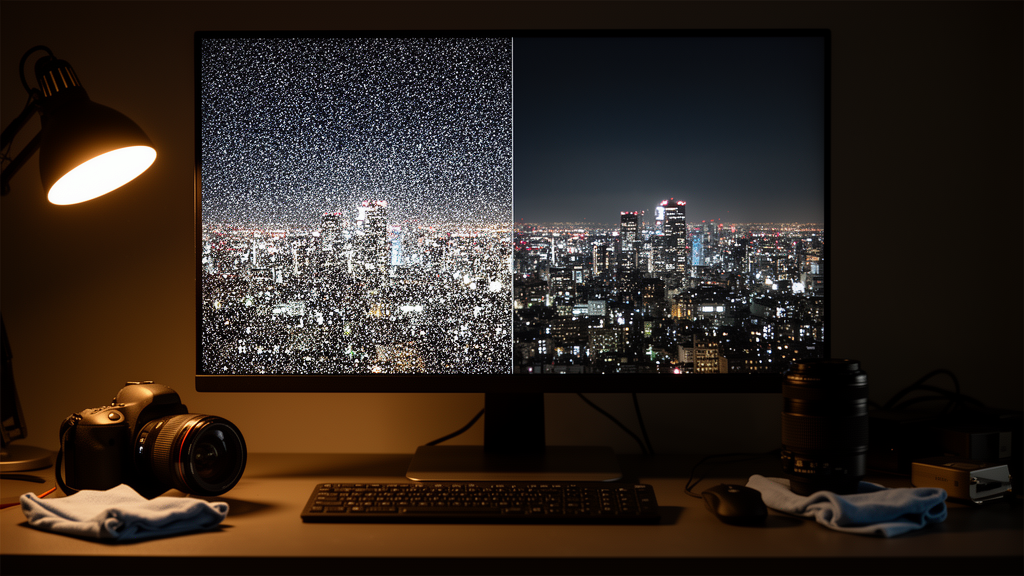
Every image-processing pipeline lives with a quiet fear: noise that refuses to behave. Most denoisers are built around the Gaussian assumption, the comfortable statistical idea that pixel errors cluster symmetrically around a mean and fade away quickly at the extremes. But real-world corruption is rarely so polite. Heavy-tailed Lorentzian, or Cauchy, noise throws extreme outliers into images and produces near-saturating artifacts that wreck visual quality far beyond what Gaussian-oriented methods can handle. A single corrupted pixel can sit at the far edge of the intensity scale, and in a Cauchy distribution such extremes are not rare accidents but expected members of the population. That is precisely the challenge a new algorithm named LORIS was built to confront.
LORIS, short for Lorentz Outlier-Robust Iterative Synthesis, was developed by Ratko Ivković, Stefan Panić, and Petar Spalević and described in the journal Multimedia Tools and Applications. The framework is local, iterative, and, perhaps most strikingly in an era dominated by deep learning, entirely training-free. It operates directly in the RGB domain, with no neural networks, no learned priors, and no datasets required to teach it what clean images look like. Instead, it leans on robust statistics, the branch of mathematics designed to make reliable estimates even when a substantial fraction of the data is contaminated. The result is a denoiser that behaves like a careful forensic analyst rather than a pattern-matching machine.
The method begins with an Adaptive Median Filter, a classical tool that computes the median of pixel values in a local neighborhood and adjusts its window size when the neighborhood itself is compromised. Median-based centering is inherently robust because the median resists being dragged by extreme values, unlike the mean, which a single wild outlier can shift arbitrarily. LORIS couples this robust centering with a scale estimator based on the interquartile range, specifically IQR divided by two, a choice that is statistically consistent with the Cauchy distribution. This matters because the Cauchy distribution has no finite variance, so conventional variance-based scale estimates break down completely; the IQR-based estimator remains meaningful and stable even under heavy-tailed conditions.
Detection is the next stage, and it is where LORIS shows its dual-mask strategy. Rather than hunting for a single type of corruption, the algorithm maintains two masks simultaneously. The first identifies heavy-tailed outliers, pixels whose values deviate so far from the robust local center that they fall outside the plausible Cauchy regime. The second targets near-saturating wing artifacts, pixels pushed close to the intensity limits where detail is effectively destroyed. By flagging both categories separately, the method avoids the common failure mode in which a filter either misses subtle corruption or, worse, misclassifies genuine image structure, such as sharp edges and fine texture, as noise and smooths it away.
Once contaminated pixels are identified, LORIS regenerates them through multi-directional Cauchy-IRLS reconstruction. IRLS stands for iteratively reweighted least squares, a technique with deep roots in robust statistics and early vision research dating back to the 1990s. In ordinary least squares, every data point contributes equally to a fit, which is catastrophic when some points are outliers. IRLS solves this by assigning weights iteratively: points that fit the current model well keep high weights, while suspicious points see their weights shrink toward zero. LORIS applies this scheme under a Cauchy loss function, whose heavy tails mean that even large residuals are downweighted gracefully rather than dominating the solution. Crucially, the regeneration draws exclusively from verified healthy neighbors, so no corrupted pixel ever contributes to the estimate that replaces it.
The evaluation design is unusually aggressive. The authors tested LORIS on four standard benchmark datasets, USC-SIPI, Set12, BSD68, and Urban100, under four mixed-noise regimes, with results averaged across multiple spatial noise densities reaching up to 90 percent pixel contamination. At that level, nine out of every ten pixels in a neighborhood may be corrupted, a condition that would leave most denoisers producing little more than mush. The comparison spanned eight representative methods, including deep-learning approaches such as SwinIR and simple baselines for image restoration, alongside classical and variational competitors built specifically for Cauchy noise.
The numbers tell a remarkable story. Across all tests, LORIS achieved a mean structural similarity index, SSIM, of 0.805, a mean peak signal-to-noise ratio, PSNR, of 31.18 dB, and a mean ISII score of 0.846, where ISII is a holistic image-quality metric introduced by the same research group that evaluates similarity across structural, pixel-level, and perceptual dimensions simultaneously. The strongest competing method, D-OGSTV, which combines overlapping group sparsity with total variation, was beaten by approximately 4.97 dB in PSNR. In image restoration, a gain of nearly 5 dB is enormous; typical incremental improvements between published methods are fractions of a decibel. LORIS also outperformed the best classical variational competitor, a mixed Cauchy-Gaussian model with total variation regularization, by 0.072 in SSIM and 0.060 in ISII.
What makes these gains significant is that they arrive together across all three metric families. A denoiser can sometimes inflate PSNR by over-smoothing, flattening noise and texture alike, which shows up as a collapse in SSIM. Conversely, a method can preserve structure while leaving pixel-level errors intact. The simultaneous improvement in structural, pixel-level, and perceptual scores indicates that LORIS achieves genuine outlier suppression while keeping edge and texture fidelity intact. The heavy-tailed Cauchy loss and the verified-neighbor constraint appear to work in concert: the loss function prevents outliers from steering the reconstruction, while the neighbor verification ensures the replacement values come from statistically trustworthy material.
The training-free character of the approach deserves particular attention in the current research climate. Deep-learning denoisers such as SwinIR and transformer-based networks deliver excellent performance on the noise types they were trained on, but they require substantial computational resources, large training corpora, and careful domain matching. When the noise regime shifts, as it does with Cauchy corruption, their learned priors can falter. LORIS, by contrast, encodes the noise model explicitly in its mathematics. Its parameters are derived from robust statistics rather than fitted to examples, which makes it inherently transparent: every threshold, weight, and estimate can be traced to a statistical rationale. This also makes the method attractive for embedded systems, medical imaging, and other settings where computational budgets are tight and interpretability is essential.
Reproducibility is another pillar of the work. The complete MATLAB implementation, experiment scripts, and test configurations are publicly available on GitHub, and a versioned snapshot has been archived on Zenodo for long-term preservation and citability. The evaluation was conducted against eight representative methods to ensure fair verification, and the authors state that the Zenodo record will serve as the stable archival reference while the GitHub repository continues to host updates and release notes. In a field where claims of superiority often rest on unpublished code and selective comparisons, an openly available implementation that anyone can run, scrutinize, and extend is a meaningful contribution in its own right. Whether LORIS becomes a standard tool in multimedia pipelines or a stepping stone toward hybrid robust-learning systems, it demonstrates that classical statistics, thoughtfully assembled, can still outperform the field at its own game.
Subject of Research: A training-free algorithm called LORIS removes heavy-tailed Cauchy noise from images using adaptive median centering and Cauchy-IRLS regeneration, outperforming deep-learning and variational competitors by nearly 5 dB PSNR.
Article Title: Robust image denoising via adaptive median centering and Cauchy-Irls regeneration
Article References: Robust image denoising via adaptive median centering and Cauchy-Irls regeneration. (n.d.). https://doi.org/10.1007/s11042-026-21968-2
Image Credits: AI Generated
DOI: 10.1007/s11042-026-21968-2
Keywords: Robust, image, denoising, adaptive, median, centering, Cauchy-Irls, regeneration, scientific research
Cite Scienmag News
Blake Davidson. (October 15, 2026). New Training-Free Denoiser Tames Heavy-Tailed Image Noise Without Machine Learning. Scienmag. https://scienmag.com/new-training-free-denoiser-tames-heavy-tailed-image-noise-without-machine-learning/
Blake Davidson. "New Training-Free Denoiser Tames Heavy-Tailed Image Noise Without Machine Learning." Scienmag, 15 October 2026, https://scienmag.com/new-training-free-denoiser-tames-heavy-tailed-image-noise-without-machine-learning/. Accessed 15 October 2026.
Blake Davidson. "New Training-Free Denoiser Tames Heavy-Tailed Image Noise Without Machine Learning." Scienmag. October 15, 2026. https://scienmag.com/new-training-free-denoiser-tames-heavy-tailed-image-noise-without-machine-learning/


