


In the rural district of Debre Elias, in Ethiopia’s Amhara region, an itchy, highly contagious skin disease keeps returning despite years of organised public health campaigns. Scabies, caused by the microscopic mite Sarcoptes scabiei, has triggered repeated large outbreaks across Amhara since 2015, and the standard response has been biomedical: mass drug administration, clinical diagnosis, and pharmaceutical treatment delivered through the formal health system. Yet a new ethnographic study published in PLOS Neglected Tropical Diseases argues that this strategy keeps missing something fundamental about how people in the district actually manage the disease in their daily lives. The research, conducted by Dereje Wonde, Kibur Engdawork, Anne Roemer-Mahler, Getnet Tadele and Mei Trueba, suggests that the persistence of scabies in the region may be tied less to the biology of the mite than to a persistent mismatch between official control programmes and the plural medical world in which villagers make their treatment decisions.
The study set out to answer a deceptively simple question: how do people living in Debre Elias understand and manage scabies in their everyday lives? To find out, the researchers deployed a rapid ethnographic approach that combined observations with semi-structured interviews. Fieldwork ran from February to July 2022 and produced 57 interviews with a deliberately broad cross-section of the community: people who had experienced scabies, people who had not but considered themselves at risk, local health workers, traditional healers, and government officials. Alongside the interviews, the team carried out participant and non-participant observation in homes, workplaces, social events and treatment facilities, watching how people with and without scabies moved through their daily routines. The researchers also undertook a critical analysis of scabies control and policy documents to understand the official framing of the disease and how it compared with the realities on the ground.
What emerged from this fieldwork is a picture of medical pluralism that official programmes have largely failed to acknowledge. People in Debre Elias routinely navigate both biomedical and traditional healing systems to manage a wide range of health problems, and scabies is no exception. These two systems are not seen as mutually exclusive alternatives but as complementary resources that can be drawn upon in sequence or in parallel. However, the study found that this everyday practice remains largely informal, because traditional healing is often marginalised in official scabies control strategies. The formal system, in other words, pretends that only one of the two pathways exists, even though nearly everyone in the community uses both.
One of the most striking findings concerns the order in which people seek care. Most individuals affected by scabies initially turn to traditional healers, and only afterwards, if the condition persists or worsens, do they seek out biomedical services. This sequencing matters enormously for control programmes. Mass drug administration campaigns assume that affected populations will present themselves to, or be reached by, the formal health system, but if the first port of call is a traditional healer, then a substantial portion of the treatment journey happens outside the sight of programme planners. Delays in reaching effective biomedical treatment can prolong infections, sustain transmission chains within households and communities, and undermine the epidemiological logic of mass treatment, which depends on treating as much of the affected population as possible within a short window to interrupt the cycle of reinfection.
The researchers identify several factors that shape these health-seeking and treatment decisions. The first is the perceived cause of the disease. In many Ethiopian communities, skin conditions such as scabies are understood not solely as biological infestations but as conditions with social, spiritual or moral dimensions, and traditional healers are often seen as better equipped to address those perceived causes. The second factor is the cultural relevance and affordability of traditional medicine. Traditional treatments are embedded in local systems of meaning and are frequently cheaper and physically closer than formal clinics, which may be distant, understaffed, or associated with costs that households struggle to bear. The third factor is limited access to biomedical services themselves, which makes the formal option less practical for many families even when they are aware of it. Together, these forces create a treatment landscape in which traditional healing is not a relic of the past but a rational, accessible and culturally resonant first choice.
From a technical standpoint, the persistence of scabies despite repeated interventions illustrates a well-known problem in neglected tropical disease control: biomedical efficacy does not automatically translate into programme effectiveness. Permethrin and other acaricides used in mass drug administration can kill the mites on treated individuals, but the success of such campaigns depends on high coverage, timely treatment, and simultaneous management of household contacts. When people delay seeking biomedical care because they first visit traditional healers, or when they never enter the formal system at all, the effective coverage of a campaign can fall well below its nominal reach. The mite continues to circulate within and between households, and the region experiences what the study describes as persistent scabies incidence despite the deployment of biomedical interventions intended to contain the disease.
The authors’ conclusion is not that traditional healing should replace biomedical treatment, which remains essential for effectively clearing infestations. Rather, they argue that recognising and engaging with the existing medical pluralism could improve the acceptability, reach and effectiveness of scabies programmes. In practice, this could mean involving traditional healers in outbreak response, creating referral pathways between healers and clinics, and designing health communication that speaks to local understandings of the disease rather than dismissing them. Such collaboration could shorten the delay between the onset of symptoms and effective treatment, extend the reach of campaigns into households that formal services rarely touch, and build the kind of community trust that top-down interventions often lack. The researchers frame this as a shift from co-existence, in which the two systems operate side by side without acknowledgment, to genuine collaboration, in which both are treated as legitimate parts of an inclusive, pluricultural management approach.
The implications extend well beyond one district in Amhara. Scabies is a global problem, disproportionately affecting resource-poor communities in tropical and subtropical regions, and the World Health Organization has included it among the neglected tropical diseases targeted for control. In many endemic countries, the same pluralistic treatment patterns documented in Debre Elias are likely to exist, with traditional healers serving as first-line providers for skin conditions. If control programmes continue to design strategies as though biomedical services were the only relevant pathway, they risk repeating the pattern observed in Ethiopia: technically sound interventions that produce temporary reductions in transmission but fail to achieve durable control. The study suggests that the marginalisation of traditional healing in official strategies is not merely a cultural oversight but an operational liability that directly affects disease outcomes.
There is also a deeper conceptual point in the paper, reflected in its call for an inclusive, pluricultural approach. The researchers argue that supporting pluralistic treatment pathways should be considered an opportunity rather than a liability for scabies control. Traditional healers possess local trust, detailed community knowledge, and established relationships with the very households that biomedical programmes find hardest to reach. Rather than treating these healers as competitors or obstacles, programmes could treat them as partners whose involvement makes interventions more acceptable and more widely used. This reframing challenges a long-standing assumption in global health that the formalisation of care must come at the expense of informal providers, and it aligns with a growing body of research showing that community-engaged approaches tend to outperform purely biomedical ones in settings of deep medical pluralism.
For the people of Debre Elias, the stakes are immediate and physical. Scabies causes intense itching, skin damage from scratching, secondary bacterial infections, and in severe cases complications such as post-streptococcal glomerulonephritis, a kidney disease linked to streptococcal skin infection. Beyond the physical burden, the observational component of the study, which followed people with and without scabies in their homes and public spaces, points to the social weight of a visible, stigmatising skin disease in a close-knit community. An approach that meets people where they actually begin their treatment journey, rather than where programmes wish they would begin it, offers a realistic path toward reducing both the transmission of the mite and the burden carried by affected families. The study’s central message is that the tools for better scabies control may already exist in Debre Elias, distributed across both of its healing traditions, and that the task of public health is to connect them rather than to choose between them.
Subject of Research: Ethnographic research on pluralistic health-seeking behaviour and scabies management in Debre Elias, Ethiopia
Article Title: From co-existence to collaboration: The need to move towards an inclusive (pluricultural) scabies management approach in Debre Elias (Ethiopia)
Article References: Wonde, D., Engdawork, K., Roemer-Mahler, A., Tadele, G., & Trueba, M. (2026). From co-existence to collaboration: The need to move towards an inclusive (pluricultural) scabies management approach in Debre Elias (Ethiopia). PLOS Neglected Tropical Diseases, 20(10), e0014773. https://doi.org/10.1371/journal.pntd.0014773
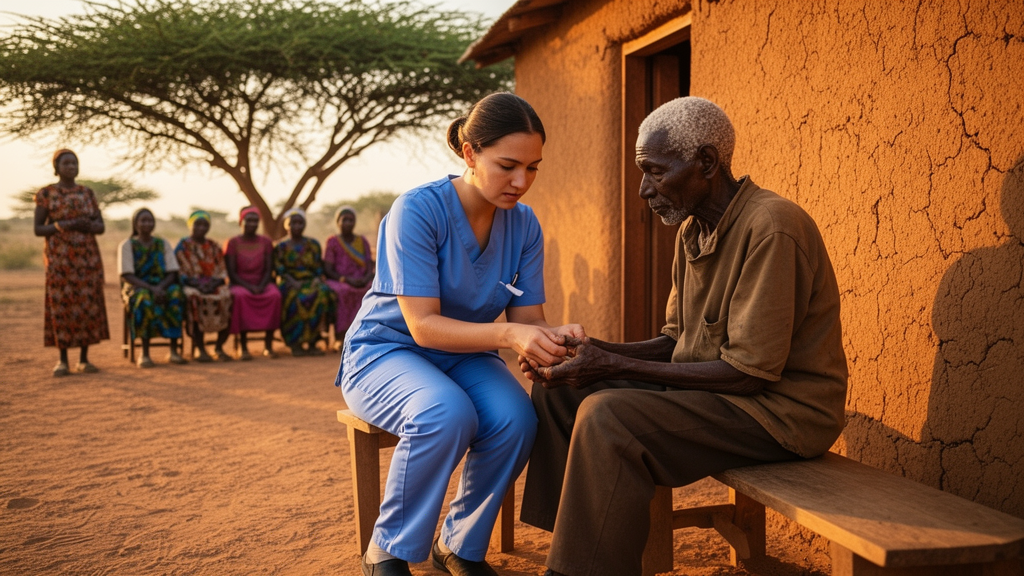
Image Credits: AI Generated
DOI: 10.1371/journal.pntd.0014773
Keywords: scabies, Ethiopia, Amhara region, traditional healing, medical pluralism, neglected tropical diseases, mass drug administration, health-seeking behaviour, ethnography, public health, Debre Elias, Sarcoptes scabiei
Cite Scienmag News
Ophelia Keating. (October 14, 2026). Scabies Outbreaks Persist in Ethiopia as Traditional Healers Remain on the Sidelines. Scienmag. https://scienmag.com/scabies-outbreaks-persist-in-ethiopia-as-traditional-healers-remain-on-the-sidelines/
Ophelia Keating. "Scabies Outbreaks Persist in Ethiopia as Traditional Healers Remain on the Sidelines." Scienmag, 14 October 2026, https://scienmag.com/scabies-outbreaks-persist-in-ethiopia-as-traditional-healers-remain-on-the-sidelines/. Accessed 14 October 2026.
Ophelia Keating. "Scabies Outbreaks Persist in Ethiopia as Traditional Healers Remain on the Sidelines." Scienmag. October 14, 2026. https://scienmag.com/scabies-outbreaks-persist-in-ethiopia-as-traditional-healers-remain-on-the-sidelines/


