


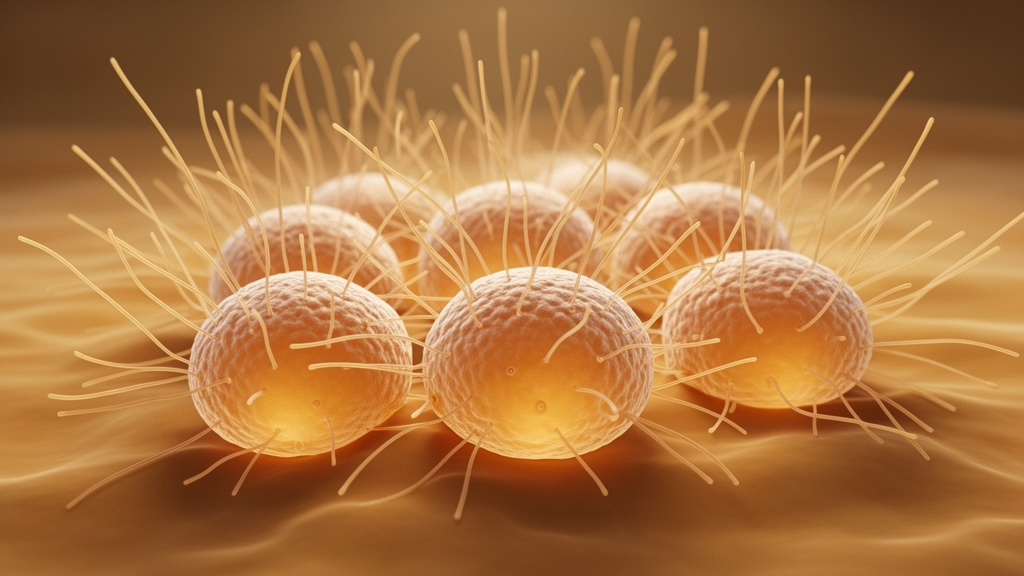
Archaea, the often-overlooked third domain of life, are turning out to be far more sophisticated builders of cell surface machinery than their reputation as extremophiles and obscure microbes suggests. A new study published in PLOS Genetics by Shamphavi Sivabalasarma and Sonja-Verena Albers maps, on a genome-wide scale, the remarkable diversity of archaeal type 4 filament systems, the membrane-embedded assembly lines that build hair-like protein appendages and drive protein secretion across the cell envelope. Using newly developed computational models, the researchers show that these machineries have diversified extensively across the archaeal tree of life, and that many organisms carry not just one but several distinct systems, each potentially devoted to a different task.
Type 4 filaments, collectively known as the T4F superfamily, are among the most widespread surface structures in prokaryotes. In bacteria, members of this superfamily include type IV pili, which mediate twitching motility, adhesion, DNA uptake, and biofilm formation, as well as type II secretion systems that push folded proteins across the outer membrane. Archaea possess their own versions of these machines, and the best-studied examples are the archaeal flagellum, or archaellum, which rotates to propel the cell, and the archaeal type IV pili that mediate surface adhesion and cell-to-cell contacts. Despite their different end products, all of these systems share a common architectural logic and a common evolutionary origin, which is why researchers now group them together under the T4F umbrella.
The minimal core of any T4F machinery consists of four essential components. An ATPase, typically positioned on the cytoplasmic face of the membrane, provides the energy that drives filament extension or substrate export. A platform protein sits embedded in the cytoplasmic membrane and acts as the central organizer, docking the other components into a coherent assembly complex. The filament-forming protein, or major pilin, is the building block that gets polymerized into the growing appendage. Finally, a class III signal peptidase, an enzyme distinct from the general signal peptidase found in bacteria, cleaves the signal peptide from the pilin-like substrates as they pass through the membrane, allowing them to be incorporated into the filament or released. This four-part core is the signature that unites the entire superfamily across both bacteria and archaea.
Identifying these systems in the ever-expanding database of archaeal genomes has been a persistent challenge. The individual components are often poorly conserved at the sequence level, and homologous ATPases can be recruited to very different kinds of systems, from motility structures to secretion apparatuses. To overcome this, the Albers group built new detection models using MacSyFinder2, a computational framework that searches genomes not for single genes in isolation but for the coordinated presence of a defined set of components arranged in a characteristic genomic context. By encoding the composition and organization of known archaeal T4F systems into these models, the team created a systematic classifier capable of scanning thousands of genomes and assigning each detected system to a specific functional subtype.
The results of this genome-wide survey were striking. Rather than a handful of well-defined categories, the analysis revealed a vast and previously underappreciated diversity of archaeal T4F systems. Many archaeal organisms harbor multiple assembly machineries simultaneously, implying that a single cell can operate several distinct filament or secretion systems in parallel, each dedicated to its own biological function. This multiplicity challenges the simpler picture in which archaea were thought to possess essentially one pilus system and one archaellum, and it suggests that surface appendage biology in archaea is at least as rich as it is in bacteria, where dozens of specialized secretion and pilus systems coexist within a single species.
To trace how this diversity arose, the researchers turned to structural phylogenetics, comparing the three-dimensional shapes of the ATPase components rather than relying solely on linear sequence similarity. Protein sequences can diverge so far that their common ancestry becomes invisible to standard alignment methods, but the folded structure of a protein often preserves evolutionary signals over much deeper timescales. The analysis focused on the N-terminal domain of the T4F-related ATPases, the region that varies most between subtypes. Remarkably, the clustering of ATPases by structural features of this variable domain mirrored the functional classification of the whole systems produced by the MacSyFinder2 models. In other words, the shape of one core component carries a record of the functional identity of the entire machine it belongs to.
This correspondence points to a specific evolutionary mechanism. The core T4F machinery appears to have diversified within the archaeal secretion ATPase family through structural innovation concentrated in the N-terminal domain. As this domain evolved new conformations and interaction surfaces, it presumably altered how the ATPase communicated with its platform protein, its pilins, and its substrates, allowing the same basic engine to be repurposed for motility, adhesion, secretion, or entirely novel functions. The study thus provides a concrete example of how modular evolution of a single domain can drive the functional radiation of an entire superfamily of molecular machines across a domain of life.
The second major discovery of the study concerns the substrates that these machineries handle. Every protein exported by a T4F system must carry a recognition tag, and for class III signal peptidase-dependent substrates this tag is a specific cleavage site, abbreviated SPIII, that the peptidase cuts during translocation. The team performed a systematic genome-wide screen for proteins containing canonical SPIII cleavage sites, asking which cargoes archaeal T4F systems are built to move. The screen revealed that proteins carrying class III signal peptides are far more widespread than previously appreciated, and that a prominent class of these substrates are substrate-binding proteins, components typically associated with transport and nutrient acquisition across the cell envelope.
From this pattern, the authors propose a new functional model: archaeal T4F machineries may be broadly dedicated to efficient substrate scavenging. In this view, the binding proteins bearing SPIII signal peptides are secreted or surface-displayed by the filament machineries, where they capture nutrients, cofactors, or other extracellular molecules and deliver them to uptake systems in the membrane. This would expand the functional repertoire of archaeal T4F systems well beyond the roles currently characterized in laboratory models, such as motility and adhesion, and would position these machines as central players in how archaea feed themselves and compete in their environments. If confirmed experimentally, the idea would reframe T4F systems not merely as appendage builders but as versatile export platforms whose outputs are tailored to the ecological needs of each organism.
The study opens several avenues for future work. The new MacSyFinder2 models provide a classification framework that other researchers can apply to newly sequenced archaeal genomes, and the predicted SPIII-containing substrate-binding proteins offer a concrete list of hypotheses to test by genetic and biochemical experiments. Structural biologists will want to examine how the divergent N-terminal domains of the ATPases contact their partners in different subtypes, and microbiologists will want to determine which substrates each machinery actually exports in living cells. What is already clear is that the archaeal cell surface is a crowded and dynamic place, populated by a far greater variety of filament and secretion systems than anyone suspected, and that the evolutionary story of these machines is written as much in the shapes of their components as in their sequences.
Subject of Research: Diversification and functional expansion of archaeal type 4 filament assembly machineries
Article Title: Diversification and functional expansion of archaeal T4F machineries
Article References: Sivabalasarma, S., & Albers, S.-V. (2026). Diversification and functional expansion of archaeal T4F machineries. PLOS Genetics, 22(10), e1012139. https://doi.org/10.1371/journal.pgen.1012139
Image Credits: AI Generated
DOI: 10.1371/journal.pgen.1012139
Keywords: archaea, type 4 filaments, T4F superfamily, ATPase, signal peptidase III, pili, MacSyFinder2, structural phylogenetics, substrate-binding proteins, secretion systems, genome mining, PLOS Genetics
Cite Scienmag News
Juliet Wilcox. (October 14, 2026). Archaeal Surface Filaments Reveal Surprising Diversity and New Jobs. Scienmag. https://scienmag.com/archaeal-surface-filaments-reveal-surprising-diversity-and-new-jobs/
Juliet Wilcox. "Archaeal Surface Filaments Reveal Surprising Diversity and New Jobs." Scienmag, 14 October 2026, https://scienmag.com/archaeal-surface-filaments-reveal-surprising-diversity-and-new-jobs/. Accessed 14 October 2026.
Juliet Wilcox. "Archaeal Surface Filaments Reveal Surprising Diversity and New Jobs." Scienmag. October 14, 2026. https://scienmag.com/archaeal-surface-filaments-reveal-surprising-diversity-and-new-jobs/


