


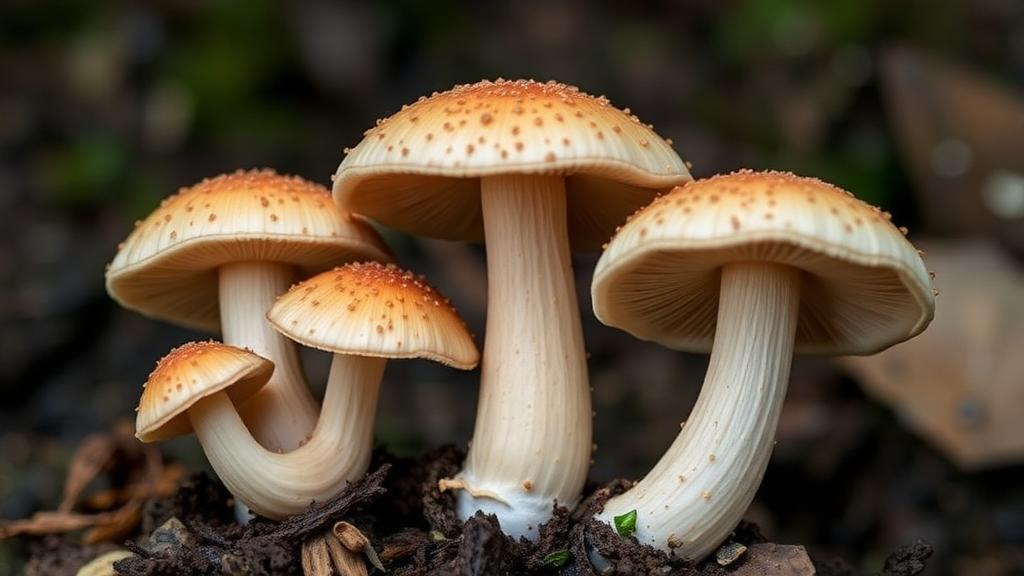
Deep in the world of medicinal fungi, a bracket fungus long prized in traditional medicine has finally surrendered the full sequence of its mitochondrial genome. In a study published in BMC Genomics, a team led by Can Jin, Jing Si and Bao-Kai Cui at Beijing Forestry University assembled, annotated and analyzed the complete mitochondrial genome of Phellinus tuberculosus, a white-rot fungus in the family Hymenochaetaceae. The work delivers the first complete mitochondrial genome for this species and, crucially, places it within a genus-level comparative framework that had been missing for one of the most medicinally important groups of wood-decaying mushrooms.
The newly assembled mitochondrial genome of P. tuberculosus measures 115,079 base pairs with a GC content of 26.1 percent, a size and composition that fit comfortably within the range reported for closely related Phellinus species. For fungi, whose mitochondrial genomes can vary enormously in size and architectural complexity, this figure immediately signals both conservation and room for the kind of expansion that makes fungal mitogenomics so intriguing. Unlike the compact animal mitochondria most people learn about in school, fungal mitochondrial genomes routinely swell with introns, repeats and intergenic spacers, and the Phellinus genomes are no exception.
Annotation of the P. tuberculosus mitogenome revealed a core genetic toolkit that appears to be a hallmark of the group: fourteen core protein-coding genes, twenty-seven transfer RNA genes and two ribosomal RNA genes. Those fourteen protein-coding genes correspond to the standard set required for oxidative phosphorylation, the electron transport chain machinery that mitochondria use to generate cellular energy. Their consistent presence across the compared species underscores how tightly evolution preserves the essential respiratory apparatus, even as the surrounding genomic landscape churns with rearrangements, duplications and mobile elements.
Beyond the genes themselves, the researchers catalogued 79 simple sequence repeats along with multiple larger repeat sequences scattered across the genome. Simple sequence repeats, sometimes called microsatellites, are short tandemly repeated motifs that mutate rapidly and can serve as informative markers for population-level studies. Larger repeat elements, by contrast, are the raw material of genome rearrangement: because recombination between repeats can invert, shuffle or duplicate genomic segments, their abundance helps explain why fungal mitochondrial genomes can differ dramatically in gene order even between closely related species. The repeat landscape of P. tuberculosus thus provides both a record of past genomic turbulence and a potential engine of future change.
One of the most technically interesting findings concerns RNA editing, the post-transcriptional process that alters the sequence of RNA transcripts relative to the DNA template. The team predicted a total of 42 C-to-U RNA editing sites across the mitochondrial protein-coding transcripts, with the nad2 gene carrying the highest number of editing sites. C-to-U editing in fungal mitochondria changes cytidine residues to uridine in the RNA, sometimes correcting codons so that the final proteins match functional expectations even when the gene sequence alone would suggest otherwise. The concentration of editing sites in nad2, which encodes a subunit of the respiratory chain’s NADH dehydrogenase complex, hints that this gene in particular may rely on post-transcriptional correction to produce a properly functioning protein.
Comparative genomic analysis with the two previously characterized Phellinus mitochondrial genomes showed that the P. tuberculosus lineage shares conserved mitochondrial genome features with its relatives, from gene content to overall organization. At the same time, the study’s title points to dynamic genome evolution within Hymenochaetaceae more broadly, reflecting the tension that defines fungal mitogenomics: the core is stable, but the periphery is restless. Introns, in particular, are notorious agents of mitochondrial genome expansion in basidiomycetes, and their gain and loss across lineages can inflate genome size without adding protein-coding capacity. The Phellinus comparison captures this dynamic in miniature, showing how genomes that carry the same essential genes can nonetheless diverge substantially in size and structure.
The phylogenomic component of the study used mitochondrial sequence data to test how P. tuberculosus relates to other members of its genus and family. The analyses showed that P. tuberculosus clusters with the two previously characterized Phellinus species in a strongly supported clade, a result that both validates the mitochondrial genome as a phylogenetic marker and reinforces the monophyly of the genus as currently sampled. Strong statistical support for this grouping matters because Phellinus, like many wood-inhabiting polypore lineages, has a taxonomic history complicated by morphological similarity, and molecular data have repeatedly reshaped how these fungi are classified. A well-supported mitochondrial phylogeny offers an independent line of evidence for species boundaries and evolutionary relationships.
Why does a mitochondrial genome from a single mushroom species matter beyond taxonomy? Phellinus species are white-rot fungi, meaning they possess the enzymatic machinery to degrade lignin, the tough aromatic polymer that gives wood its rigidity. That capability has enormous ecological significance in forests, where white-rot fungi drive carbon cycling by decomposing dead wood, and equally significant biotechnological potential, since lignin-degrading enzymes are of interest for biofuels, bioremediation and green chemistry. Many Phellinus species also produce medicinally functional compounds and nutrients, and several have been used in traditional medicine systems for centuries. Understanding the genetic architecture of these organisms, including their mitochondrial genomes, contributes to a fuller picture of their biology, their evolution and their potential applications.
The authors frame their work as filling a genuine gap: despite the medicinal importance of Phellinus, a comprehensive genus-level analysis of mitochondrial genomes had been unavailable until now. By providing the first complete mitogenome for P. tuberculosus and comparing it with its congeners, the study establishes a baseline for future phylogenetic, ecological and biotechnological investigations of medicinally important species. The annotated genome, with its catalogued repeats and predicted RNA editing sites, becomes a resource that other researchers can mine for markers, for insights into mitochondrial gene expression, and for reconstructing the evolutionary history of a lineage that shapes forests and pharmacies alike.
The study also illustrates a broader trend in genomics: mitochondrial genomes, once treated as an afterthought compared to nuclear genomes, have become workhorses for evolutionary biology in fungi. Their relatively small size makes them cheap to assemble completely, their uniparental inheritance simplifies comparisons between lineages, and their combination of conserved cores and variable architecture makes them ideal for resolving relationships at shallow and intermediate evolutionary depths. For the Hymenochaetaceae, a family that includes numerous pathogens and decomposers of standing trees as well as medicinal species, each new complete mitogenome adds a data point that sharpens both phylogeny and our understanding of how fungal genomes evolve. The P. tuberculosus genome, published open access and citable with a permanent DOI, now joins that growing library, and the strongly supported Phellinus clade it anchors suggests that more genus-level mitochondrial comparisons across Hymenochaetaceae will be well worth watching.
Subject of Research: Comparative mitochondrial genomics of the medicinal fungus Phellinus tuberculosus within the family Hymenochaetaceae
Article Title: Comparative mitochondrial genomics of the medicinal mushroom Phellinus tuberculosus reveals conserved core genes and dynamic genome evolution within Hymenochaetaceae
Article References: Comparative mitochondrial genomics of the medicinal mushroom Phellinus tuberculosus reveals conserved core genes and dynamic genome evolution within Hymenochaetaceae. (n.d.). https://doi.org/10.1186/s12864-026-13454-8
Image Credits: AI Generated
DOI: 10.1186/s12864-026-13454-8
Keywords: Phellinus tuberculosus, mitochondrial genome, Hymenochaetaceae, comparative genomics, RNA editing, white-rot fungi, medicinal mushrooms, phylogenomics, simple sequence repeats, fungal evolution, BMC Genomics, genome annotation
Cite Scienmag News
Gavin Prescott. (October 14, 2026). Medicinal Mushroom’s Mitochondrial Genome Reveals Conserved Core and Dynamic Evolution. Scienmag. https://scienmag.com/medicinal-mushrooms-mitochondrial-genome-reveals-conserved-core-and-dynamic-evolution/
Gavin Prescott. "Medicinal Mushroom’s Mitochondrial Genome Reveals Conserved Core and Dynamic Evolution." Scienmag, 14 October 2026, https://scienmag.com/medicinal-mushrooms-mitochondrial-genome-reveals-conserved-core-and-dynamic-evolution/. Accessed 14 October 2026.
Gavin Prescott. "Medicinal Mushroom’s Mitochondrial Genome Reveals Conserved Core and Dynamic Evolution." Scienmag. October 14, 2026. https://scienmag.com/medicinal-mushrooms-mitochondrial-genome-reveals-conserved-core-and-dynamic-evolution/


