


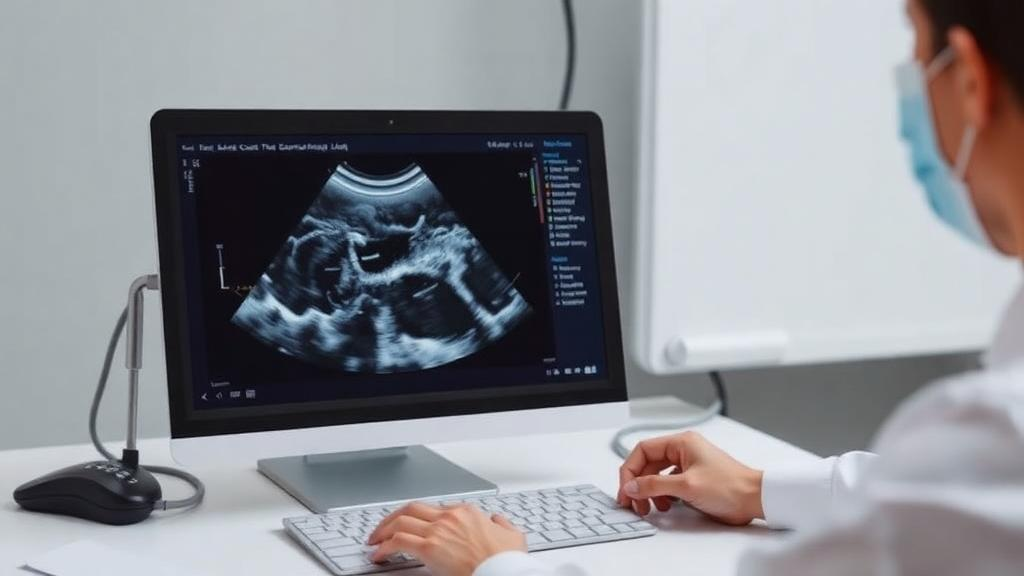
Point-of-care ultrasonography has quietly become one of the most transformative technologies in modern medicine, placing diagnostic imaging directly at the bedside of patients rather than behind the closed doors of a radiology department. But the rapid spread of these handheld and portable ultrasound machines has exposed a persistent gap: many healthcare professionals were never formally trained to use them. A new study published in BMC Medical Education offers one of the most detailed looks yet at how structured postgraduate ultrasound training changes the way clinicians practice, revealing dramatic gains in self-assessed competence alongside a striking appetite for even more education.
The research, conducted by Sławomir Mika of the Upper Silesian School of Ultrasonography in Chorzów, Poland, together with colleagues from WSB University, Jan Kochanowski University, and the Medical University of Silesia, surveyed 521 healthcare professionals who completed ultrasound courses at the single training center. Using a retrospective post-then-pre survey design, participants rated their own ultrasound competence on a scale from 0 to 100, both as they recalled it before the course and as they perceived it after completing the training. The results were unambiguous: the mean retrospectively assessed pre-course score was just 40.2 out of 100, while the mean post-course score climbed to 77.3 out of 100, a jump of nearly 37 points that was statistically significant in paired comparisons using the Wilcoxon signed-rank test.
That magnitude of improvement is remarkable, but the study’s real significance lies in what happened after participants returned to their clinical environments. A full 84.1 percent of respondents reported a positive change in their daily practice following the course, and 77.2 percent said they felt increased confidence when making ultrasound-based clinical decisions. Perhaps most telling from a practical standpoint, 70.3 percent of participants reported that they had implemented at least one new ultrasound technique into their routine work. In other words, the training did not simply inflate confidence on a questionnaire; it appeared to translate into changed behavior at the bedside, where clinicians were actually deploying new scanning skills on real patients.
Satisfaction with the training was similarly high. The mean overall satisfaction score reached 90.6 out of 100, and 92 percent of respondents rated their satisfaction above 80 on the same scale. These figures matter because postgraduate medical education is expensive, time-consuming, and often competing with demanding clinical schedules. Courses that fail to engage learners or fail to produce perceived practical value are quickly abandoned. The near-universal satisfaction reported here suggests that structured, hands-on ultrasound curricula can achieve something that many continuing medical education formats struggle with: learners who feel the training was worth their time and who can point to concrete changes in how they practice.
The technical foundations of point-of-care ultrasonography, often abbreviated as POCUS, help explain why structured training is so critical. Unlike conventional diagnostic imaging performed by sonographers and interpreted by radiologists, POCUS is performed and interpreted by the treating clinician in real time, answering focused clinical questions such as whether a patient in shock has a poorly filling heart, whether a patient with breathlessness has a pleural effusion, or whether vascular access can be secured with ultrasound guidance. The technique relies on recognizing characteristic echo patterns, understanding probe positioning and machine settings, and integrating findings instantly into clinical decision-making. Errors in image acquisition or interpretation can lead directly to misdiagnosis, which is why professional societies worldwide have emphasized that POCUS competence requires deliberate, supervised training rather than informal learning at the bedside.
The study’s participants came through courses organized by the Upper Silesian School of Ultrasonography, a Polish training institution, and the research team emphasizes that the program was structured rather than ad hoc. While the published abstract does not detail every curricular component, the concept of structured ultrasound training generally implies a defined sequence of theoretical instruction, demonstration, supervised hands-on scanning practice, and assessment of progression. This stands in contrast to the historical pattern in many specialties, where clinicians learned ultrasound opportunistically from colleagues or through brief workshops with little follow-up. The authors, who include anesthesiology and intensive care specialist Hanna Misiołek of the Medical University of Silesia, frame the work as a response to the growing need for effective postgraduate ultrasound education as POCUS spreads across anesthesiology, intensive care, emergency medicine, and beyond.
One of the most intriguing findings is that the appetite for learning did not diminish with competence. Approximately 76 percent of the 521 participants, or 396 respondents, expressed a need for further ultrasound training even after completing their courses. This pattern reflects a growing recognition among ultrasound educators that competence in POCUS is not a binary achievement but a continuum, spanning basic image acquisition, pattern recognition, and eventually advanced applications such as echocardiography or ultrasound-guided procedures. The finding suggests that well-designed introductory courses may function less as endpoints and more as gateways, opening clinicians’ eyes to what ultrasound can do and motivating them to pursue progressively more sophisticated skills.
The authors are careful, and rightly so, about the limits of their methodology. Because pre-course competence was assessed retrospectively, after the training had already occurred, participants may have underestimated their earlier abilities once they knew what they had since learned, a well-documented cognitive bias in post-then-pre survey designs. More importantly, the study relied entirely on self-assessed competence rather than objective measures such as proctored image-quality assessments, standardized practical examinations, or validated competency instruments. No patient-related outcomes were measured either, so the study cannot demonstrate that the reported changes in practice improved diagnosis or treatment. The authors explicitly state that the findings should be interpreted as participants’ perceived educational and clinical benefits rather than objectively demonstrated effects, a caveat that distinguishes responsible educational research from overclaiming.
Those limitations do not diminish the study’s practical relevance. Self-assessed confidence and perceived practice change are meaningful outcomes in postgraduate education, particularly when collected from a large cohort of 521 practicing professionals, and they align with a substantial body of literature showing that clinicians who feel competent are more likely to use a skill, while those who feel untrained tend to avoid it. The single-center design, acknowledged in the study’s title, means the results describe one training program’s participants rather than a nationally representative sample, and the survey-based observational approach means no causal claims can be made with certainty. Still, the consistency of the findings, spanning competence scores, satisfaction, confidence in decision-making, and reported implementation of new techniques, paints a coherent picture of a training format that learners experience as genuinely transformative.
As portable ultrasound continues its march from specialist tool to everyday instrument, studies like this one will shape how health systems invest in training. The message from Upper Silesia is twofold: structured postgraduate ultrasound education can produce large perceived gains in competence and real changes in clinical behavior, and even highly satisfied graduates recognize that one course is only the beginning. For the clinicians scanned, probed, and examined in this survey, the ultrasound machine at the bedside is no longer an intimidating black box but a working extension of their physical examination, and they want to learn more.
Subject of Research: Structured point-of-care ultrasonography training and its impact on self-assessed competence and clinical practice among healthcare professionals
Article Title: Impact of structured ultrasonography training on clinical practice and self-assessed competence among healthcare professionals: a single-center study
Article References: Mika, S., Wilk, M., Gil-Mika, M., Gola, W., & Misiołek, H. (2026). Impact of structured ultrasonography training on clinical practice and self-assessed competence among healthcare professionals: a single-center study. BMC Medical Education. https://doi.org/10.1186/s12909-026-10612-0
Image Credits: AI Generated
DOI: 10.1186/s12909-026-10612-0
Keywords: point-of-care ultrasonography, POCUS, medical education, ultrasound training, self-assessed competence, healthcare professionals, postgraduate training, clinical practice, survey study, anesthesiology, intensive care, BMC Medical Education
Cite Scienmag News
Courtney Benton. (October 13, 2026). Structured Ultrasound Training Doubles Clinicians’ Self-Assessed Competence, Survey Finds. Scienmag. https://scienmag.com/structured-ultrasound-training-doubles-clinicians-self-assessed-competence-survey-finds/
Courtney Benton. "Structured Ultrasound Training Doubles Clinicians’ Self-Assessed Competence, Survey Finds." Scienmag, 13 October 2026, https://scienmag.com/structured-ultrasound-training-doubles-clinicians-self-assessed-competence-survey-finds/. Accessed 13 October 2026.
Courtney Benton. "Structured Ultrasound Training Doubles Clinicians’ Self-Assessed Competence, Survey Finds." Scienmag. October 13, 2026. https://scienmag.com/structured-ultrasound-training-doubles-clinicians-self-assessed-competence-survey-finds/


