


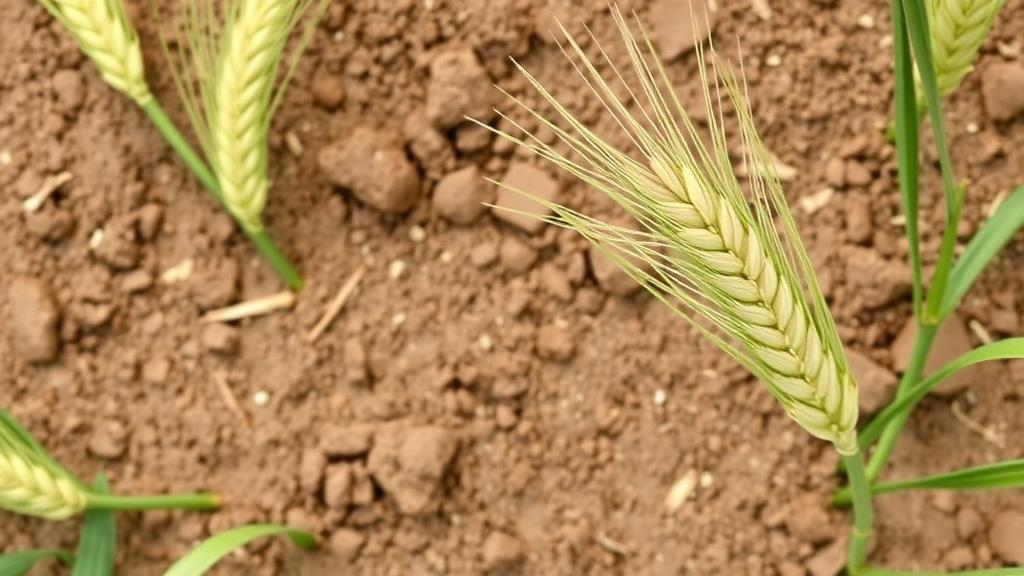
Wheat, the cereal that supplies roughly a fifth of the calories consumed by humanity, is increasingly being grown on land that is both salty and laced with heavy metals. A new study published in Plant Cell Reports suggests that a remarkably simple, low-cost treatment—seed priming and foliar spraying with moringa leaf extract and the antioxidant glutathione—can dramatically improve how wheat copes with this punishing combination of stresses. The work, led by Amnah M. Alamri of King Abdulaziz University in Saudi Arabia together with colleagues in Pakistan, Egypt and Saudi Arabia, offers a potential lifeline for farmers whose fields have been degraded by salinity and industrial contamination.
The problem the researchers set out to tackle is more insidious than either stress alone. Salinity does not simply dehydrate plants; it also changes soil chemistry in ways that make heavy metals more mobile and more available for uptake. Earlier work cited by the team, including studies on cadmium mobility in saline soils, has shown that sodium salts can displace metal ions from soil particles, releasing them into the soil solution where roots readily absorb them. In the experimental soil used in this study, which had an electrical conductivity of 9.06 decisiemens per meter, wheat plants accumulated substantially more sodium, copper, lead and cadmium than plants grown under normal conditions.
The consequences for the plants were severe. Across two growing seasons, salinity combined with heavy metal contamination raised leaf sodium concentrations by roughly 50 to 53 percent, while leaf contents of copper rose by about 24 percent, lead by 66 to 87 percent and cadmium by 36 to 41 percent. The contaminated plants also accumulated more nitrate and nitrite, compounds that are undesirable in grain destined for human consumption. The physiological toll was reflected in the harvest: straw yields fell by about 30 to 35 percent and grain yields by nearly 32 percent compared with unstressed controls.
At the biochemical level, the stressed plants were fighting a losing battle against reactive oxygen species. Salinity and heavy metals both trigger the overproduction of these destructive molecules, which damage membranes, proteins and DNA. The plants responded by ramping up their enzymatic antioxidant defenses—superoxide dismutase, catalase and guaiacol peroxidase—and by elevating their pools of glutathione, a tripeptide that sits at the heart of the cellular redox system. Yet protein content declined, and the levels of essential macronutrients such as nitrogen, phosphorus and calcium, along with micronutrients including iron, manganese and zinc, all dropped. The plants were essentially starving while simultaneously being poisoned.
The intervention tested by the team was elegantly simple. Seeds were primed in either water, a 3 percent moringa leaf extract, a 1 millimolar glutathione solution, or a combination, and the same solutions were then applied as foliar sprays as the plants developed. Moringa oleifera, often called the miracle tree, is rich in antioxidants, vitamins, minerals and growth-promoting substances, and its leaf extract has previously been shown to alleviate salt and cadmium stress in several crops. Glutathione, meanwhile, is the plant’s own master antioxidant, participating directly in the detoxification of reactive oxygen species and in the chelation and sequestration of heavy metals.
The results of the sequenced application were striking. Plants that received both moringa leaf extract and glutathione, as seed priming followed by foliar spray, showed increases in superoxide dismutase activity of roughly 45 to 49 percent and in guaiacol peroxidase activity of 51 to 56 percent compared with stressed, untreated plants. Total protein content climbed by about 32 to 33 percent, and glutathione levels themselves surged by 60 to 70 percent, suggesting that the treatment primed the plants’ internal antioxidant machinery rather than merely supplementing it from outside.
Just as importantly, the treatment restored nutritional balance. Leaf concentrations of nitrogen rose by 28 to 51 percent, phosphorus by nearly 48 to 50 percent, potassium by 20 to 26 percent and calcium by 33 to 53 percent. Micronutrients followed the same pattern: leaf iron increased by 33 to 51 percent, zinc by 48 to 54 percent and manganese by about 36 percent, with similarly large gains in the grain. Because iron, zinc and manganese deficiencies affect billions of people worldwide, the finding that this treatment can biofortify wheat grain while detoxifying it is among the most consequential aspects of the work.
At the same time, the toxic load in the plants fell sharply. Leaf cadmium declined by 47 to 50 percent and lead by 48 to 49 percent, while grain cadmium dropped by 29 to 30 percent, lead by 47 to 54 percent and copper by about 26 percent. Leaf sodium, the principal driver of salt toxicity, fell by 40 to 45 percent, and grain nitrate and nitrite contents decreased by 47 to 54 percent and 54 to 61 percent respectively. The combined effect was a substantial recovery in productivity, with treated plants producing markedly higher straw and grain yields than their untreated, stressed counterparts.
The mechanism, as the authors describe it, is a coordinated restoration of homeostasis. By boosting the antioxidant defense system, the treatment limits the oxidative damage that heavy metals and sodium inflict on cells. By improving nutrient uptake, it counteracts the competitive interference that sodium causes with potassium, calcium and other essential elements. And by reducing the accumulation of toxic ions, it frees the plant’s metabolic resources for growth and grain filling rather than repair. The sequenced approach—priming seeds to establish defenses early, then reinforcing them with foliar sprays during critical growth stages—appears to be key, consistent with the team’s earlier work showing that sequenced glutathione and biostimulant applications improve wheat’s adaptation to salinity.
For agriculture in arid and semi-arid regions, where saline and contaminated soils are spreading, the implications are considerable. Both moringa leaf extract and glutathione are inexpensive, environmentally benign and easy to apply, making the strategy accessible to smallholder farmers who cannot afford soil remediation or expensive genetic solutions. The study, funded by the Deanship of Scientific Research at King Abdulaziz University, demonstrates that crop protection on degraded land need not begin in the soil itself; it can begin in the seed and the leaf. If field-scale trials confirm these two-season results, a tree extract and a common cellular antioxidant could become standard tools for growing safer, more nutritious wheat on some of the world’s most compromised farmland.
Subject of Research: Alleviation of combined salinity and heavy metal stress in wheat using moringa leaf extract and glutathione
Article Title: Glutathione and moringa leaf extract improve wheat tolerance to heavy metal-contaminated saline soil by regulation of antioxidant defense system and nutrient balance
Article References: Glutathione and moringa leaf extract improve wheat tolerance to heavy metal-contaminated saline soil by regulation of antioxidant defense system and nutrient balance. (n.d.). https://doi.org/10.1007/s00299-026-04010-5
Image Credits: AI Generated
DOI: 10.1007/s00299-026-04010-5
Keywords: wheat, salinity stress, heavy metals, glutathione, moringa leaf extract, antioxidant defense, seed priming, foliar spray, nutrient balance, grain quality, cadmium, soil contamination
Cite Scienmag News
Alan Morgan. (October 13, 2026). Moringa Extract and Glutathione Shield Wheat From Toxic Salty Soils. Scienmag. https://scienmag.com/moringa-extract-and-glutathione-shield-wheat-from-toxic-salty-soils/
Alan Morgan. "Moringa Extract and Glutathione Shield Wheat From Toxic Salty Soils." Scienmag, 13 October 2026, https://scienmag.com/moringa-extract-and-glutathione-shield-wheat-from-toxic-salty-soils/. Accessed 13 October 2026.
Alan Morgan. "Moringa Extract and Glutathione Shield Wheat From Toxic Salty Soils." Scienmag. October 13, 2026. https://scienmag.com/moringa-extract-and-glutathione-shield-wheat-from-toxic-salty-soils/


