


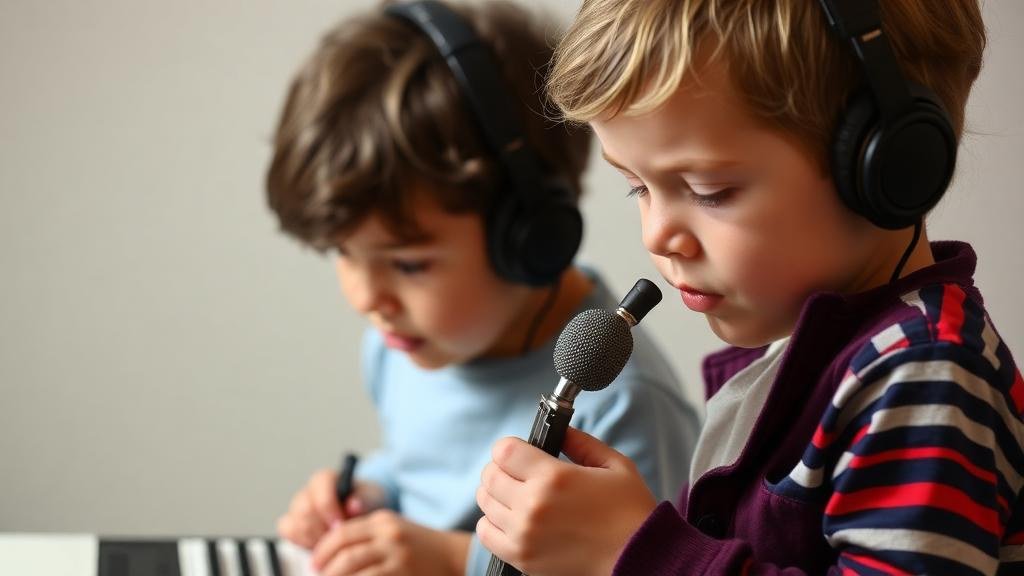
Music has long been celebrated for its power to move us emotionally, but a new analysis suggests it may do something far more practical for young minds: teach children how to manage themselves. A team of researchers led by Peng Rong and colleagues at Hunan Normal University in China has published a comprehensive meta-analysis in the journal Current Psychology showing that music interventions produce a significant, moderate improvement in self-regulation among children aged three to twelve. The finding, drawn from 28 empirical studies containing 127 independent effect sizes and an aggregate sample of 2,865 children, offers some of the strongest statistical evidence yet that structured musical activity is not merely entertainment but a genuine developmental tool.
Self-regulation is one of the most consequential capacities a child develops. Psychologists define it as the ability to control one’s emotions, behavior, and cognition in the service of long-term goals, and decades of research have linked it to school readiness, academic achievement, and lifelong social and economic outcomes. Children who can delay gratification, persist through frustration, and modulate emotional reactions tend to perform better across nearly every measurable domain of later life. Because of this, educators and policymakers have invested heavily in interventions designed to strengthen these skills, ranging from curriculum-based programs to targeted executive-function training. The question of whether music belongs in that toolkit has been contested, with individual studies producing mixed results and earlier syntheses reaching cautious or even skeptical conclusions.
The new meta-analysis tackled that uncertainty with a three-level random-effects model, a statistical approach that has become the gold standard for synthesizing behavioral research. Traditional meta-analyses assume that every effect size is independent, but in practice a single study often reports multiple outcomes from the same participants, violating that assumption and inflating the apparent precision of the pooled estimate. Three-level models, pioneered in the meta-analytic literature by researchers such as Cheung and by Assink and Wibbelink, partition the variance into three components: sampling variance within effect sizes, variance between effect sizes within the same study, and variance between studies. This allows all available effect sizes to be retained without double-counting, yielding a more honest estimate of both the overall effect and the true heterogeneity across the literature.
The headline result is strikingly clear. Across all 127 effect sizes, music interventions produced a pooled effect of g = 0.53, with a 95 percent confidence interval of 0.35 to 0.70 and a p-value below 0.001. In the conventional benchmarks proposed by Jacob Cohen, a g of 0.53 sits comfortably within the moderate range, meaning that the average child receiving a music intervention gained roughly half a standard deviation in self-regulation relative to controls. Importantly, the benefit was not confined to a single domain. The analysis found meaningful positive effects across all three core subdimensions of self-regulation: emotional regulation, which involves recognizing and modulating feelings; behavioral regulation, the capacity to inhibit impulses and follow rules; and cognitive regulation, which encompasses attention control and executive processes such as working memory and cognitive flexibility.
Perhaps the most practically valuable contribution of the study lies in its moderator analyses, which asked not simply whether music works but under what conditions it works best. Three factors emerged as critical. First, the type of intervention mattered enormously. Contextual music interventions that incorporated role-play produced significantly stronger effects than those that did not. This finding aligns closely with Vygotskian developmental theory, which holds that make-believe play is a wellspring of self-regulation because children must voluntarily constrain their own behavior to sustain a shared pretend scenario. When music is embedded in such imaginative contexts, children practice self-control not as an imposed exercise but as an intrinsic requirement of the game itself.
Second, cultural background emerged as a powerful moderator. Interventions delivered within collectivist cultural settings outperformed those in individualist cultures. The authors’ interpretation, grounded in cross-cultural psychology, is that collectivist contexts tend to emphasize group harmony, coordination, and responsiveness to others, values that resonate naturally with the communal, synchronized character of musical activity. Joint music making requires children to listen, coordinate, and subordinate individual impulses to the ensemble, and these demands may be reinforced rather than contradicted by the surrounding cultural norms. For practitioners, this suggests that imported music programs cannot simply be transplanted across cultures; they must be aligned with local values and socialization practices to achieve their full effect.
Third, and perhaps most strikingly, the magnitude of benefit was markedly larger for children with special needs than for typically developing children. This pattern is consistent with the differential susceptibility framework articulated by Belsky and Pluess, which proposes that certain children are more malleable to environmental influence, for better or worse. Children with developmental challenges such as autism spectrum conditions or hearing impairments, who often struggle with emotional and behavioral regulation, may have the most room to grow and may respond most sensitively to the structured, predictable, and inherently rewarding scaffolding that music provides. The analysis thus positions music intervention not as a universal booster but as a particularly potent lever for the children who need it most.
Just as revealing are the factors that did not matter. Neither the frequency of intervention sessions nor the total duration of the program showed significant moderating effects, indicating the absence of a clear dose-response relationship. More music was not reliably better music. Likewise, participant age did not moderate outcomes: intervention efficacy remained stable across both preschool and school-age children, suggesting that the developmental window for musical self-regulation training is broader than many had assumed. These null findings carry real practical weight. Schools and clinics operating under tight budgets need not commit to lengthy, intensive programs to see benefits, and practitioners need not worry that they have missed a critical early window by starting with older children.
The study was conducted with the methodological safeguards expected of modern meta-analysis, including assessments of publication bias using techniques descended from the trim-and-fill and funnel-plot methods of Duval, Tweedie, and Egger, and the authors report no funding conflicts that might color the interpretation. The research team, which spans the College of Education Science and the Hunan Provincial Key Laboratory of Cognition and Human Behavior, also notes that the underlying data are available from the corresponding author upon reasonable request, supporting transparency and reproducibility. The work builds on a growing body of evidence, including randomized controlled trials of rhythm-and-movement programs in disadvantaged communities and studies of orchestral training on inhibitory control, that has gradually shifted the field from skepticism toward cautious optimism about music’s cognitive reach.
For parents, teachers, and therapists, the takeaways are concrete. The authors recommend prioritizing contextual music activities integrated with role-play, ensuring that programs are tailored to the local cultural context, and designing targeted interventions for children with special needs. In an era when screen time and sedentary entertainment dominate childhood, the image of children singing, moving, and pretending their way toward stronger self-control is an appealing one, and now it rests on a firmer statistical foundation than ever before. Music, this analysis suggests, is not a luxury appended to education but a mechanism through which children rehearse the very skills that education exists to cultivate.
Subject of Research: Effects of music interventions on self-regulation in children aged 3 to 12
Article Title: The effects of music intervention on children’s self-regulation: A three-level meta-analysis
Article References: Rong, P., Yueming, Z., Xi, L., Xuru, Z., Hanyu, L., & Jie, C. (2026). The effects of music intervention on children’s self-regulation: A three-level meta-analysis. Current Psychology, 45(17), Article 1473. https://doi.org/10.1007/s12144-026-10038-3
Image Credits: AI Generated
DOI: 10.1007/s12144-026-10038-3
Keywords: music intervention, self-regulation, meta-analysis, child development, emotional regulation, behavioral regulation, cognitive regulation, role-play, cultural context, special needs, executive function, Current Psychology
Cite Scienmag News
Glenn Wilkins. (October 13, 2026). Music Helps Children Learn Self-Control, Major Analysis of 28 Studies Finds. Scienmag. https://scienmag.com/music-helps-children-learn-self-control-major-analysis-of-28-studies-finds/
Glenn Wilkins. "Music Helps Children Learn Self-Control, Major Analysis of 28 Studies Finds." Scienmag, 13 October 2026, https://scienmag.com/music-helps-children-learn-self-control-major-analysis-of-28-studies-finds/. Accessed 13 October 2026.
Glenn Wilkins. "Music Helps Children Learn Self-Control, Major Analysis of 28 Studies Finds." Scienmag. October 13, 2026. https://scienmag.com/music-helps-children-learn-self-control-major-analysis-of-28-studies-finds/


