


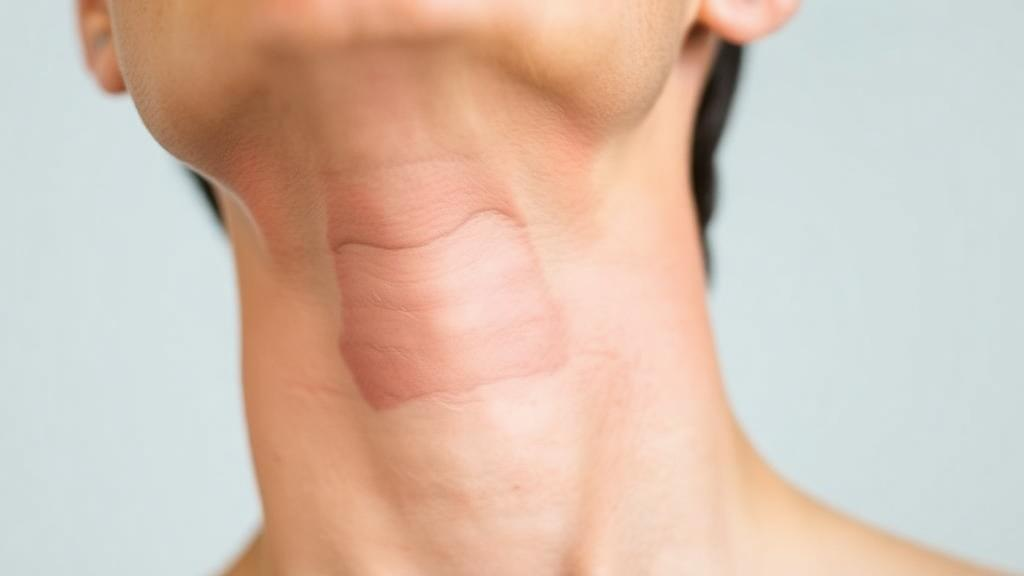
A velvety, darkened patch of skin on the back of the neck or in the armpits has long been dismissed by many patients as a hygiene problem or a harmless quirk of pigmentation. Dermatologists and endocrinologists know it by another name: acanthosis nigricans, a thickened, hyperpigmented plaque that often signals something far more serious than a cosmetic nuisance. Now, a large cross-sectional study from Shanghai Tenth People’s Hospital has mapped this skin sign onto a finely grained picture of metabolic health, and the results sharpen a message that clinicians have suspected for decades. Among more than 1,100 adults screened at an endocrinology clinic, acanthosis nigricans was not simply a general marker of impending diabetes. Instead, it peaked with striking specificity at a narrow metabolic window: the stage at which the pancreas is pumping out excess insulin to keep blood sugar looking deceptively normal.
The research, published in BMC Endocrine Disorders, enrolled 1,158 adults who underwent acanthosis nigricans screening at the hospital’s Endocrinology Clinic between 2010 and 2021. Rather than treating metabolic health as a simple diabetic-versus-nondiabetic binary, the team sorted every participant into one of five mutually exclusive stages spanning the full arc of metabolic deterioration. The five categories were Normal, Isolated Insulin Resistance, Hyperinsulinemia, Prediabetes with Insulin Resistance, and Diabetes with Insulin Resistance. This stratification allowed the investigators to ask a question that simpler study designs cannot answer: does the skin sign track with metabolic disease in general, or does it point to one particular physiological moment along the road from health to diabetes?
The answer was both surprising and clinically useful. Prevalence of acanthosis nigricans varied across the five stages in a distinctly non-monotonic pattern. It reached its highest point, 71.3 percent, in the Hyperinsulinemia stage, when fasting insulin levels are elevated but blood glucose remains within normal limits. The prevalence then fell to 51.7 percent among participants with prediabetes and insulin resistance and dropped further to 44.6 percent among those with outright diabetes and insulin resistance, a gradient that was statistically significant at P less than 0.001. In other words, the skin sign was most common not at the end of the metabolic road, when the disease is most advanced, but at a middle waypoint where the body is still successfully compensating for insulin resistance by secreting ever-larger amounts of the hormone.
The physiological logic behind this pattern begins at the cellular level. Insulin resistance means that target tissues, chiefly skeletal muscle, liver, and adipose tissue, respond poorly to insulin’s normal signaling. To maintain glucose homeostasis, pancreatic beta cells compensate by secreting more insulin, driving circulating insulin concentrations upward. Acanthosis nigricans is thought to arise as a byproduct of this compensatory flood. Insulin at high concentration spills over onto insulin-like growth factor 1 receptors, or IGF-1R, on keratinocytes and fibroblasts in the skin. Activation of these receptors triggers the phosphatidylinositol 3-kinase, or PI3K, and protein kinase B, or AKT, signaling cascades, which stimulate proliferation of epidermal cells and deposition of the velvety, papillomatous texture that defines the condition. The skin, in this framing, is a visible readout of how hard the pancreas is working to keep glucose under control.
Consistent with this mechanism, participants with the skin sign were, on average, younger than those without it and carried higher body mass index. They also had markedly higher fasting insulin and C-peptide levels, the latter a co-secreted fragment of proinsulin that serves as an independent index of beta-cell secretory activity. All of these differences were statistically robust at P less than 0.001. The combination of younger age, greater adiposity, and higher insulin output paints a coherent portrait: acanthosis nigricans tends to appear in people whose metabolic machinery is straining hardest, often years before laboratory tests of glucose would raise any alarm.
Of course, cross-sectional data are vulnerable to confounding, and the team addressed this concern with a carefully layered statistical strategy. Using multinomial logistic regression, the researchers examined the association between the skin sign and each metabolic stage, progressively adjusting for demographic and metabolic covariates. Even in the fully adjusted model, the Hyperinsulinemia stage retained by far the strongest link to acanthosis nigricans, with an odds ratio of 4.69 and a 95 percent confidence interval spanning 1.58 to 13.95. By contrast, the associations observed for the prediabetes and diabetes stages attenuated and lost statistical strength once full covariate adjustment was applied. The specificity of the signal survived scrutiny: this is a marker of compensatory hyperinsulinemia with preserved glycemia, not a generic badge of advanced metabolic disease.
Subgroup analyses probing whether the association varied by age, sex, or body mass index added further texture to the findings, and the investigators also asked a practical question that matters for any screening context: how much does seeing the skin actually help? Receiver operating characteristic analysis showed that adding acanthosis nigricans to existing information modestly but significantly improved discrimination for hyperinsulinemia, raising the area under the curve from 0.730 to 0.776, a difference significant at P less than 0.001. The improvement is not dramatic enough to turn the skin sign into a diagnostic test on its own, but it is meaningful as an adjunctive cue. A clinician who spots the velvety plaques during a routine examination gains measurable incremental information about a patient’s likelihood of silent insulin excess.
Perhaps the most mechanistically intriguing component of the study was an exploratory mediation analysis. The team asked whether measurable metabolic traits, specifically waist circumference, uric acid, and the liver enzyme alanine aminotransferase, might explain the statistical link between the skin sign and hyperinsulinemia. Together, these three factors accounted for a substantial proportion of the association. Waist circumference is the classic anthropometric proxy for visceral adiposity, the metabolically active fat depot most tightly coupled to insulin resistance. Uric acid has been repeatedly linked to hyperinsulinemia and metabolic syndrome, while elevated alanine aminotransferase reflects hepatic steatosis, the fatty infiltration of the liver that both drives and responds to insulin excess. That these mediators soak up much of the association suggests that acanthosis nigricans sits at the convergence of visceral obesity, fatty liver, and hyperuricemia, a cluster of interlocking abnormalities that all feed the same compensatory physiology.
The authors are candid about the limits of their design. This was a clinic-based cohort of adults attending an obesity and endocrinology service in Shanghai, so the participants carry a high baseline burden of adiposity and metabolic risk; the prevalence figures would very likely differ in a general population sample. The cross-sectional structure captures a single moment in time and cannot prove that hyperinsulinemia causes the skin changes, only that the two travel together in this population. The mediation analysis, by the authors’ own framing, is exploratory and does not establish causal pathways. Longitudinal follow-up would be needed to determine whether the appearance of acanthosis nigricans predicts progression from the hyperinsulinemic stage to prediabetes and diabetes, and whether treating the underlying insulin excess causes the plaques to fade.
Even with those caveats, the clinical takeaway is unusually actionable for a marker that costs nothing to detect. The hyperinsulinemic stage, the one most tightly bound to the skin sign, is precisely the window in which intervention has the greatest chance of preventing progression. Lifestyle change, weight reduction, and pharmacologic agents that lower insulin demand are all most effective before beta-cell function falters and glucose begins to climb. Yet this stage is also the one least likely to be caught by routine screening, because fasting glucose and even glycated hemoglobin, measured as HbA1c, remain normal while insulin surges unseen. The study therefore supports treating acanthosis nigricans as an adjunctive clinical sign, in the authors’ phrase, rather than a standalone screening tool, one that should prompt a clinician to order fasting insulin, C-peptide, an oral glucose tolerance test with insulin curves, and assessment of waist circumference and liver enzymes in high-risk individuals. A dark patch of skin that patients often hide or ignore may, on closer inspection, be the body’s earliest visible cry that its metabolic budget is being spent faster than it can be replenished, and recognizing it could buy years of prevention that blood tests alone would miss.
Subject of Research: Acanthosis nigricans as a cutaneous marker of compensatory hyperinsulinemia across metabolic stages
Article Title: Acanthosis nigricans as a cutaneous marker of compensatory hyperinsulinemia with preserved glycemia: a cross-sectional study
Article References: Acanthosis nigricans as a cutaneous marker of compensatory hyperinsulinemia with preserved glycemia: a cross-sectional study. (n.d.). https://doi.org/10.1186/s12902-026-02630-2
Image Credits: AI Generated
DOI: 10.1186/s12902-026-02630-2
Keywords: acanthosis nigricans, hyperinsulinemia, insulin resistance, prediabetes, type 2 diabetes, metabolic syndrome, obesity, C-peptide, waist circumference, fatty liver, uric acid, cross-sectional study
Cite Scienmag News
Ophelia Keating. (October 13, 2026). Skin Darkening on the Neck May Reveal Hidden Insulin Overload Before Blood Sugar Rises. Scienmag. https://scienmag.com/skin-darkening-on-the-neck-may-reveal-hidden-insulin-overload-before-blood-sugar-rises/
Ophelia Keating. "Skin Darkening on the Neck May Reveal Hidden Insulin Overload Before Blood Sugar Rises." Scienmag, 13 October 2026, https://scienmag.com/skin-darkening-on-the-neck-may-reveal-hidden-insulin-overload-before-blood-sugar-rises/. Accessed 13 October 2026.
Ophelia Keating. "Skin Darkening on the Neck May Reveal Hidden Insulin Overload Before Blood Sugar Rises." Scienmag. October 13, 2026. https://scienmag.com/skin-darkening-on-the-neck-may-reveal-hidden-insulin-overload-before-blood-sugar-rises/


