


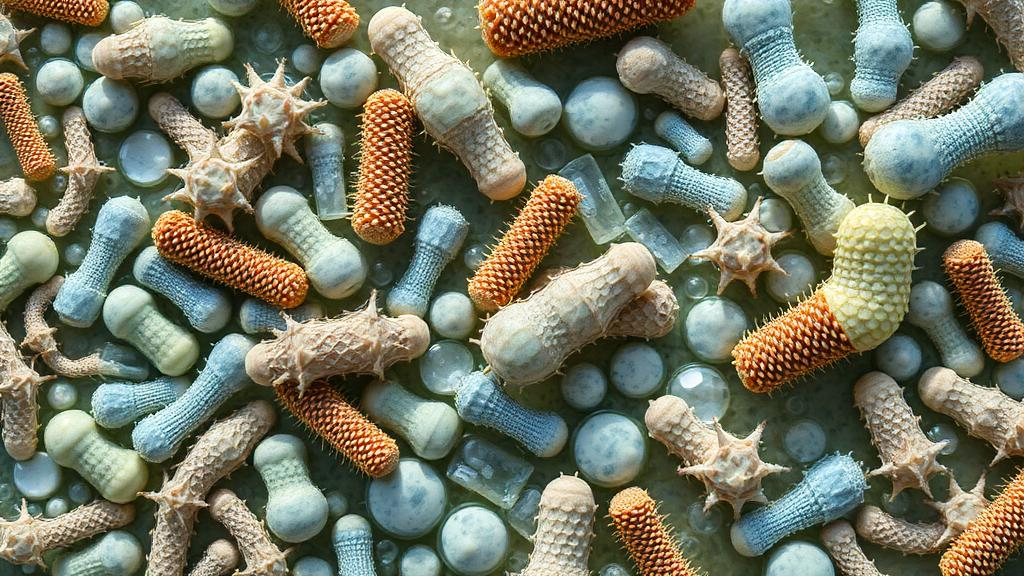
In the shallow coastal waters of the Gulf of Finland, where freshwater rivers meet the brackish Baltic Sea, an invisible drama unfolds among thousands of microscopic eukaryotic species. A new study combining field surveys with controlled aquarium experiments reveals that where these tiny organisms live matters far more than how salty their water is. The research, published in the journal Ocean Microbiology, challenges long-standing assumptions about how salinity structures microbial communities in one of the world’s largest brackish ecosystems, and uncovers a hidden menagerie of parasites and predators never before documented in the region.
The Baltic Sea presents a natural laboratory for studying salinity’s influence on life. Its waters stretch from nearly freshwater conditions in the north to fully marine salinities in the southwest, with the Gulf of Finland sitting squarely in the low-salinity zone between 0 and 7 practical salinity units. For decades, ecologists have debated whether this gradient acts as a fundamental barrier dividing freshwater from marine communities. Earlier molecular surveys of offshore Baltic waters identified two apparent thresholds: one near salinity 6, where dinoflagellates give way to ochrophytes, and another near salinity 10, where dictyochophytes yield dominance to dinophytes. Some researchers have even proposed a so-called horohalinicum, a band around salinities 5 to 8 where planktonic species richness peaks.
To test whether these patterns hold in shallow coastal habitats, a team led by Daniel P. R. Herlemann, Helen Tammert, Carmen Kivistik, and Veljo Kisand sampled water, surface sediment, and hard-surface biofilms at Estonian coastal sites spanning salinities from 0 to 6. They collected plankton from half a meter deep, scooped the top two centimeters of sandy sediment, and scraped stones clean of their microbial coatings, flash-freezing everything in liquid nitrogen on site. Back in the laboratory, they extracted DNA and sequenced the V4 region of the 18S ribosomal RNA gene, the standard molecular barcode for eukaryotic microbes, generating hundreds of thousands of reads that they processed through the QIIME2 pipeline with the DADA2 denoising algorithm.
The field results were striking in what they failed to show. When the researchers calculated a sequencing-depth-corrected richness metric called Stot, they found no significant differences in alpha diversity across the salinity gradient. Habitat, however, told a different story. Water column samples harbored the highest richness, biofilms came in at an intermediate level, and sediments supported the lowest, though with considerable variability. Redundancy analysis of community composition revealed that habitat type and salinity together explained 15 percent of the variation in natural samples, with habitat accounting for 12.5 percent and salinity for 10.6 percent. The remaining 76.9 percent of variation remained unexplained, pointing to the overwhelming importance of unmeasured factors such as nutrient dynamics, biotic interactions, and microhabitat heterogeneity.
The aquarium experiments added a crucial twist. The team filled twelve ten-liter aquaria with filtered lake water and sandy sediment from Lake Võrtsjärv in Estonia, then raised salinity to 3 or 6 using commercial reef salt in replicate tanks, while control tanks stayed at freshwater salinity. Over eight days at sixteen degrees Celsius, they tracked how the microeukaryotic communities responded. The results were unambiguous: short-term exposure to increased salinity significantly reduced alpha diversity in the water column, while sediment communities remained remarkably stable. The researchers attribute this resilience to the sediment’s buffering capacity, its redox gradients, and its resource-rich microenvironments that shelter organisms from osmotic stress.
Why did natural communities show no diversity loss along the same salinity range that devastated experimental water communities? The answer, the authors suggest, lies in dispersal. In the open coastal water column, mixing continuously introduces brackish- and marine-adapted microeukaryotes that can replace freshwater taxa lost to salinity stress. In the closed aquaria, no such immigration occurred, so sensitive taxa simply declined without replacement. The experimental response thus reflects the combined effects of salinity filtering and the absence of rescue by incoming species, whereas the connected Baltic Sea buffers community-level diversity through constant exchange. This distinction between closed and open systems carries important implications for predicting how coastal ecosystems will respond to salinification driven by climate change and industrial salt discharge.
Perhaps the most visually compelling finding came from the temporal dynamics inside the aquaria. Incubation time emerged as the single strongest driver of community composition, explaining 13.8 percent of variance and overshadowing both habitat and salinity effects. Early blooms of autotrophic cryptophytes and diatoms were consistently followed, days later, by surges in fungal parasites including chytrids and Cryptomycotina, as well as the parasitic dinoflagellate genus Perkinsida. Heterotrophic ciliates, particularly Litostomatea and Spirotrichea, then rose to dominance in the later stages. This cascading sequence of producers, parasites, and grazers unfolded so rapidly and forcefully that it masked any salinity signal, demonstrating that trophic interactions and ecological succession can override environmental filtering even within a single week. An antibiotic control treatment confirmed that these temporal patterns were not merely indirect effects of altered bacterial communities.
The study also delivered a taxonomic surprise. Several poorly documented groups appeared in abundance in both field and experimental samples, including Gregarinomorphea, apicomplexan parasites of invertebrates never before reported from the Baltic Sea, along with Perkinsida, the ameboid lineages Filosa-Imbricatea and Filosa-Thecofilosea, and the bacterivorous Eugregarinorida in coastal sediments. Their detection underscores how much of the Baltic’s protist diversity remains invisible to traditional microscopy and highlights the power of environmental DNA metabarcoding to reveal hidden biodiversity. Diatoms, by contrast, were abundant across all habitats and salinities but taxonomically depauperate, dominated by motile raphid pennate species and polar-centric genera such as Thalassiosira and Skeletonema. Freshwater cryptophytes clustered at the zero-salinity end, while green algal sequences from marine Ulvophyceae appeared only at salinities 3 and above, confirming that much of the detected DNA reflected local organisms rather than distant sources.
What emerges from this work is a revised picture of microbial assembly in shallow brackish coasts. Salinity, long treated as the master variable of Baltic Sea ecology, exerts only a weak influence on microeukaryotic diversity within the moderate range of 0 to 6, weaker than the deterministic thresholds suggested by offshore studies. Instead, habitat type, temporal succession, parasitism, and stochastic processes such as ecological drift and random dispersal dominate community structure. Microeukaryotes, with their smaller population sizes and different dispersal dynamics compared to bacteria, appear less tightly governed by environmental filtering and more susceptible to chance events. For managers of brackish ecosystems, the message is sobering: predicting how these communities will respond to salinity shifts requires accounting for habitat heterogeneity, connectivity, and the invisible web of trophic interactions, not just the salt concentration on a sensor. The authors call for future work exploring non-linear responses and extreme events, such as repeated freshwater pulses or saline intrusions, which may push these resilient communities past their buffering limits.
Subject of Research: Salinity and habitat effects on microeukaryotic community structure in shallow Baltic Sea coastal waters
Article Title: Unraveling the roles of shallow coastal habitats and salinity in shaping aquatic microeukaryotic communities using experimental and field approaches
Article References: Herlemann, D. P. R., Tammert, H., Kivistik, C., & Kisand, V. (2026). Unraveling the roles of shallow coastal habitats and salinity in shaping aquatic microeukaryotic communities using experimental and field approaches. Ocean Microbiology, 2(1), Article 6. https://doi.org/10.1186/s44375-026-00012-6
Image Credits: AI Generated
DOI: 10.1186/s44375-026-00012-6
Keywords: microeukaryotes, Baltic Sea, salinity gradient, Gulf of Finland, 18S rRNA metabarcoding, biofilm, sediment communities, protist parasites, ecological succession, aquarium experiment, coastal ecology, alpha diversity
Cite Scienmag News
Morgan Morrow. (October 13, 2026). Habitat Trumps Salinity in Shaping Baltic Coastal Microbial Eukaryotes. Scienmag. https://scienmag.com/habitat-trumps-salinity-in-shaping-baltic-coastal-microbial-eukaryotes/
Morgan Morrow. "Habitat Trumps Salinity in Shaping Baltic Coastal Microbial Eukaryotes." Scienmag, 13 October 2026, https://scienmag.com/habitat-trumps-salinity-in-shaping-baltic-coastal-microbial-eukaryotes/. Accessed 13 October 2026.
Morgan Morrow. "Habitat Trumps Salinity in Shaping Baltic Coastal Microbial Eukaryotes." Scienmag. October 13, 2026. https://scienmag.com/habitat-trumps-salinity-in-shaping-baltic-coastal-microbial-eukaryotes/


