


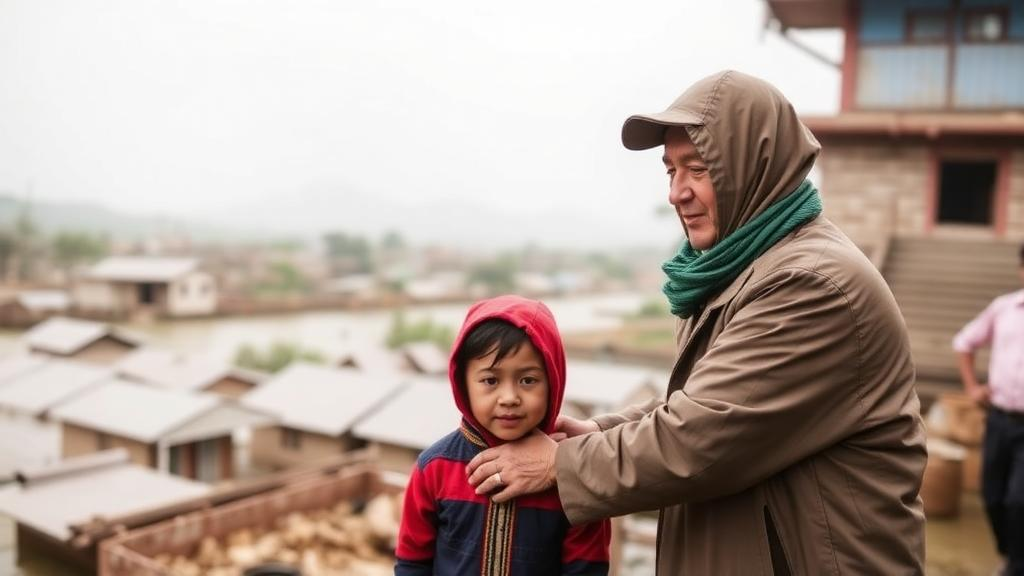
When a massive flash flood tore through communities in Nepal and Tibet on August 26, it washed away homes, schools and entire neighborhoods, leaving thousands of families with nothing. In the days that followed, a group of physician researchers at Johns Hopkins Medicine made a decision that reflects an increasingly important truth about global health work: the infrastructure built to fight a single disease can become a lifeline when disaster strikes. The investigators, who have spent the past decade leading an international initiative called Zero TB in Kids, are now channeling the program’s logistics, community relationships and donor networks into an emergency relief fundraiser for the children and families hit hardest by the flood.
The fundraiser, hosted through Johns Hopkins Medicine’s Aspire giving platform, is asking for donations that will be converted directly into basic necessities: medical supplies, blankets, tents, warm clothes, food and heaters. These are not abstract aid categories. In the high-altitude Himalayan regions affected by the flood, nights turn cold quickly, and families who lost everything in a matter of hours face immediate exposure risks on top of hunger and displacement. The relief effort is aimed first at children, who are the most vulnerable to both the elements and the infectious disease outbreaks that almost invariably follow natural disasters.
Their homes are gone, food is scarce and children are hungry, says Kunchok Dorjee, M.D., Ph.D., M.P.H., assistant professor of medicine and international health at the Johns Hopkins University School of Medicine. Diseases will surge. We want to do everything we can to prevent this. Dorjee’s warning is grounded in epidemiological reality rather than rhetoric. Floods contaminate water supplies, destroy sanitation systems, crowd displaced people into temporary shelters and interrupt vaccination and treatment programs, creating ideal conditions for respiratory infections, diarrheal diseases and other communicable illnesses to spread rapidly through weakened populations.
Dorjee’s personal connection to the region runs deep. In a video message accompanying the fundraiser, he explains that he grew up in the Himalayas and saw poverty firsthand, an experience that shaped a medical and research career devoted to serving communities that global health systems often overlook. That biography matters for the relief effort in practical terms. Emergency aid frequently fails not because supplies are unavailable but because outsiders lack the trust, language skills and local knowledge to deliver them where they are needed. The Zero TB in Kids team has spent years building exactly those connections.
The Zero TB in Kids program, a Johns Hopkins University global health initiative, was founded with an ambitious goal: to eliminate tuberculosis in the places where it is most common. Over the past decade, the program’s physician researchers have screened more than 30,000 refugee children, teenagers and close household contacts living in South Asia for tuberculosis infection, and they have provided treatment to everyone who tested positive. That combination of active case finding, community engagement and sustained follow-up produced a striking result: an 83 percent reduction in tuberculosis among Tibetan refugee children living in India. It is precisely this screening-and-treatment machinery, along with the trained personnel and community trust behind it, that the researchers now intend to repurpose for flood recovery.
Understanding why that machinery matters requires understanding the disease itself. Tuberculosis is caused by the bacterium Mycobacterium tuberculosis, which spreads through direct exposure to respiratory droplets released when an infected person coughs, sneezes, speaks or laughs. In many cases, people who are infected never develop symptoms, a state known as latent infection, or their symptoms may emerge years after the initial exposure. The disease primarily attacks the lungs but can also affect the kidneys, spine and brain. Diagnosis currently relies on a skin test performed on the forearm or a blood test, while active infections are confirmed when characteristic symptoms appear alongside findings on a chest X-ray. Those symptoms can include a chronic cough, chest pain and fatigue.
The scale of the global tuberculosis burden remains enormous. According to 2024 estimates from the World Bank, more than 10 million people worldwide were living with tuberculosis disease, the term used to describe an active infection rather than latent carriage. That figure translates to an average of 131 cases for every 100,000 people globally. The contrast between regions is stark. In the United States, the incidence was just 3 cases per 100,000 people. In Nepal, it was 227 per 100,000, a rate that exceeds the 185 per 100,000 average for regions officially designated as carrying a high burden of the disease. For children displaced by a flood and crowded into temporary shelters, that baseline risk becomes an acute danger.
Treatment for tuberculosis, whether for latent or active infections, relies on antibiotics, and the course can span anywhere from a few months to a year or longer. That duration is a critical vulnerability in disaster settings. When patients are displaced, when clinics are destroyed or when health workers are diverted to emergency response, treatment regimens are interrupted, and incomplete treatment drives both relapse and drug resistance. Vaccines are often provided in infancy in many parts of the world, offering some protection, but the cornerstone of control remains early detection and completed treatment. Without early intervention, permanent lung damage can occur in people with active infections, and untreated individuals continue to transmit the bacterium to those around them, including the children the relief effort is designed to protect.
The flood relief effort will draw on more than the team’s tuberculosis work. The Zero TB researchers have also been studying how to treat dengue fever, a mosquito-borne viral disease, in Nepal’s Chitwan district, where rescue operations have been underway along the banks of the Narayani River. Their broader portfolio in the region includes a Nepal-based prevention program for stomach cancer, which is the leading cause of death in Tibet, and a Smart Kids Initiative that supports the education of children in these communities. Each of these programs represents a web of local staff, health workers, educators and families that can be activated in a crisis.
We will leverage these programs to provide support to people affected by this flood, Dorjee says. The road to recovery is difficult. We want to provide a smoother path to support the basic needs of this community and their long-term health outcomes. That long-term framing distinguishes this effort from one-time disaster charity. Beyond the immediate delivery of blankets, food, tents and heaters, the fundraiser is designed to fund sustained recovery: screening and treatment for the infectious diseases that Dorjee expects to surge in the flood’s aftermath, educational support for children whose schools were destroyed, and other assistance for families working to rebuild. It is a model of disaster response built on a decade of public health research, one that treats a community’s health infrastructure, once established, as something worth defending even when the emergency that threatens it is water rather than a microbe.
Subject of Research: Repurposing a pediatric tuberculosis elimination program's infrastructure for flood disaster relief and infectious disease prevention in Nepal and Tibet
Article Title: Fundraiser supports children affected by flooding in Nepal and Tibet
Article References: Fundraiser supports children affected by flooding in Nepal and Tibet. (n.d.). Original publication
Image Credits: AI Generated
DOI: Not provided
Keywords: Zero TB in Kids, Johns Hopkins Medicine, tuberculosis, Nepal, Tibet, flash flood, disaster relief, pediatric health, global health, infectious disease, Kunchok Dorjee, humanitarian aid
Cite Scienmag News
Violet Maxwell. (October 13, 2026). Tuberculosis Researchers Turn Their Network Into Flood Relief for Children in Nepal and Tibet. Scienmag. https://scienmag.com/tuberculosis-researchers-turn-their-network-into-flood-relief-for-children-in-nepal-and-tibet/
Violet Maxwell. "Tuberculosis Researchers Turn Their Network Into Flood Relief for Children in Nepal and Tibet." Scienmag, 13 October 2026, https://scienmag.com/tuberculosis-researchers-turn-their-network-into-flood-relief-for-children-in-nepal-and-tibet/. Accessed 13 October 2026.
Violet Maxwell. "Tuberculosis Researchers Turn Their Network Into Flood Relief for Children in Nepal and Tibet." Scienmag. October 13, 2026. https://scienmag.com/tuberculosis-researchers-turn-their-network-into-flood-relief-for-children-in-nepal-and-tibet/


