


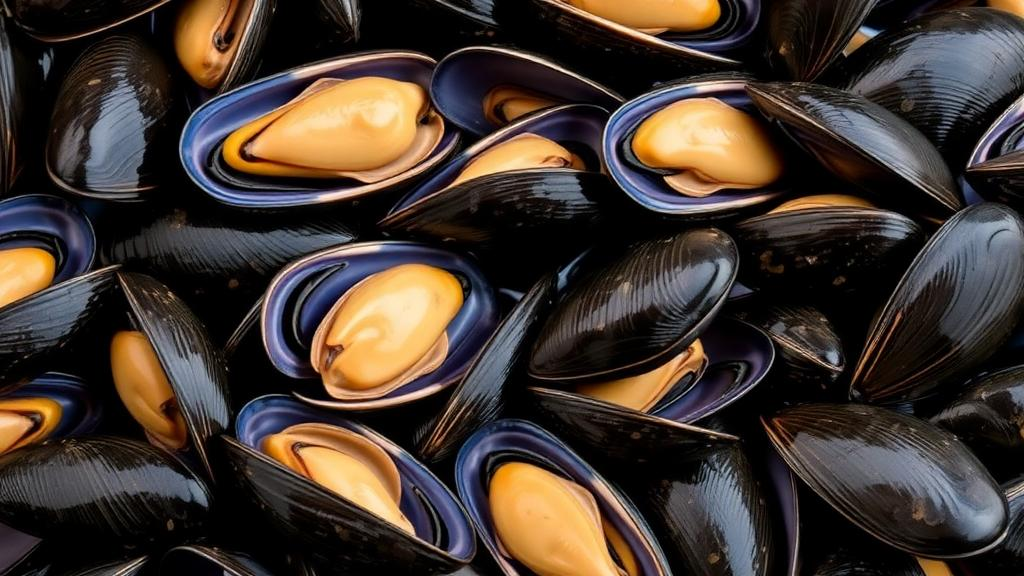
Mussels have long been prized as one of the ocean’s most generous gifts to the dinner table, but they also serve a second, less appetizing role: they are living recording devices for everything that washes into the sea. Because these bivalve molluscs feed by filtering enormous volumes of water, they accumulate bacteria, heavy metals, and algal toxins in their tissues, making them ideal sentinels for coastal pollution. Now, a team of Portuguese and Italian researchers has mined more than a decade of official monitoring records to ask a deceptively simple question: how safe have Portugal’s harvested mussels actually been, and what do their contaminant profiles reveal about the health of the coastal waters they came from? The answer, published in the journal Environmental Monitoring and Assessment, is a story of two very different threats, one seasonal, one microbial, and both increasingly shaped by the weather.
The study, led by Raffaele Guastella and Joana C. Prata, drew on publicly available records from Portugal’s official control program for bivalve molluscs, covering the period from 2013 to 2025. Rather than collecting new samples, the researchers performed a historical analysis, re-examining the surveillance data that regulators already gather to classify harvesting areas and decide when shellfish beds can be opened or must be closed. This approach allowed the team to detect seasonal and spatial trends that are invisible in any single year of monitoring. Mussels of the genus Mytilus, primarily the Mediterranean mussel Mytilus galloprovincialis, dominate Portuguese production, and the monitoring data spanned estuaries, lagoons, and open coastal waters across the country’s northern, central, and southern regions.
The headline finding is, on balance, reassuring for consumers. Most of the harvested mussels complied with the strictest microbiological standard, known as Class A, in 75.5 percent of samples, meaning they could legally be sold for direct human consumption without prior depuration, the controlled purification process in which shellfish are held in clean water to purge contaminants. Heavy metals, a perennial worry in shellfish because elements such as cadmium, lead, and mercury bind to tissues and resist breakdown, breached regulatory limits only once across the entire dataset. In other words, the industrial and chemical contamination that dominated twentieth-century concerns about coastal seafood appears to be largely under control in Portuguese waters, a testament to decades of environmental regulation and improved wastewater treatment.
But the picture changes dramatically when the researchers turned to marine biotoxins. Toxins of the okadaic acid group, which cause diarrhetic shellfish poisoning in humans, exceeded legal limits in 19.5 percent of samples, nearly one in five. These compounds are not produced by the mussels themselves but by microscopic algae of the genus Dinophysis, which bloom in coastal waters and are concentrated by filter-feeding shellfish. Okadaic acid and its analogues inhibit protein phosphatases, enzymes essential for cellular regulation, and ingestion of contaminated shellfish causes severe gastrointestinal illness, including diarrhea, nausea, and vomiting. Although rarely fatal, diarrhetic shellfish poisoning is a significant public health burden and a persistent economic headache for the shellfish industry, because toxin-laden mussels must be withheld from market until the algae subside and the animals depurate the compounds.
The seasonal geography of contamination turned out to be strikingly divergent. Microbiological contamination, measured through the indicator bacterium Escherichia coli, peaked in winter and was most pronounced in estuaries and coastal lagoons, the semi-enclosed water bodies where freshwater runoff converges with the sea. Biotoxin exceedances, by contrast, peaked in summer and were most frequent in open coastal areas, where warm, stratified waters and nutrient dynamics favor the proliferation of toxic dinoflagellates. This seasonal split matters for regulators and producers alike: the two hazards respond to different environmental drivers, peak at different times of year, and therefore demand different monitoring strategies rather than a one-size-fits-all surveillance calendar.
Geography told a parallel story. Both microbiological failures and biotoxin exceedances occurred most often in Portugal’s North and Center regions, a pattern the researchers attribute largely to rainfall-related inputs. Heavy rain flushes fecal microorganisms from agricultural land, urban drainage, and inadequate sewage systems into rivers and estuaries, delivering E. coli and other microbes directly to the shellfish beds. The same hydrological pulses also carry nutrients that can fuel algal growth, linking the two contamination pathways to a shared meteorological trigger. Similar associations between rainfall and E. coli levels in bivalves have been documented elsewhere in Europe, including Sardinia, reinforcing the conclusion that land-based runoff is a dominant driver of shellfish microbiological quality.
Here the study acquires an urgent contemporary relevance. Climate projections for the Iberian Peninsula, including the Portuguese RNA2100 climate assessment cited by the authors, anticipate more frequent and more intense extreme weather events, including torrential rainfall episodes punctuating prolonged droughts. Each such event can deliver a concentrated pulse of contaminants to coastal waters, overwhelming treatment infrastructure and triggering both bacterial spikes and, in the aftermath, nutrient-driven algal blooms. The researchers warn that the contamination patterns documented over the past decade may intensify under these changing conditions, meaning that today’s monitoring baselines could understate tomorrow’s risk. Drought and wildfire, too, have been linked to shifts in diarrhetic shellfish toxin trends in northwestern Portugal, suggesting that the full cascade of climate impacts on shellfish safety is only beginning to come into focus.
One of the study’s most important conceptual contributions is its reframing of what harvesting restrictions actually mean. When regulators close a shellfish bed because of E. coli or biotoxin exceedances, the closure is a food safety measure, but the researchers argue it should also be read as an ecosystem health signal. A mussel bed contaminated with fecal bacteria is a watershed with a waste management problem; a bed laden with okadaic acid is a coastal zone experiencing harmful algal blooms, often a symptom of eutrophication and shifting ocean conditions. In this sense, the humble mussel functions as an integrated biological sensor, and the official monitoring program, designed primarily to protect consumers, doubles as an unintentional but remarkably comprehensive survey of coastal environmental quality.
The authors call for strengthened monitoring and mitigation measures to safeguard both ecosystem integrity and public health. Practical implications include sharpened surveillance during winter rainfall events in estuarine production areas of the North and Center, enhanced summer monitoring for Dinophysis toxins along the coast, and investment in the upstream infrastructure, from wastewater treatment to agricultural runoff management, that determines what reaches the shellfish beds in the first place. Advances in forecasting toxic harmful algae for the northeast Atlantic, an active research frontier, could eventually give producers advance warning of bloom events, while continued reliance on mussels as sentinel organisms ensures that the biological record of coastal contamination keeps accumulating. For now, Portuguese consumers can take genuine comfort in the findings: the mussels on their plates have, overwhelmingly, been safe. But the same data that certify that safety are quietly chronicling a changing coastline, one filtered mouthful of seawater at a time, and the decade ahead will test whether monitoring programs can evolve as fast as the climate that increasingly drives the risk.
Subject of Research: Historical analysis of microbiological, metal, and marine biotoxin contamination in harvested mussels in Portugal
Article Title: Contamination of mussels with microorganisms, metals, and biotoxins: a historical analysis from Portugal
Article References: Guastella, R., Nuvoloni, R., Teixeira, A., Pérez-Mongiovi, D., Freitas, A. R., & Prata, J. C. (2026). Contamination of mussels with microorganisms, metals, and biotoxins: a historical analysis from Portugal. Environmental Monitoring and Assessment, 198(10), Article 1072. https://doi.org/10.1007/s10661-026-15890-1
Image Credits: AI Generated
DOI: 10.1007/s10661-026-15890-1
Keywords: mussels, Mytilus galloprovincialis, marine biotoxins, okadaic acid, Escherichia coli, heavy metals, shellfish safety, harmful algal blooms, Portugal, coastal monitoring, climate change, food safety
Cite Scienmag News
Violet Maxwell. (October 11, 2026). Portuguese Mussels Reveal a Decade of Hidden Contamination Patterns. Scienmag. https://scienmag.com/portuguese-mussels-reveal-a-decade-of-hidden-contamination-patterns/
Violet Maxwell. "Portuguese Mussels Reveal a Decade of Hidden Contamination Patterns." Scienmag, 11 October 2026, https://scienmag.com/portuguese-mussels-reveal-a-decade-of-hidden-contamination-patterns/. Accessed 11 October 2026.
Violet Maxwell. "Portuguese Mussels Reveal a Decade of Hidden Contamination Patterns." Scienmag. October 11, 2026. https://scienmag.com/portuguese-mussels-reveal-a-decade-of-hidden-contamination-patterns/


