


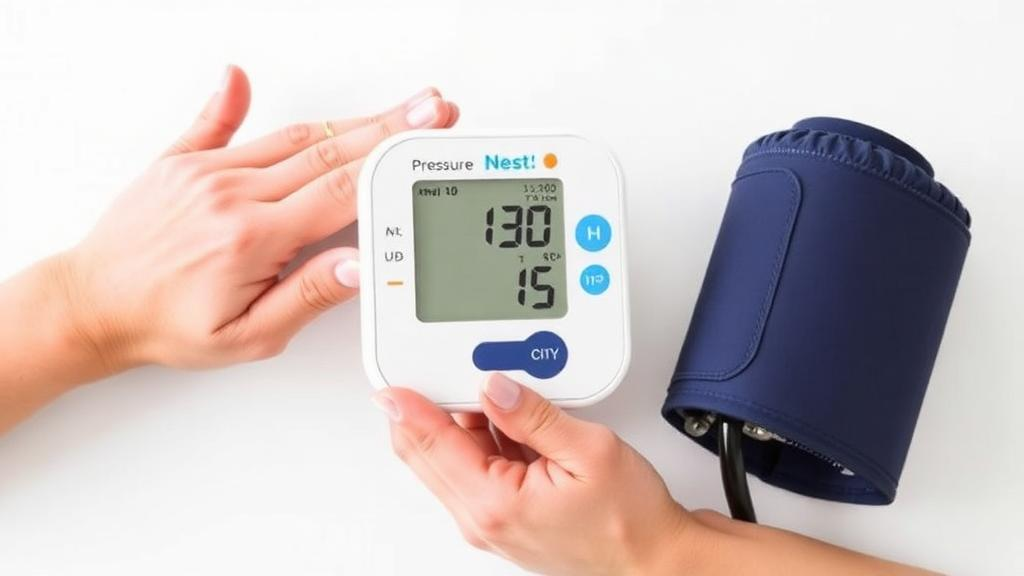
Hypertension is often called the silent killer for good reason: it damages the heart, brain, kidneys, and eyes for years before it announces itself with a symptom. Self-measured blood pressure monitoring, in which patients check their own blood pressure at home with a validated cuff and share the readings with their care team, has repeatedly been shown to improve diagnosis and control of high blood pressure. Yet the practice remains stubbornly underused, especially in community health centers that care for patients facing language barriers, unstable work schedules, and limited digital access. A new study published in BMC Health Services Research describes how researchers at the University of California, San Francisco, Alameda Health System, and UC Davis tackled this gap not by inventing new technology, but by asking the people who would actually use it.
The work is part of a larger pragmatic randomized trial called InSPIRED, short for Implementation Strategies for Self-Measured Blood Pressure Monitoring in Racially and Ethnically Diverse Populations. The trial registered as NCT06871462 spans six community health centers within two safety-net healthcare systems, the San Francisco Health Network and Alameda Health System. Before any intervention could be tested, the team needed to understand precisely where the process of home blood pressure monitoring breaks down, both for patients who are asked to measure themselves and for clinicians who are asked to prescribe, train, and document. Their answer was to borrow methods from human-centered design, the same iterative, empathy-driven approach that technology companies use to build products around real user behavior.
The patient-facing side of the research was extensive. The investigators conducted nine focus groups and eighteen individual interviews in English, Spanish, and Chinese, reaching a total of sixty patients. This multilingual design mattered: safety-net populations include large numbers of patients whose primary language is not English, and implementation strategies built only around English-language materials routinely fail them. The interviews probed three domains: the challenges patients face when trying to engage with home blood pressure monitoring, their preferences for training and hypertension education, and their attitudes toward involving peers, family members, or friends in their hypertension care.
The findings on training were strikingly consistent. Patients said they preferred in-person, language-concordant instruction on how to perform self-measured blood pressure monitoring and how to use mobile health applications that support it. A single demonstration at the pharmacy counter or a printed leaflet was not enough. Patients wanted ongoing access to training resources, such as videos they could revisit whenever they forgot a step or a family member needed to learn the technique. This preference for refreshable, on-demand education reflects a well-known problem in digital health: initial training decays quickly, and without reinforcement, correct technique, including proper cuff placement, resting posture, and timing of measurements, drifts within weeks.
Perhaps the most socially interesting result concerned peer support. Patients expressed genuine enthusiasm for joining virtual or in-person support groups focused on hypertension, provided the groups were led by trained research staff and used vetted discussion content. The idea of harnessing community for a chronic condition that is otherwise managed alone at home resonated with participants. But when it came to family and friends, patients drew a clear boundary. Most preferred low-touch approaches that would not burden their loved ones, such as giving family members access to the same educational materials the patients received, rather than asking relatives to take on active caregiving tasks like tracking readings or managing medications. The distinction is subtle but important for intervention designers: patients want their social networks informed, not conscripted.
On the clinic side, the researchers convened seven focus groups with sixty-two clinicians to map the obstacles that arise across the entire self-measured blood pressure workflow. The list was long and revealing. Clinicians described the absence of standardized workflows for educating patients about home monitoring, uncertainty about how to confirm that a patient’s home device is clinically validated and fitted with the correct cuff size, difficulty training patients on measurement technique within the constraints of a brief visit, and inconsistent documentation of monitoring plans in the electronic health record. Each of these friction points may seem minor in isolation, but together they form a gauntlet that a home monitoring program must survive, and in busy, under-resourced clinics, the path of least resistance is often simply not to start.
Device validation deserves particular attention because it is a technical detail with real clinical consequences. Blood pressure monitors sold for home use vary enormously in accuracy, and inaccurate devices produce readings that can lead to misdiagnosis or inappropriate treatment. Clinicians in the focus groups flagged that confirming validation and appropriate cuff size, which differs by arm circumference, was a recurring and poorly supported task. Any implementation strategy that ignores this step risks building a monitoring program on unreliable data.
Having gathered this evidence, the team prioritized pragmatic, low-cost strategies built around two pillars. The first was training care teams and clinical champions, embedding expertise within each clinic so that knowledge about validated devices, proper technique, and patient education does not depend on a single enthusiastic individual. The second was a suite of electronic health record tools designed to smooth the clinical workflow. These included reminders that surface the core teaching content for self-measured blood pressure monitoring and instructions for validating home monitors, standardized documentation templates known as smartphrases that let clinicians record monitoring plans quickly and consistently, and patient-facing instructions in the patient’s own language that clinicians can print or send with minimal effort.
The elegance of the approach lies in its economy. Rather than proposing expensive new platforms or additional staffing that safety-net systems cannot sustain, the co-design process surfaced interventions that piggyback on infrastructure already in place: the electronic health record that clinicians already use, the educational materials that can be produced once and reused indefinitely, and the social networks that patients already trust. Human-centered design served as the filter that separated plausible-on-paper strategies from ones that patients and clinicians said they would actually adopt, and the multilingual engagement ensured the resulting tools would work for the diverse populations these centers serve.
The study, funded by the Agency for Healthcare Research and Quality with additional support from the National Institutes of Health, offers a template that extends beyond blood pressure. As remote monitoring expands to diabetes, heart failure, and pregnancy-related hypertension, the same implementation challenges will recur: who trains the patient, how the technique is verified, how the data flows into the record, and how the plan is communicated. The InSPIRED team’s answer, co-design with patients and clinicians in their own languages before building anything, is a deceptively simple prescription. Whether the co-designed strategies ultimately raise blood pressure control rates will be answered by the ongoing randomized trial, but the study already demonstrates that the people closest to the problem can articulate solutions that experts might never imagine, from peer support groups with vetted content to the quiet insistence that family should be informed but not burdened.
Subject of Research: Co-designed implementation strategies for self-measured blood pressure monitoring in community health centers
Article Title: Co-Designing Pragmatic implementation strategies to improve adoption of self-measured blood pressure monitoring by patients and clinicians in community health centers
Article References: Kim, H. C., Li, J., Garcia, F., Larreynaga, J., Luna, I., Mejia-Lopez, A., Yang, A., Curtis, N. C., Lyles, C. R., Sarkar, U., & Khoong, E. C. (2026). Co-Designing Pragmatic implementation strategies to improve adoption of self-measured blood pressure monitoring by patients and clinicians in community health centers. BMC Health Services Research. https://doi.org/10.1186/s12913-026-15825-z
Image Credits: AI Generated
DOI: 10.1186/s12913-026-15825-z
Keywords: hypertension, self-measured blood pressure, community health centers, human-centered design, implementation science, electronic health records, health equity, patient education, digital health, safety-net care, pragmatic clinical trial, remote monitoring
Cite Scienmag News
Ophelia Keating. (October 11, 2026). Patients and Clinicians Help Design a Simpler Way to Monitor Blood Pressure at Home. Scienmag. https://scienmag.com/patients-and-clinicians-help-design-a-simpler-way-to-monitor-blood-pressure-at-home/
Ophelia Keating. "Patients and Clinicians Help Design a Simpler Way to Monitor Blood Pressure at Home." Scienmag, 11 October 2026, https://scienmag.com/patients-and-clinicians-help-design-a-simpler-way-to-monitor-blood-pressure-at-home/. Accessed 11 October 2026.
Ophelia Keating. "Patients and Clinicians Help Design a Simpler Way to Monitor Blood Pressure at Home." Scienmag. October 11, 2026. https://scienmag.com/patients-and-clinicians-help-design-a-simpler-way-to-monitor-blood-pressure-at-home/


