


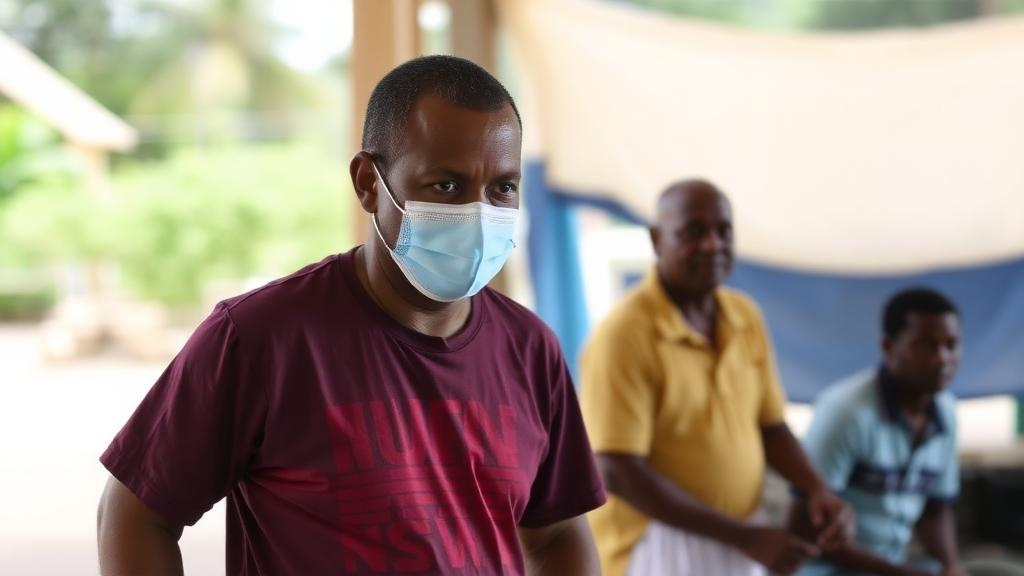
In the southern reaches of Belize, where the Toledo district meets the Caribbean coast and the foothills of the Maya Mountains, researchers have quietly gathered evidence of a health crisis that rarely makes headlines. A new screening study published in PLOS Global Public Health reveals that nearly one in three men tested in this remote region carried dangerously elevated blood pressure, while a troubling fraction showed blood sugar levels high enough to raise immediate concern about diabetes. The findings arrive at a moment when Belize, like many small nations in Latin America and the Caribbean, finds itself struggling against an enemy that no longer comes from infectious disease but from the slow, silent accumulation of chronic illness.
The numbers that motivated the study are stark. Belizean men suffer 275 cardiac deaths and 60 diabetes-related deaths per 100,000 people each year, figures that rank among the highest in the entire Americas, placing the country third and fifth respectively in those grim tallies. The prevalence of raised fasting glucose in Belizean men stands at 8.5 percent, the third highest in the hemisphere, while roughly one in five Belizean men lives with elevated blood pressure. These statistics reflect a completed epidemiological transition: Belize has largely moved beyond the era in which infectious diseases dominated its burden of disease, and chronic, noncommunicable conditions now shape the health of its population. Yet progress toward Sustainable Development Goal 3, the United Nations’ pledge of good health and wellbeing for all, has slowed in recent years, and men have fallen conspicuously behind.
To understand how these national numbers translate to lived experience in one of Belize’s most underserved regions, researchers John Rovers and Matthew Nicasio designed a community-based screening effort targeting men specifically. The Toledo district, home to a mosaic of Maya, Garifuna, Mestizo, and Creole communities, is among the country’s least developed, and men there often have limited routine contact with the health system. Rather than waiting for patients to appear in clinics, the study team brought the clinic to them, visiting two local villages and setting up four health fairs in the town square of Punta Gorda, the district’s modest capital.
The approach was elegantly simple. At each location, men were invited to have both their blood pressure and their blood sugar checked on the spot. Over the course of the campaign, data were collected from 103 men, a modest sample by the standards of large epidemiological surveys but a meaningful one in a setting where reaching men at all represents a considerable logistical and social achievement. Each measurement offered a snapshot of health status that many of the participants may never have otherwise obtained, since routine screening for chronic disease remains uncommon for men in the district.
The results painted a sobering picture. Systolic blood pressure readings of 140 mm/Hg or higher, the clinical threshold at which hypertension is typically diagnosed, were found in 32 of the 103 men screened, or 31.1 percent. Diastolic pressures of 90 mm/Hg or above appeared in 26 men, representing 25.2 percent of the sample. Elevated diastolic pressure, in particular, signals that the arteries remain under sustained tension even between heartbeats, a condition that over time damages blood vessels throughout the body and sharply raises the risk of stroke, heart attack, and kidney disease.
Blood sugar told a parallel story. Eight men, 7.8 percent of those screened, had random blood glucose readings of 200 mg/dl or higher, a level that merits further evaluation to rule out diabetes. Unlike fasting glucose tests, which require preparation, random glucose measurements can be taken at any time, and values exceeding 200 mg/dl are strongly suggestive of disordered glucose metabolism. Taken together with the blood pressure findings, the data suggest that hypertension and diabetes are common among men in the Toledo District and, critically, that neither condition is well controlled in most of the men affected.
One of the study’s most technically revealing observations involved the men who were already receiving treatment. Among participants taking antihypertensive or antiglycemic medication, both blood pressure and blood sugar measurements were statistically higher than among the rest of the sample. This counterintuitive finding does not mean that medications are failing in principle; rather, it suggests that even men who have entered the treatment pipeline are not achieving adequate control of their conditions. Whether the problem lies in dosing, adherence, access to follow-up care, or the interruption of treatment, the implication is clear: diagnosing chronic disease is only the first step, and the steps that follow are where the system is faltering.
The researchers traced many of these failures to the social determinants of health, the economic and social conditions that shape whether people can actually act on medical knowledge. In a district where poverty rates are high, transportation to clinics can be difficult, and work schedules in farming or fishing rarely accommodate medical appointments, the barriers to controlling a chronic condition extend far beyond the pharmacy counter. Facilitators of good care, when they exist, tend to arise from the same social fabric, such as community relationships and local health workers who can bridge the distance between villages and formal services.
Equally important, the study emphasizes that men’s beliefs about health and healthcare are often distinctly gendered. In many Caribbean and Central American communities, masculinity norms discourage men from seeking care until symptoms become severe, frame clinics as female spaces, and valorize toughness at the expense of prevention. Such patterns help explain why Belizean men’s cardiovascular mortality outpaces that of women so dramatically, and why screening events in public squares, where health checks become social occasions rather than clinical ordeals, may succeed where conventional outreach fails. The men screened in Punta Gorda’s town square were not necessarily more health-conscious than their peers, but the setting lowered the social cost of participation.
The lesson the researchers draw is that interventions designed to improve care in southern Belize should sharpen their focus in two directions at once: toward the social determinants of health that constrain what individual patients can do, and toward the gender-specific beliefs and preferences that determine whether men engage with care at all. Screening programs like this one can identify people in need, but identification alone will not bend the curves of cardiac and diabetes mortality that currently place Belize among the worst-affected nations in the Americas. What happens after the numbers are measured, whether treatment is sustained, whether follow-up is possible, whether men return, will decide whether the 103 men counted in this study become the beginning of a trend or simply another data point in a widening epidemic.
Subject of Research: Community-based screening for hypertension and elevated blood glucose among men in the Toledo district of southern Belize
Article Title: Screening men in the Toledo district of southern Belize for elevated blood pressure and blood sugar
Article References: Rovers, J., & Nicasio, M. (2026). Screening men in the Toledo district of southern Belize for elevated blood pressure and blood sugar. PLOS Global Public Health, 6(10), e0007380. https://doi.org/10.1371/journal.pgph.0007380
Image Credits: AI Generated
DOI: 10.1371/journal.pgph.0007380
Keywords: Belize, Toledo district, hypertension, diabetes, blood pressure screening, blood glucose, men's health, noncommunicable diseases, Punta Gorda, social determinants of health, global public health, cardiovascular mortality
Cite Scienmag News
Kristina Jarvis. (October 11, 2026). In Southern Belize, Simple Screenings Reveal a Silent Epidemic Among Men. Scienmag. https://scienmag.com/in-southern-belize-simple-screenings-reveal-a-silent-epidemic-among-men/
Kristina Jarvis. "In Southern Belize, Simple Screenings Reveal a Silent Epidemic Among Men." Scienmag, 11 October 2026, https://scienmag.com/in-southern-belize-simple-screenings-reveal-a-silent-epidemic-among-men/. Accessed 11 October 2026.
Kristina Jarvis. "In Southern Belize, Simple Screenings Reveal a Silent Epidemic Among Men." Scienmag. October 11, 2026. https://scienmag.com/in-southern-belize-simple-screenings-reveal-a-silent-epidemic-among-men/


