


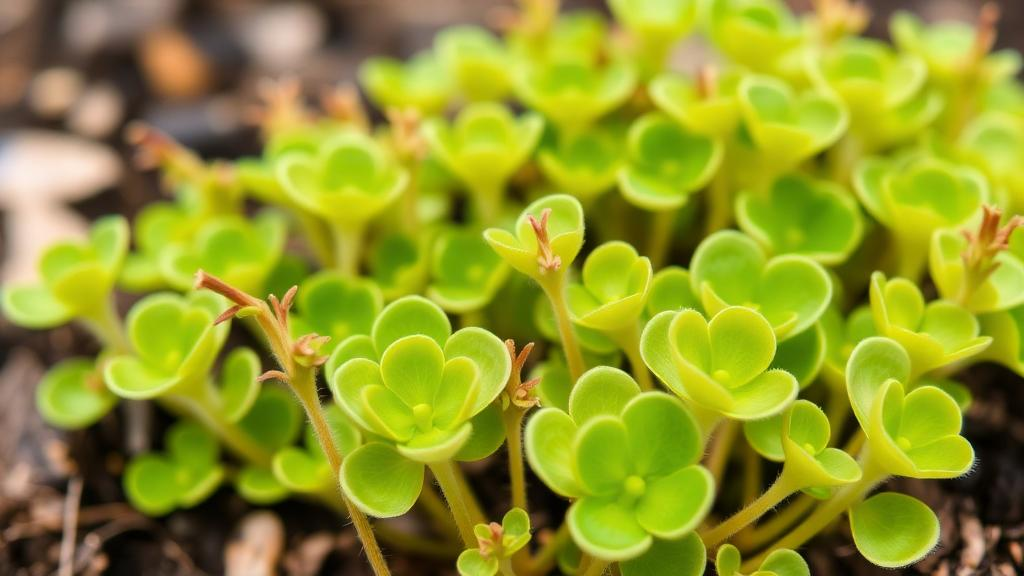
A humble weed with tiny white flowers is quietly teaching scientists how invasive species manage to colonize enormous stretches of climate in just a few decades. Hairy bittercress, Cardamine hirsuta, first appeared in Japan in 1974 and has since spread from the subtropical south to the cool north of the archipelago. A new genomic study, published in Ecology and Evolution, reveals that this rapid conquest was not the work of a single, universally adaptable lineage. Instead, the invader arrived as a patchwork of genetically distinct clusters, each with its own climatic preferences, and one remarkably versatile group that seems comfortable almost anywhere.
The research team, led by Bo O. Zhang and Kouki Hikosaka and their colleagues, set out to solve a puzzle that has long fascinated invasion biologists: how does a plant that arrived only about fifty years ago manage to thrive across a mean annual temperature gradient spanning roughly minus three degrees Celsius to eighteen degrees Celsius? Many plant species are tightly restricted by climate. Some alpine herbs live only where mean annual temperatures hover between zero and three degrees, while tropical trees demand warmth above twenty-three degrees. Even within species that occupy wide ranges, populations often differentiate genetically along environmental gradients, as famously documented in the model plant Arabidopsis thaliana.
To test how hairy bittercress pulled off its expansion, the researchers formulated three competing hypotheses. The first proposed that a single genetic cluster might simply tolerate a broad range of environmental conditions. The second suggested that different genetic clusters, each adapted to different climates, divide the temperature gradient between them. The third proposed that admixed individuals, carrying mixed ancestry from different clusters, might occupy intermediate environments that neither parental cluster could handle. Distinguishing among these scenarios required high-resolution genetic data, which the team obtained using restriction-site associated DNA sequencing, a technique that samples thousands of genome-wide loci at relatively low cost.
The sampling effort was ambitious. Seeds were collected from twenty sites along two latitudinal transects in eastern Japan, one on the Pacific side and one on the Sea of Japan side, stretching from Fujieda in the south to Arito in the north. Additional samples came from Kagoshima and Hakodate, and reference material was gathered from the Netherlands, the United States, and the native range in Europe. In total, 82 individual plants contributed to the analysis. After sequencing, the team obtained more than 282 million reads, of which 98.7 percent mapped successfully to the C. hirsuta reference genome, and a final filtered set of 251 SNPs was retained for population genetic analyses.
The clustering analysis, performed with the software ADMIXTURE, delivered a clear verdict: the lowest cross-validation error occurred at four genetic clusters, not the three previously identified with lower-resolution microsatellite markers. Three of these clusters occur in Japan. Cluster 1 is concentrated in the warmer southern regions of eastern Japan, Cluster 3 dominates the cooler north, and Cluster 2 spreads broadly across the archipelago. Cluster 4 contains nearly all the overseas samples from the Netherlands and the United States, plus just two Japanese individuals from Hakodate and Joboji. A principal component analysis confirmed the same structure, with admixed individuals falling in intermediate positions between the clusters.
Genetic diversity statistics added an intriguing layer to the story. Cluster 2, the group with the broadest geographic reach, also showed the highest nucleotide diversity and expected heterozygosity, while Cluster 1, confined to warmer regions, showed the lowest. Genetic differentiation among clusters was modest, with the lowest pairwise FST value, about 0.072, between Clusters 2 and 3, and the highest, about 0.151, between Clusters 1 and 4. The relatively low differentiation, combined with the presence of fourteen admixed individuals, suggests the clusters are not completely isolated and that genetic mixing is ongoing or recent, a plausible scenario for a self-pollinating winter annual in which generations turn over quickly.
To connect genetics with climate, the team built species distribution models using the MaxEnt algorithm, drawing on WorldClim temperature, precipitation, solar radiation, wind speed, and water vapor data from 1970 to 2000. Because hairy bittercress germinates in September and dies by June, the summer months were excluded from the models. The results showed that each Japanese cluster is associated with a distinct climatic signature. Cluster 1’s distribution is linked primarily to solar radiation in January and maximum temperatures in April, while Cluster 3’s is driven by September precipitation and minimum February temperatures. Cluster 2’s distribution depends on four factors, including September maximum temperature, which alone contributed 54 percent of the model’s explanatory power.
When the researchers plotted predicted occurrence probability against mean annual temperature across the whole of Japan, a striking pattern emerged. Cluster 3 showed higher probabilities in cooler regions, Cluster 1 in warmer ones, and Cluster 2 maintained a broad plateau of suitability across much of the gradient. Crucially, the modeled distributions of the three clusters overlapped broadly, and no obvious gap appeared where all three showed low occurrence probability. This finding undercut the third hypothesis: admixed individuals were not filling climatic no-man’s-lands between clusters. Instead, they were found precisely where the distributions of multiple clusters overlap, suggesting that mixed-ancestry plants arise where different genetic lineages meet rather than colonizing novel territory.
The study also resolved a discrepancy with earlier work. Previous microsatellite-based research had described three genetic groups in Japan, including a broad northern group. The higher resolution of RAD-seq revealed that this northern group actually consists of two distinct clusters, Clusters 2 and 3, which the older method could not separate. The fate of Cluster 4 in Japan remains an open question. The authors propose three possible explanations: it may be related to a large western Japanese population not sampled in this study, it may have once been more common in eastern Japan before being displaced, or it may have arrived recently and mixed with established clusters. Broader sampling from western Japan and the European native range will be needed to distinguish among these scenarios.
The authors are careful to note the limits of their conclusions. The species’ current distribution likely represents a non-equilibrium phase of invasion, with cluster boundaries still shifting, and the MaxEnt models describe climatic associations rather than demonstrating physiological tolerance directly. Whether Cluster 2’s broad success reflects genuine adaptation, phenotypic plasticity, or other ecological mechanisms requires experimental testing. Still, the practical implications are clear. Genetic clusters with contrasting climatic associations may differ in their potential for further spread, and incorporating intraspecific genetic structure into invasion assessments could improve the identification of vulnerable areas and sharpen monitoring efforts. For a weed that conquered a nation in fifty years, hairy bittercress has much left to teach about the genetics of biological invasion.
Subject of Research: Genetic structure and climatic distribution of the invasive plant Cardamine hirsuta along a temperature gradient in eastern Japan
Article Title: Genetic Structure Along Temperature Gradient in a Recent Invader Cardamine hirsuta in Eastern Japan
Article References: Zhang, B. O., Shen, Y., Ozaki, H., Yoshida, N., Morinaga, S.-I., Muller, O., & Hikosaka, K. (2026). Genetic Structure Along Temperature Gradient in a Recent Invader Cardamine hirsuta in Eastern Japan. Ecology and Evolution, 16(10), Article e74480. https://doi.org/10.1002/ece3.74480
Image Credits: AI Generated
DOI: 10.1002/ece3.74480
Keywords: Cardamine hirsuta, invasive species, population genetics, RAD-seq, species distribution models, temperature gradient, admixture, Japan, MaxEnt, genetic clusters, ecology, Brassicaceae
Cite Scienmag News
Juliet Wilcox. (October 10, 2026). Hairy Bittercress Conquers Japan’s Temperature Gradient With Four Genetic Clusters. Scienmag. https://scienmag.com/hairy-bittercress-conquers-japans-temperature-gradient-with-four-genetic-clusters/
Juliet Wilcox. "Hairy Bittercress Conquers Japan’s Temperature Gradient With Four Genetic Clusters." Scienmag, 10 October 2026, https://scienmag.com/hairy-bittercress-conquers-japans-temperature-gradient-with-four-genetic-clusters/. Accessed 10 October 2026.
Juliet Wilcox. "Hairy Bittercress Conquers Japan’s Temperature Gradient With Four Genetic Clusters." Scienmag. October 10, 2026. https://scienmag.com/hairy-bittercress-conquers-japans-temperature-gradient-with-four-genetic-clusters/


