


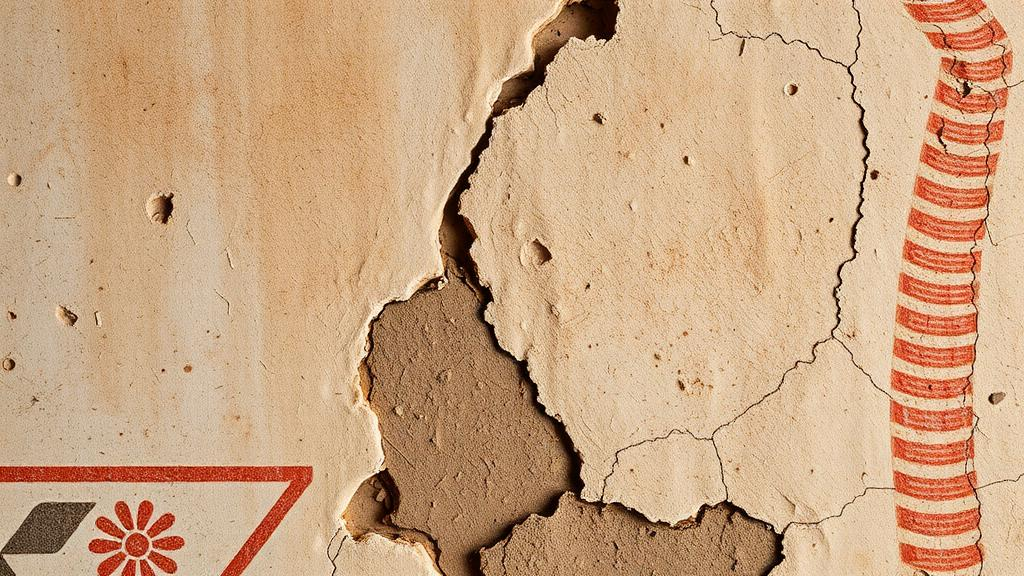
Ancient murals are among the most fragile witnesses to human history. Painted directly onto plaster walls in temples, tombs, caves, and palaces, they survive centuries of humidity, salt crystallization, temperature swings, and human contact. When conservators assess a mural’s condition, they must map every flake of pigment loss, every crack, and every patch of deterioration before deciding how to intervene. A new study published in npj Heritage Science presents an artificial intelligence system designed to make that mapping faster and more precise, and its central insight is as much about how neural networks learn as it is about what they look at.
The system, called MuHP-DLNet, was developed by Zhengchao Chang, Xianlin Peng, Jinye Peng, Shaohui Ma, Dong Liu, Dan Liu, and Moncef Gabbouj, a team spanning Northwest University and the Henan Institute of Technology in China, Henan Normal University, and Tampere University in Finland. Their work addresses a problem that has long frustrated automated heritage inspection: damage on murals is sparse, irregular, and visually entangled with the artwork itself. A crack in a painted drapery fold or a flake of lost pigment inside a textured cloud pattern is not a clean, isolated object sitting on a plain background. It is a small anomaly buried inside a richly decorated surface, which makes it extraordinarily hard for a segmentation network to separate damage from art.
This difficulty has a technical name: foreground imbalance. In a typical mural photograph, damaged pixels make up only a tiny fraction of the image, while intact painted surface dominates. Standard segmentation networks, which learn by minimizing errors across all pixels equally, are quickly overwhelmed by the intact majority. They drift toward predicting that nothing is damaged, because that safe guess produces low average error even though it misses exactly the information conservators need. The problem compounds at the boundaries of damaged regions, where irregular, jagged edges of flaking plaster resist the smooth contours that convolutional networks naturally prefer to draw.
MuHP-DLNet’s answer is a multi-stage architecture that splits the job in two. A coarse branch first performs global localization, scanning the whole image to identify roughly where damage is likely to occur. This stage acts like a conservator’s initial walkthrough of a hall: it does not trace every hairline crack, but it establishes which wall sections deserve close attention. A fine branch then takes over, performing detailed segmentation on the regions the coarse stage has flagged. This division of labor means the network does not have to simultaneously find damage and delineate it at pixel-level precision in a single pass, a combination that has historically forced compromises in accuracy.
Within the fine branch, three components work in concert. Edge enhancement sharpens the network’s sensitivity to the transitions between damaged and intact material, directly attacking the boundary segmentation problem. Transformer encoding then models long-range relationships across the image, allowing the network to reason about context that lies far from any given pixel. This matters because damage patterns are not random: deterioration often follows structural lines in the wall, and recognizing those global relationships helps the network distinguish a genuine crack from a painted line that merely looks like one. Finally, query-guided dynamic feature modulation lets the network adapt its internal feature processing to the specific characteristics of each damaged region, rather than applying a single rigid filter everywhere.
To fuse these two streams of information, the architecture includes cross-scale aggregation, which combines the global context captured by the coarse branch with the local details extracted by the fine branch. The goal is to improve mask coherence, meaning that the segmented damage regions come out as plausible, connected shapes rather than scattered fragments, and to sharpen boundary delineation so that the outline of each damaged area is traced accurately. For conservators, coherent masks matter enormously: a fragmented prediction forces manual cleanup, while a well-formed region map can feed directly into condition reports and restoration planning.
Perhaps the study’s most distinctive contribution lies not in the architecture but in the loss function, the mathematical signal that tells the network how wrong its predictions are during training. The team designed a damage-aware loss that combines weighted binary cross entropy with the Dice loss, a pairing common in medical image segmentation where small structures must be found in large images. The innovation is in how the weighting is computed: it uses the image’s damage ratio, the actual proportion of damaged pixels, together with the local structure of the annotations, so that the training signal adapts to each image’s specific condition. A mural that is nearly intact generates different weighting than one with extensive deterioration. Learnable normalized weights further balance the main supervision signal against auxiliary supervision from intermediate network stages, letting the training process discover the optimal emphasis on its own rather than relying on hand-tuned constants.
The experimental evaluation covered two mural datasets and three public benchmarks, where MuHP-DLNet demonstrated favorable overall performance against representative baseline methods. Just as importantly, the team ran controlled ablation studies, systematically removing individual components to measure each one’s contribution. These ablations identified complementary architectural contributions, confirming that the edge enhancement, Transformer encoding, dynamic modulation, and cross-scale aggregation each add distinct value. The ablation results also delivered a striking finding: the proposed damage-aware loss had the largest effect among all the evaluated components. In other words, teaching the network to weigh its mistakes intelligently mattered more than any single architectural refinement, a conclusion that resonates with a broader trend in computer vision toward smarter supervision rather than ever-larger models.
The practical implications extend across the heritage conservation workflow. Accurate damage maps are the foundation of condition assessment, prioritization of interventions, and monitoring of deterioration over time. When such maps can be produced automatically from ordinary photographs, conservators can survey large sites more frequently and consistently, tracking whether a crack is spreading or a flaking area is stabilizing. The method’s demonstrated ability to segment subtle damage within complex mural textures suggests it could handle the demanding visual conditions of real heritage sites, where painted ornamentation and deterioration often share colors, textures, and contours.
The work also fits into a rapidly growing research effort at the intersection of artificial intelligence and heritage science. Related recent publications in the same journal include a damage detection network based on multi-scale boundary and region feature fusion, an ancient mural classification model using shallow texture enhancement and cross-layer attention aggregation, and a mural inpainting approach built on a two-stage generative adversarial network. Together, these studies sketch a pipeline in which machine learning systems detect, classify, and even digitally repair deterioration. MuHP-DLNet’s contribution to that pipeline is a reminder that the hardest problems in automated heritage documentation are often not about seeing more, but about learning what to look for when the evidence is faint, irregular, and woven into the fabric of the artwork itself. The research was supported by the National Natural Science Foundation of China and the Key Technologies Research and Development Program of Henan Province, and the authors report no competing interests.
Subject of Research: Deep learning-based damage detection and segmentation in ancient mural conservation
Article Title: MuHP-DLNet: a multi-stage high-precision mural damage detection network with damage-aware dynamic loss
Article References: Chang, Z., Peng, X., Peng, J., Ma, S., Liu, D., Liu, D., & Gabbouj, M. (2026). MuHP-DLNet: a multi-stage high-precision mural damage detection network with damage-aware dynamic loss. npj Heritage Science. https://doi.org/10.1038/s40494-026-03016-2
Image Credits: AI Generated
DOI: 10.1038/s40494-026-03016-2
Keywords: ancient murals, deep learning, image segmentation, heritage science, damage detection, Transformer, loss function, computer vision, conservation, foreground imbalance, boundary delineation, npj Heritage Science
Cite Scienmag News
Blake Davidson. (October 10, 2026). AI Network Learns to Spot Faint Damage on Ancient Murals. Scienmag. https://scienmag.com/ai-network-learns-to-spot-faint-damage-on-ancient-murals/
Blake Davidson. "AI Network Learns to Spot Faint Damage on Ancient Murals." Scienmag, 10 October 2026, https://scienmag.com/ai-network-learns-to-spot-faint-damage-on-ancient-murals/. Accessed 10 October 2026.
Blake Davidson. "AI Network Learns to Spot Faint Damage on Ancient Murals." Scienmag. October 10, 2026. https://scienmag.com/ai-network-learns-to-spot-faint-damage-on-ancient-murals/


