


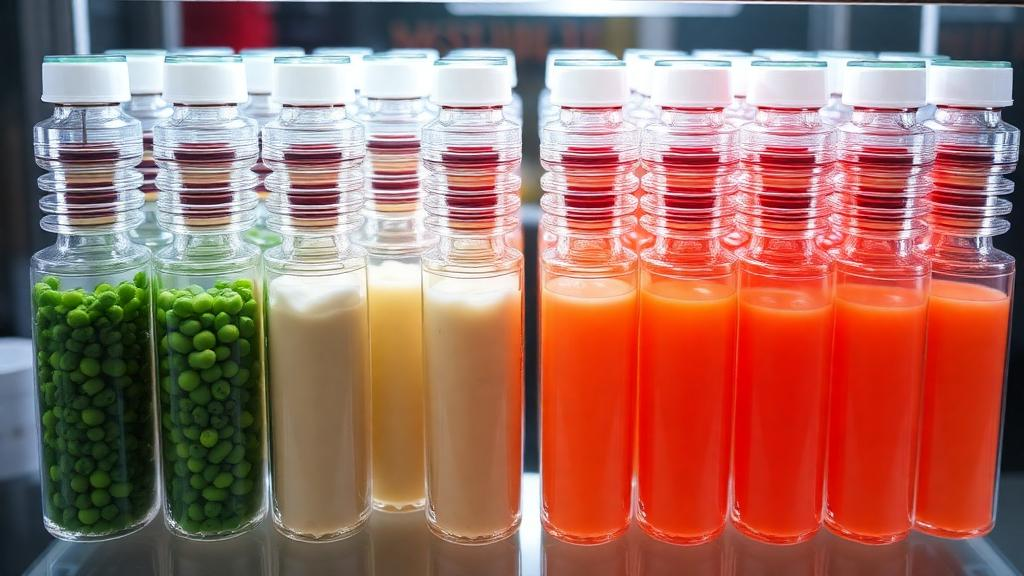
The human gut is one of the most densely populated microbial habitats on Earth, and understanding how its trillions of residents respond to diet has long required laboratory models that can faithfully mimic colonic conditions. A team of Danish and Irish researchers has now unveiled a new in vitro platform designed to make that task dramatically faster. Writing in Scientific Reports, Frederik Beck of Fermentationexperts AS and the University of Copenhagen, together with Lalitha D. Gottumukkala of Celignis Bioprocess, Ninfa Rangel Pedersen and Dennis Sandris Nielsen, introduce the HUGS protocol, short for High-throughput Universal Gut Simulator. The system allows 32 individual colonic fermentations to run simultaneously in a single 24-hour experiment, each with independent pH control under strictly anaerobic conditions, a combination of physiological relevance and scalability that the authors argue has been missing from existing colon simulation platforms.
In vitro gut models occupy a crucial middle ground between animal experiments and human trials. They allow researchers to expose standardized microbial communities to defined substrates, then measure exactly which bacteria bloom and which metabolites accumulate. Yet the field has been constrained by a persistent trade-off. Simple batch systems are easy to scale but leave important parameters, most notably colonic pH, uncontrolled, which distorts microbial ecology because pH is one of the strongest determinants of which taxa can survive. More sophisticated multi-compartment simulators can hold pH, temperature and oxygen tension steady, but they are expensive, bulky and low-throughput, meaning researchers can test only a handful of conditions at a time. HUGS was designed specifically to break this compromise by replicating ascending colon conditions, including controlled pH, anaerobiosis and temperature, while remaining experimentally scalable.
The technical heart of the platform is its parallel fermentation architecture. In a single run, 32 vessels operate side by side, each functioning as an independent mini-colon with its own pH regulation. This means a researcher can test dozens of substrate formulations, doses or combinations in one day rather than spreading them across weeks of sequential experiments. The authors emphasize that the model simulates the passage of material through the colon while maintaining the environmental controls that more complex simulators provide. Because each fermentation is independent, statistical comparisons between treatments rest on genuine biological replication rather than on repeated sampling from a single shared reactor, which strengthens the interpretability of downstream sequencing and metabolite data.
To validate the system, the team put it to work on a panel of plant-derived substrates connected to the European Union-funded EnXylascope project, which received support from the Horizon 2020 Research and Innovation program under grant agreement No 101000831. The substrates included fermented and unfermented rapeseed meal, fermented and unfermented soybean meal, seaweed, and different xylans, an enzyme-modified xylan, a GH115-modified xylan and a control xylan, tested both individually and in various combinations. Fermentation of plant meals before colonic exposure is of particular interest because microbial pre-digestion can change which fibers and proteins reach the gut microbiome, potentially reshaping its composition and metabolic output. The abbreviations used in the study, from FSBM for fermented soybean meal to FSBMS for its combination with seaweed, reflect the systematic factorial design the platform was built to handle.
Measuring what happened inside the mini-colons required two complementary analytical approaches. The composition of the resulting in vitro colonic microbiome was determined by 16S rRNA gene amplicon sequencing, the standard method for cataloguing bacterial communities, while short-chain fatty acid production was quantified by ion-exchange chromatography. Short-chain fatty acids, including acetate, propionate and butyrate, are the principal metabolic currency of the colonic microbiome, produced when bacteria ferment dietary fiber, and they influence gut health, inflammation and even distant organs. Quantifying them alongside community composition allows researchers to distinguish between substrates that merely change which bacteria are present and those that genuinely alter microbial metabolic activity, a distinction central to screening dietary fibers and microbiome-modulating compounds.
The validation results were encouraging on the fundamentals. The HUGS model supported the growth of key anaerobic gut microorganisms, including Faecalibacterium prausnitzii, a butyrate-producing bacterium widely associated with gut health, and Akkermansia muciniphila, a mucin-degrading species that has attracted intense interest for its links to metabolic health. Equally important, the model preserved the dominant phylum-level characteristics of the original fecal microbiomes used as inocula, meaning the communities that developed in the vessels remained recognizably human rather than drifting toward laboratory artifacts. As is commonly observed in short-term in vitro colon models, alpha diversity decreased following fermentation, but the obligate anaerobic taxa that define a healthy colonic community remained abundant throughout the experiments, indicating that the anaerobic conditions inside the vessels were being maintained effectively.
When the team turned to the substrate treatments themselves, the picture was more nuanced. Overall, the different substrate treatments did not produce distinct clustering patterns in the community data, meaning that at the level of whole-community structure, the fermentations looked broadly similar regardless of what the bacteria were fed. However, differential abundance analysis, which examines individual taxa rather than global patterns, identified substrate-dependent shifts that were biologically meaningful. Fermentations containing fermented plant materials showed increased relative abundance of Akkermansia muciniphila and Leuconostoc citreum, a lactic acid bacterium, together with reduced abundance of Cutibacterium acnes and Clostridium perfringens, the latter a species with well-known pathogenic potential. These targeted shifts suggest that fermentation pre-treatment of plant meals can nudge the microbiome in directions that may be nutritionally relevant, even when the overall community architecture stays stable.
Metabolic readouts told a similarly subtle story. Short-chain fatty acid production varied between substrate formulations, and one difference rose to statistical significance: a reduction in total SCFA concentration, with an adjusted p-value of 0.016, following xylan supplementation of the fermented soybean meal and seaweed formulation. That a fiber addition reduced rather than increased total SCFA output in that particular context illustrates exactly why high-throughput, well-controlled screening matters. Fiber effects are highly context-dependent, shaped by the baseline community, the other substrates present and the specific chemical structure of the fiber, and only a platform that can test many combinations in parallel with proper replication can map that interaction space efficiently. The statistical machinery applied to the data, including principal coordinate analysis, permutational multivariate analysis of variance and Tukey’s honestly significant difference testing, reflects the rigor the platform enables.
The authors propose HUGS as a promising platform for high-throughput screening of dietary fibers, feed additives and microbiome-modulating compounds in both fundamental and translational future research. The implications extend beyond human nutrition. Because the same logic applies to animal feed, the platform could serve agricultural biotechnology companies evaluating how feed additives reshape livestock gut microbiomes, and it could help functional food developers substantiate claims about prebiotic ingredients before expensive clinical trials. The work was conducted under the EnXylascope project, whose focus on xylan-degrading enzymes aligns with the substrate panel tested, and the study received ethical approval from the Ethical Committee of the Capital Region of Denmark under registration number H-20028549, with the authors declaring no competing interests.
What makes the HUGS advance notable is not any single feature but the combination it achieves. Controlled pH, robust anaerobiosis, preservation of key anaerobic taxa and sensitivity to substrate-dependent responses have each been demonstrated before in individual systems, but rarely together with 32-fold parallelization in a 24-hour run. If the platform performs as well in other laboratories as it did in this validation, it could accelerate the pace at which candidate prebiotics, enzymes and microbiome therapies move from hypothesis to evidence, compressing screening timelines that currently stretch over months into days. For a field where the complexity of the gastrointestinal microbiome and its interactions with food components and other environmental factors remains only partly understood, tools that make that complexity experimentally tractable at scale are a welcome addition to the arsenal.
Subject of Research: High-throughput in vitro simulation of the human colonic microbiome for testing dietary fibers and plant-derived substrates
Article Title: The novel HUGS colon model enables high-throughput parallel cultivation of metabolically active human gut microbiomes in vitro
Article References: Beck, F., Gottumukkala, L. D., Pedersen, N. R., & Nielsen, D. S. (2026). The novel HUGS colon model enables high-throughput parallel cultivation of metabolically active human gut microbiomes in vitro. Scientific Reports. https://doi.org/10.1038/s41598-026-72614-8
Image Credits: AI Generated
DOI: 10.1038/s41598-026-72614-8
Keywords: gut microbiome, in vitro colon model, HUGS, high-throughput fermentation, short-chain fatty acids, 16S rRNA sequencing, dietary fiber, xylan, Faecalibacterium prausnitzii, Akkermansia muciniphila, anaerobic culture, prebiotics
Cite Scienmag News
Morgan Morrow. (October 10, 2026). New HUGS Colon Model Runs 32 Gut Microbiome Fermentations in Parallel. Scienmag. https://scienmag.com/new-hugs-colon-model-runs-32-gut-microbiome-fermentations-in-parallel/
Morgan Morrow. "New HUGS Colon Model Runs 32 Gut Microbiome Fermentations in Parallel." Scienmag, 10 October 2026, https://scienmag.com/new-hugs-colon-model-runs-32-gut-microbiome-fermentations-in-parallel/. Accessed 10 October 2026.
Morgan Morrow. "New HUGS Colon Model Runs 32 Gut Microbiome Fermentations in Parallel." Scienmag. October 10, 2026. https://scienmag.com/new-hugs-colon-model-runs-32-gut-microbiome-fermentations-in-parallel/


