


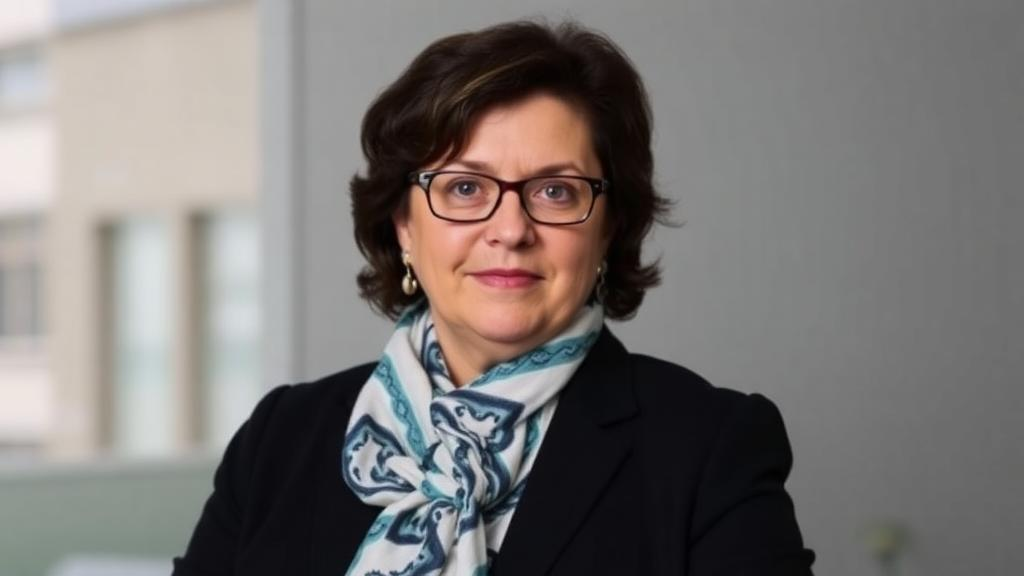
Anglia Ruskin University has announced the appointment of Professor Lady Sue Black, Baroness Black of Strome, as its new Chancellor, a role that places one of the world’s most distinguished forensic scientists at the ceremonial and civic head of an institution now embarking on an ambitious ten-year institutional plan. The appointment arrives at a deliberate moment in the university’s history, coinciding with the launch of Transforming Lives, a decade-long strategy intended to shape decisions across research, teaching and community engagement. Lady Black succeeds Lord Bernard Ribeiro, the surgeon who has served as Chancellor, and inherits a position that in modern British higher education is far more than ornamental: chancellors act as ambassadors, conferring officers and public advocates for the values a university claims to uphold. For a university that has built its identity around widening participation and social mobility, the arrival of a scientist whose career has been devoted to giving voice to the dead, and to the victims of war and disaster, carries an obvious symbolic weight.
Lady Black’s scientific reputation rests on forensic anthropology, the discipline that applies knowledge of human skeletal biology to legal and humanitarian investigations. Forensic anthropologists read the skeleton as a biological archive: the shape of the pelvis and skull can indicate sex, the fusion of growth plates and the wear of dental surfaces can estimate age at death, and healed fractures, infections or trauma patterns can reconstruct events that occurred years or decades before death. In mass-fatality and conflict settings, these techniques allow investigators to separate commingled remains, establish minimum numbers of individuals, and build the biological profiles that make identification possible when names, documents and even entire communities have been destroyed. It is exacting laboratory work conducted in the most difficult field conditions imaginable, and it demands both technical mastery of human anatomy and the ability to defend every observation under the scrutiny of a courtroom.
Her career in that discipline has been unusually wide-ranging. She has served as a forensic anthropology consultant for the UK Government, work that took her to Iraq, Sierra Leone and Grenada, and she acted as lead forensic anthropologist during the international war crimes investigations in Kosovo. In such contexts, the findings of anthropologists become evidence in prosecutions for atrocities: establishing the age and sex of victims, distinguishing perimortem injuries from post-mortem damage, and documenting patterns of trauma that can indicate systematic violence rather than random loss. The scientific standards required are severe, because a single misidentified feature can alter the course of a criminal case or the closure offered to a grieving family. That combination of humanitarian purpose and evidentiary rigour has defined her professional life and, by her own account in the university’s announcement, aligns closely with the values she now brings to her ceremonial role.
Before taking up her current position as President of St John’s College, Oxford, Lady Black was Professor of Anatomy and Forensic Anthropology at the University of Dundee from 2003 to 2018, where she helped establish the city as a leading centre for the teaching and practice of forensic anthropology in Britain. She subsequently served as Pro-Vice-Chancellor for Engagement at Lancaster University, an administrative role focused on how universities connect their research to external communities, employers and public partners. She holds visiting professorships at Oxford and Lancaster and is an Honorary Fellow of Homerton College, Cambridge. This trajectory, spanning pure anatomy, applied forensic casework and senior university leadership, gives her an unusually complete view of how academic institutions function, from the dissection laboratory to the governing body, and explains why her appointment is being read as more than a ceremonial coup.
The honours attached to her name trace the same arc of public service. She was appointed Dame Commander of the Order of the British Empire in 2016, entered the House of Lords in 2021 as a crossbench peer, and in 2024 was appointed to the Most Ancient and Most Noble Order of the Thistle, the highest order of chivalry in Scotland, an honour that recognises extraordinary contributions to Scottish public life. The same year, Anglia Ruskin itself awarded her an Honorary Award, making her return as Chancellor a continuation of an existing relationship rather than a cold introduction. She is also a Fellow of the Royal Society, the lifetime Professor of Anatomy for the Royal Scottish Academy, a former President of the Royal Anthropological Institute and a patron of three charities, a portfolio of affiliations that reflects standing across science, anthropology and public service simultaneously.
Beyond the laboratory and the courtroom, Lady Black has become one of the most visible public communicators of forensic science in the English-speaking world. She has appeared on BBC Radio 4’s The Life Scientific and Desert Island Discs, programmes that reach audiences far beyond the usual science listenership, and she is the author of three books, the most recent of which, An Expert Witness, was published in July. Her earlier writing brought the realities of human identification and forensic casework to general readers with a candour that helped demystify a discipline often sensationalised in fiction. In an era when public trust in expert testimony is contested, scientists who can explain, accurately and accessibly, how skeletal evidence is actually analysed and how expert witnesses actually operate perform a service that extends well beyond entertainment. Her media profile will now be attached to Anglia Ruskin’s public identity.
The timing of the appointment is inseparable from the university’s new strategy. Transforming Lives will guide Anglia Ruskin’s decisions over the next ten years, and it is organised around five distinct aims: to empower learning, to drive discovery with purpose, to strengthen the places the university serves, to foster a culture of belonging and achievement, and to deliver sustainable growth and impact. Vice-Chancellor Professor Roderick Watkins described the framework as providing a clear direction for the future, shaped to focus the institution’s energy and resources where they will make the greatest difference, and to be delivered jointly by everyone at ARU. The language matters: strategies of this kind determine how a university allocates finite resources across teaching, infrastructure and research, and the choice of five broad goals signals an institution trying to balance educational access, research quality, civic responsibility and financial sustainability at the same time.
For Lady Black, the connection between her own career and the strategy’s language of transformation is explicit. In the university’s announcement she described herself as honoured to be joining at what she called a pivotal moment, as the university unveils its ambitious new strategy for the decade ahead, and said she looks forward to supporting and championing ARU’s work across research, education and civic engagement. She noted that the university’s commitment to transforming lives through education and research, and to widening opportunities through social mobility initiatives, reflects values that are deeply important to her, and expressed her eagerness to help the university continue making a positive difference to the communities it serves. For a scientist whose professional life has been spent identifying the unnamed and testifying on their behalf, the move into an advocacy role for a socially engaged university is a coherent next chapter.
Watkins, for his part, welcomed the appointment as the beginning of an important and exciting new chapter, saying the university is proud to welcome Lady Black as Chancellor and looks forward to drawing on her wealth of experience in the years ahead. The pairing of a new Chancellor and a new ten-year strategy is a classic institutional reset: the strategy supplies the plan, while the Chancellor supplies the public face and the moral authority to carry it beyond campus boundaries. Anglia Ruskin operates across campuses in Cambridgeshire, Essex and London and serves a student population that includes many first-in-family and mature learners, which is precisely the constituency that social mobility rhetoric is meant to address. Whether the strategy’s five goals translate into measurable outcomes for those students will be the real test of the decade.
What the appointment ultimately illustrates is the changing character of university leadership in Britain. Chancellors are increasingly chosen not for lineage or political connection but for demonstrated alignment with an institution’s mission, and few figures embody a mission of transforming lives more literally than a forensic anthropologist who has spent her career recovering identity from the most degraded circumstances imaginable. Lady Black brings to the role a Fellow of the Royal Society’s scientific credibility, a parliamentarian’s public platform, a college president’s administrative experience and a broadcaster’s communication skill. As Anglia Ruskin begins the decade under Transforming Lives, the university has effectively recruited one of Britain’s most recognisable scientists as its chief advocate, and the coming years will show how much difference a Chancellor’s voice can make to an institution’s ambitions.
Subject of Research: Appointment of forensic anthropologist Professor Lady Sue Black as Chancellor of Anglia Ruskin University alongside its new ten-year strategy
Article Title: Professor Lady Black appointed as ARU Chancellor
Article References: Professor Lady Black appointed as ARU Chancellor. (n.d.). Original publication
Image Credits: AI Generated
DOI: Not provided
Keywords: Lady Sue Black, Anglia Ruskin University, Chancellor appointment, forensic anthropology, Transforming Lives strategy, higher education, St John's College Oxford, University of Dundee, war crimes investigations, social mobility, Roderick Watkins, science communication
Cite Scienmag News
Courtney Benton. (October 10, 2026). Forensic Scientist Lady Sue Black Named Chancellor of Anglia Ruskin University. Scienmag. https://scienmag.com/forensic-scientist-lady-sue-black-named-chancellor-of-anglia-ruskin-university/
Courtney Benton. "Forensic Scientist Lady Sue Black Named Chancellor of Anglia Ruskin University." Scienmag, 10 October 2026, https://scienmag.com/forensic-scientist-lady-sue-black-named-chancellor-of-anglia-ruskin-university/. Accessed 10 October 2026.
Courtney Benton. "Forensic Scientist Lady Sue Black Named Chancellor of Anglia Ruskin University." Scienmag. October 10, 2026. https://scienmag.com/forensic-scientist-lady-sue-black-named-chancellor-of-anglia-ruskin-university/


