


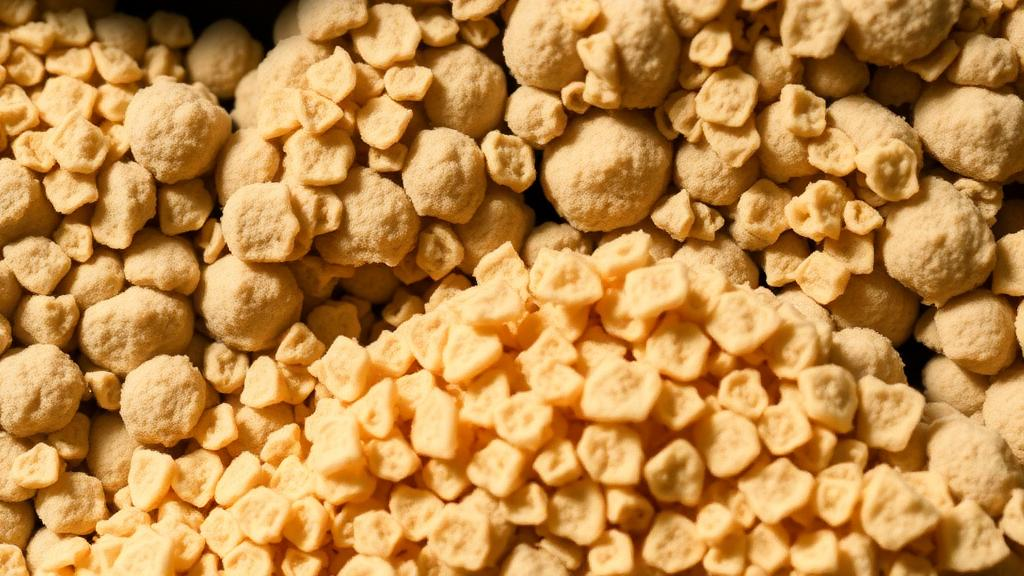
A quiet revolution is taking shape in materials science laboratories, and it is being grown rather than manufactured. Researchers have developed building insulation biocomposites from fungal mycelium and agricultural waste, demonstrating that materials cultivated from hemp shives, wheat straw, and flax straw can deliver thermal and mechanical performance that rivals conventional synthetic insulation. The study, published in Cleaner Engineering and Technology, comes at a critical moment for the construction industry, which in 2021 accounted for more than 34 percent of global energy consumption and 37 percent of carbon dioxide emissions associated with energy and processes. With the European Union targeting a 90 percent reduction in building-sector emissions by 2050, the search for environmentally suitable alternatives to petrochemical-based insulation has become one of the most urgent challenges in sustainable engineering.
The new materials belong to a class known as mycelium biocomposites, in which the vegetative root-like networks of fungi are grown through organic substrates such as agricultural residues. The fungal hyphae bind the loose lignocellulosic particles into a solid, relatively lightweight structure that is biodegradable and recyclable. Historically an experimental biomaterial, mycelium composites have attracted growing attention because of their promising combination of low weight, thermal insulation capacity, and reasonable strength and durability. Their production also offers a route to valorizing by-products, storing atmospheric carbon dioxide, and reducing dependence on petrochemicals, all while embodying circular economy principles in which materials can be disassembled, reused, and ultimately returned to natural systems.
Producing these composites is a multi-phase biological process rather than an industrial extrusion. Mycelium is first grown on a substrate over one to two weeks under carefully controlled conditions, typically at temperatures between 24 and 30 degrees Celsius and humidity levels of 60 to 75 percent. The material then develops for two to four weeks as the fungal network colonizes the substrate into a uniformly dense structure. A final drying stage, lasting from a few days to a week, halts fungal growth and provides the strength and dimensional stability that make the material usable in construction. Each of these steps, along with the choice of substrate and fungal strain, shapes the physicochemical characteristics of the finished composite.
In the new study, a research team prepared four experimental series of mycelium biocomposites, each with a different composition, production flow, and specimen geometry. Series I combined wheat straw with Ganoderma lucidum, Series II paired flax straw with Pleurotus ostreatus, Series III used hemp shives with Pleurotus ostreatus, and Series IV tested wheat straw, hemp shives, and flax straw, each inoculated with Ganoderma lucidum. All samples were produced by mixing 7.5 grams of colonized grain spawn into 300 grams of sterilized straw, a spawn-to-substrate ratio of 2.5 percent, with the sterilized substrate held at approximately 60 percent preparative moisture. The mixtures were compressed by hand into cardboard molds shaped as cubes, cylinders, or rectangular prisms, then cultivated and dried under formulation-specific conditions before testing.
The team evaluated four parameters most relevant to insulation performance: thermal conductivity, density, flexural strength, and compressive strength. Density was measured with a precision laboratory balance and manual dimensional measurements, while thermal conductivity was assessed with a portable Isomet 2114 heat transfer analyzer under controlled laboratory conditions of 20 degrees Celsius and 50 percent relative humidity. Each specimen was measured twice on adjacent surfaces, with the median value used for analysis. The researchers also computed a thermal conductivity-to-weight ratio, an inverse indicator that favors formulations combining low heat conduction with low bulk density, to compare the overall thermal-mass balance of the tested materials.
The results revealed striking differences among the formulations. Thermal conductivity ranged from 0.0385 to 0.0719 watts per meter-kelvin depending on substrate and fungal strain, while densities spanned from 80 to 227 kilograms per cubic meter. The standout performer was the hemp shive composite inoculated with Pleurotus ostreatus, which achieved the lowest density range of 80 to 120 kilograms per cubic meter and the most efficient thermal conductivity, from 0.0385 to 0.057 watts per meter-kelvin. This formulation recorded the highest thermal conductivity-to-weight ratio of 0.209, approximately 35.7 percent higher than the next best formulation in the study. By contrast, the multi-material Series IV showed the widest variability in both density and conductivity, reflecting the challenges of consistency in mixed compositions.
Mechanical testing of the optimal hemp shive and Pleurotus ostreatus composite produced equally notable results. Two independently molded prism specimens, each 40 by 40 by 160 millimeters, were subjected to three-point bending on a standardized flexure testing device with a 100-millimeter support span. The composite achieved an average flexural strength of 8.85 megapascals, with individual specimens reaching 8.58 and 9.11 megapascals. Compressive testing on the uncracked halves of the broken prisms yielded an average compressive strength of 4.25 megapascals. Both values exceed or match similar mycelium-based composites described in the literature, where flexural strengths have typically ranged from 0.44 to 4.23 megapascals depending on substrate, and many lignocellulosic formulations have shown compressive strengths below 1 megapascal.
To contextualize these findings, the researchers benchmarked their data against seven published studies of mycelium composites made from comparable plant-derived substrates, plotting thermal conductivity jointly with density because porosity and density strongly influence thermal performance. The literature dataset spans roughly 0.035 to 0.096 watts per meter-kelvin across a wide density range. The hemp shive composite’s minimum conductivity of 0.0385 watts per meter-kelvin compares favorably with values reported for birch sawdust composites and mycelium-bound fibers from invasive plants, and its combination of approximately 100 kilograms per cubic meter density with low conductivity places it firmly in the favorable low-density, low-conductivity region of the performance map. The authors caution, however, that differences in specimen geometry, moisture state, processing conditions, and measurement procedures mean such comparisons serve as performance benchmarking rather than a strictly standardized ranking.
The researchers supplemented their measurements with scanning electron microscopy of the wheat straw and Ganoderma lucidum formulation, which revealed an interconnected filamentous network bridging the lignocellulosic structural elements and numerous micrometer-scale voids. These images provide qualitative evidence of the porous microstructure that underpins the materials’ insulating behavior, although porosity was not quantitatively determined. The team also conducted a rigorous uncertainty analysis, estimating measurement-related uncertainties of roughly 0.6 to 1.3 percent for density, 6.4 to 7.6 percent for thermal conductivity, 3.0 percent for flexural strength, and 2.0 percent for compressive strength, ensuring the reported values rest on a transparent methodological foundation.
The implications extend beyond the laboratory. The hemp shive and Pleurotus ostreatus composite appears suitable for non-load-bearing panels, partition walls, insulation boards, and lightweight structural components, applications where its combination of insulation efficiency, mechanical cohesion, and biodegradability offers genuine advantages over conventional materials. The authors emphasize that their mechanical values rest on limited replication and that future work must address scalability, fire behavior, moisture resistance, biological durability, ageing, dimensional stability, and industrial-scale manufacturability before building-scale deployment. Nevertheless, the study provides practical guidance for future research, industrial pilot projects, and policy-driven adoption of eco-composites. As the construction sector confronts its outsized carbon footprint, materials grown from fungal networks and farm waste are moving from curiosity toward credible contender, proving that the walls of future buildings might one day be cultivated in a matter of weeks.
Subject of Research: Thermal and mechanical performance of mycelium-agricultural waste biocomposites for building insulation
Article Title: Mycelium–Agriwaste Biocomposites for Cleaner Building Insulation: Thermal and Mechanical Performance
Article References: Babenko, M., Kononets, Y., Kunes, R., Makys, P., Spalek, F., Sramhauser, K., Hanzal, P., Majernik, J., Zoubek, T., & Bartos, P. (2026). Mycelium–Agriwaste Biocomposites for Cleaner Building Insulation: Thermal and Mechanical Performance. Cleaner Engineering and Technology, Article 101334. https://doi.org/10.1016/j.clet.2026.101334
Image Credits: AI Generated
DOI: 10.1016/j.clet.2026.101334
Keywords: mycelium biocomposites, building insulation, hemp shives, Pleurotus ostreatus, Ganoderma lucidum, thermal conductivity, agricultural waste, sustainable construction, circular economy, flexural strength, compressive strength, lignocellulosic substrates
Cite Scienmag News
Sloane Callahan. (October 10, 2026). Fungal Insulation: Hemp-Grown Mycelium Composites Rival Synthetic Building Materials. Scienmag. https://scienmag.com/fungal-insulation-hemp-grown-mycelium-composites-rival-synthetic-building-materials/
Sloane Callahan. "Fungal Insulation: Hemp-Grown Mycelium Composites Rival Synthetic Building Materials." Scienmag, 10 October 2026, https://scienmag.com/fungal-insulation-hemp-grown-mycelium-composites-rival-synthetic-building-materials/. Accessed 10 October 2026.
Sloane Callahan. "Fungal Insulation: Hemp-Grown Mycelium Composites Rival Synthetic Building Materials." Scienmag. October 10, 2026. https://scienmag.com/fungal-insulation-hemp-grown-mycelium-composites-rival-synthetic-building-materials/


