


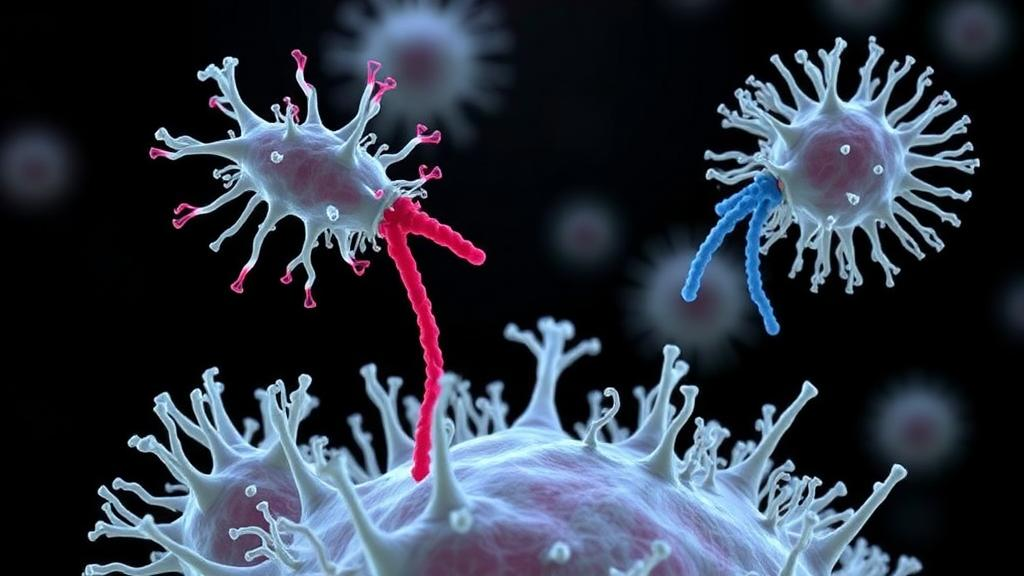
Bacteria are master exporters. They ship proteins across their cell envelopes using a toolkit of dedicated secretion systems, most of which depend on a simple address label: a short stretch of amino acids at the beginning of a protein, known as a signal peptide, that tells the transport machinery where the cargo belongs. But a growing number of bacterial proteins defy this logic. They carry no recognizable signal peptide, yet they end up outside the cell, fully functional, where they help their microbial hosts scavenge nutrients, fend off competitors, and survive hostile environments. How these proteins escape has been one of the more stubborn puzzles in microbiology. A new study published in PLOS Genetics by Congying Liang, Wenping Zhu, and Lu Lin now offers a detailed answer for one such protein, revealing a two-step relay in which outer membrane proteins act as molecular tethers that link the classical Sec secretion pathway to outer membrane vesicles.
The protein at the center of the story is a B-type dye-decolorizing peroxidase, dubbed DypB_(2985), produced by the soil bacterium Pseudomonas putida. Peroxidases of this family are enzymes that break down reactive oxygen species and can also degrade dye molecules and other aromatic compounds, which makes them interesting both as tools of bacterial physiology and as candidates for biotechnological applications such as bioremediation. What makes DypB_(2985) puzzling is that it lacks the canonical N-terminal signal peptide that would normally route a protein through the Sec pathway, the workhorse system that threads unfolded proteins across the bacterial inner membrane and into the periplasm, the compartment between the inner and outer membranes of Gram-negative bacteria. Without that label, the standard models of bacterial export offer no obvious route for the enzyme to reach the cell surface.
Liang and colleagues approached the problem by systematically dissecting the secretion process in P. putida, and their experiments converged on two key players in the outer membrane: a lipoprotein designated Lpp_(1528) and an outer membrane protein called OmpW_(4836). Lipoproteins and OmpW-family proteins are abundant, well-studied components of the outer membrane in Gram-negative bacteria, where they typically help maintain client proteins in a folded state or form pore channels that allow molecules to pass through. The new work shows that these proteins do something more surprising in the case of DypB_(2985): they act as sequence-specific adaptors that shepherd a signal-peptide-free cargo through two successive stages of export, each stage relying on a different membrane-bound system.
The first stage begins in the cytoplasm. Lpp_(1528), despite being an outer membrane lipoprotein itself, is initially synthesized with its own Sec signal peptide, which routes it through the Sec machinery into the periplasm before it is anchored in the inner leaflet of the outer membrane. From there, the researchers found, Lpp_(1528) performs a remarkable trick: it recognizes a hydrophobic region at the C-terminus, the tail end, of DypB_(2985) while the peroxidase is still inside the cytoplasm. This recognition allows the enzyme to be coupled to the Sec translocation machinery for transport across the inner membrane, even though DypB_(2985) has no canonical N-terminal signal peptide of its own. In effect, the lipoprotein substitutes for the missing address label, physically linking the cargo to the export channel that would otherwise ignore it.
Once the pair has crossed the inner membrane, the partnership appears to dissolve. The study indicates that Lpp_(1528) and DypB_(2985) dissociate in the periplasm, leaving the peroxidase free in that compartment and the lipoprotein free to return to its anchoring duties. This handoff point is where the second stage of the relay begins. A different outer membrane protein, OmpW_(4836), now takes over. OmpW_(4836) binds a hydrophobic region at the opposite end of the enzyme, the N-terminus, and uses that interaction to direct periplasmic DypB_(2985) into outer membrane vesicles, or OMVs, the small spherical blebs that Gram-negative bacteria constantly pinch off from their outer membranes and release into the surrounding environment.
Outer membrane vesicles have attracted intense interest in recent years because they are far more than cellular debris. Bacteria use them to deliver toxins to rival cells, to package enzymes that digest complex nutrients, to shed antibiotics and signaling molecules, and to interact with host organisms during infection. Because OMVs bud from the outer membrane, proteins that end up inside them are effectively secreted: when the vesicle travels away from the cell and eventually ruptures or delivers its contents, the cargo reaches the extracellular space. What the new study adds is a concrete mechanism for how a specific protein gets sorted into these vesicles rather than remaining free in the periplasm. The recognition of the N-terminal hydrophobic region of DypB_(2985) by OmpW_(4836) provides that sorting specificity, ensuring that the peroxidase is loaded into vesicles destined for export rather than left behind.
Taken together, the findings sketch a stepwise pipeline that is elegant in its division of labor. One outer membrane protein, Lpp_(1528), solves the entry problem by tethering a signal-less cargo to the Sec machinery at the inner membrane. Another, OmpW_(4836), solves the exit problem by loading the cargo into vesicles at the outer membrane. The authors describe these proteins as molecular tethers, and the description fits: each one bridges a gap between a protein that lacks the standard credentials for export and a transport system that requires them. The crosstalk between the Sec pathway and the OMV system, mediated by these tethers, constitutes what the researchers characterize as an unconventional secretion route, one that expands the known repertoire of ways bacteria move proteins beyond their envelopes.
The implications reach beyond a single enzyme in a single species. Non-classical secretion, the export of proteins without signal peptides, has been documented across many bacterial groups, and the proteins involved often perform important extracellular functions, from oxidative stress defense to nutrient acquisition. Understanding the machinery behind one such case provides a template for hunting down similar mechanisms elsewhere. The stepwise logic uncovered here, in which distinct accessory proteins handle cytoplasmic entry and vesicular exit, suggests that other signal-less proteins may likewise depend on outer membrane components acting as adaptors, a possibility that could reframe how microbiologists interpret the growing catalog of proteins found in bacterial secretomes without obvious export signals.
There is also a practical dimension. Outer membrane vesicles are increasingly viewed as versatile biotechnological platforms: they can be engineered to display antigens for vaccine development, to carry enzymes for industrial catalysis, or to deliver therapeutic molecules. A major challenge in this field has been controlling which proteins end up inside the vesicles, since cargo loading has often appeared somewhat arbitrary. The OmpW_(4836)-dependent sorting mechanism identified in this study offers a handle for that problem. If a hydrophobic recognition sequence is what directs a protein into OMVs, then attaching similar tags to proteins of interest could, in principle, allow researchers to program the vesicular packaging of chosen cargoes, turning a naturally occurring bacterial export route into a customizable delivery system.
For P. putida itself, the ability to secrete a peroxidase without a signal peptide likely reflects an evolutionary solution to a specific survival need, allowing the bacterium to deploy oxidative enzymes outside the cell where they can help manage reactive compounds in the environment. The study by Liang, Zhu, and Lin, published on September 15, 2026, in PLOS Genetics, does not claim to have found the only route for unconventional secretion, and the authors frame their work as expanding understanding of non-classical protein export mechanisms and bacterial survival strategies rather than closing the book on them. But it does demonstrate, with unusual mechanistic clarity, that the boundary between the classical and unconventional secretion worlds is blurrier than once thought. A protein with no signal peptide can still ride the Sec pathway, provided a lipoprotein is willing to vouch for it, and it can still reach the outside world, provided an outer membrane protein is willing to pack it into a departing vesicle. In the bacterial cell envelope, it seems, the right molecular handshake can substitute for any address label.
Subject of Research: Unconventional secretion of a signal-peptide-free peroxidase in Pseudomonas putida via outer membrane protein-mediated crosstalk between the Sec pathway and outer membrane vesicles
Article Title: Outer membrane proteins mediate unconventional secretion of Pseudomonas peroxidase through crosstalk between the Sec pathway and outer membrane vesicles
Article References: Liang, C., Zhu, W., & Lin, L. (2026). Outer membrane proteins mediate unconventional secretion of Pseudomonas peroxidase through crosstalk between the Sec pathway and outer membrane vesicles. PLOS Genetics, 22(9), e1012311. https://doi.org/10.1371/journal.pgen.1012311
Image Credits: AI Generated
DOI: 10.1371/journal.pgen.1012311
Keywords: Pseudomonas putida, protein secretion, Sec pathway, outer membrane vesicles, lipoprotein, OmpW, peroxidase, DypB, unconventional secretion, Gram-negative bacteria, outer membrane proteins, molecular tethers
Cite Scienmag News
Morgan Morrow. (October 10, 2026). Bacterial Tug-of-War: How Pseudomonas Smuggles a Signal-Lacking Enzyme Out of the Cell. Scienmag. https://scienmag.com/bacterial-tug-of-war-how-pseudomonas-smuggles-a-signal-lacking-enzyme-out-of-the-cell/
Morgan Morrow. "Bacterial Tug-of-War: How Pseudomonas Smuggles a Signal-Lacking Enzyme Out of the Cell." Scienmag, 10 October 2026, https://scienmag.com/bacterial-tug-of-war-how-pseudomonas-smuggles-a-signal-lacking-enzyme-out-of-the-cell/. Accessed 10 October 2026.
Morgan Morrow. "Bacterial Tug-of-War: How Pseudomonas Smuggles a Signal-Lacking Enzyme Out of the Cell." Scienmag. October 10, 2026. https://scienmag.com/bacterial-tug-of-war-how-pseudomonas-smuggles-a-signal-lacking-enzyme-out-of-the-cell/


