


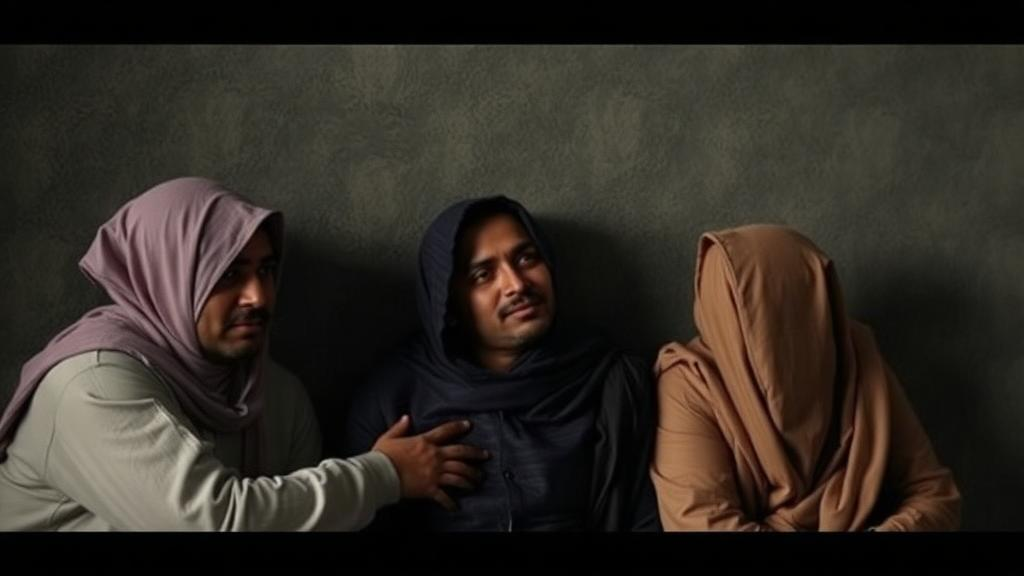
In a decision that has sent shockwaves through the global mental health community, Pakistan has reversed one of its most significant recent public health reforms. On 18 May 2026, the Federal Shariat Court ordered the restoration of Section 325 of the Pakistan Penal Code, a colonial-era provision that punishes attempted suicide with up to one year of simple imprisonment, a fine, or both. The Court ruled that the 2022 legislation which had removed the section was contrary to the Holy Quran and Sunnah. In legal terms, the judgment reinstates a penal provision; in public mental health terms, it recasts people who survive a suicide attempt as criminals. Writing in PLOS Mental Health, Ahsan Mashhood of the University of Oxford and Murad Moosa Khan of Aga Khan University argue that the ruling represents a profound setback for suicide prevention, one with lessons that reach far beyond Pakistan’s borders.
The law Pakistan has returned to is not new. It is part of a colonial legal inheritance that treated attempted suicide as an offence against the state rather than a manifestation of treatable distress. For decades, the provision remained on the books even as global suicide prevention strategy moved decisively toward decriminalization and non-punitive responses to self-harm, championed by initiatives such as the World Health Organization’s 2023 policy brief and the Decriminalize Suicide Worldwide Project. In 2022, Pakistan briefly joined that shift, and the change opened active conversations about centering the survivor and asking what actually drives individuals to attempt suicide. That opening has now narrowed. The authors argue that the 2026 ruling, often framed as a question of whether Islam condemns suicide, misses the more urgent question: what should follow when the person is still alive? Should the state respond to survival with punishment, or make support easier to access?
The Court’s judgment rests on a coherent-sounding theory of deterrence. Because Islam treats life as sacred and suicide as prohibited, the Court held, the state has a duty to retain punishment for attempts to take one’s own life. Mental illness, in this framework, is not a reason to remove the offence altogether; it is at most a reason to exempt particular individuals on a case-by-case basis, primarily through Section 84 of the Penal Code, which exempts those who, by reason of unsoundness of mind, could not understand the nature or wrongness of their act. The petitioners had argued that human life is a trust from God that cannot be ended at one’s own discretion, and that decriminalization might leave unpunished those who attempt suicide while of sound mind. The Federation of Pakistan had defended the 2022 amendment on public health grounds, contending that suicidal behavior typically emerges from depression, mental illness, or severe social and economic distress, and that survivors require treatment, counselling, and rehabilitation rather than criminal sanctions. The Court rejected this, objecting that the parliamentary justification was too broad, particularly the suggestion that suicide attempts are always linked to mental illness.
The difficulty, the authors contend, is that this legal logic is far more coherent in theory than in clinical practice. Legal incapacity is a narrow threshold, and many people who attempt suicide will not meet the standard of unsoundness of mind even where depression, trauma, abuse, debt, shame, hopelessness, or family conflict are clearly central to the act. Clinical vulnerability and legal incapacity are not the same thing. A person may be in acute suicidal distress and in urgent need of care without being legally incapable of understanding what they are doing. Moreover, the deterrent value of punishment in suicidal crisis is deeply uncertain. Criminal law assumes that the threat of sanction shapes behavior before an act occurs, yet many people in acute distress are not weighing the future possibility of imprisonment against their present suffering. In Pakistan, some may know that suicide is religiously condemned but encounter the legal implications of attempted suicide only when they reach a hospital. At that stage, the law no longer deters the act; it deters disclosure, help-seeking, and honest documentation.
The empirical record supports these concerns. Under Pakistan’s pre-2022 criminalization regime, clinicians reported concealment of self-harm and barriers to care linked to police and medico-legal involvement. International evidence likewise does not show that criminalization reduces suicide rates; an ecological study of 171 countries found no protective effect. The authors also note that the religious prohibition of suicide does not by itself resolve the separate question of whether a survivor must be punished. Even within a ta’zir framework, the relevant policy question is whether criminal punishment advances the purposes invoked to justify it, particularly the preservation of life, hifz al-nafs, which the Court itself recognized as a primary objective of Shariah. Decriminalizing the survivor need not imply legal indifference to coercion, abetment, or facilitation of suicidal behavior, which can be addressed separately without making the person who survives an accused.
Criminal law applies, in theory, to everyone equally. In practice, its burdens fall unevenly, and the authors devote particular attention to who will suffer most. Evidence from Pakistan consistently shows that suicidal behavior and self-harm concentrate among younger people, often below the age of 30. A recent Karachi-based study found that 63 percent of self-harm cases were between 20 and 39 years of age, with interpersonal relationship problems the most commonly reported reason. For a young person whose distress is tied to family conflict, academic pressure, or shame, the hospital is already a difficult place to enter; criminalization makes that entry harder still. The family, a central institution in Pakistani society, adds another layer of fear. A suicide attempt can quickly become a story about honor, parental failure, sexual reputation, marriageability, religious sin, or police trouble, giving families powerful incentives to conceal the attempt, delay disclosure, or reframe it as an accident.
Women face a distinct and equally serious form of harm. In Pakistan, suicidal behavior is often entangled with domestic conflict, intimate partner violence, coercive marriages, restrictions on mobility, and everyday forms of gendered control. Nationally representative data from the Pakistan Demographic and Health Survey show that 34 percent of ever-married women have experienced physical, sexual, or emotional spousal violence, and among women who experienced physical or sexual violence, 56 percent had never sought help or told anyone. For women, recriminalization may convert a crisis produced by violence into evidence of deviance. A woman who attempts suicide after abuse or coercion may already be blamed for dishonoring her household; criminalization shifts attention from what happened to her toward what she has allegedly done. The threat of a police case or public scandal may become another instrument through which husbands, in-laws, or families silence women, creating a perverse structure in which the survivor may need protection from the very household that controls her access to care.
Poverty compounds every other vulnerability. Wealthier families can often purchase privacy, accessing private hospitals and psychiatrists and avoiding public medico-legal systems through social capital. Poorer families rely on public emergency departments, which involve police-facing documentation, making them more visible to the state precisely because they have fewer alternatives. Healthcare in Pakistan is strongly shaped by out-of-pocket payments, and recent evidence shows catastrophic health expenditure disproportionately affects poorer households. A suicide attempt already brings emergency transport, hospital fees, medicines, lost wages, and caregiving costs. Section 325 adds legal fees, possible informal payments, repeated court visits, and the social cost of being known as a family with a case. For a daily-wage household, even one day navigating legal procedure means lost income, and fear of these costs may be enough to avoid formal care altogether. Deterrence, the authors conclude, is the wrong frame: the law is unlikely to deter evenly and may simply threaten selectively, falling on those at the margins.
The short-term consequences are already visible. Psychiatric associations, mental health coalitions, and civil society groups are mobilizing against the ruling, but the fact that such resistance is again necessary reveals how fragile legal reform in mental health can be. Energy is being diverted from building crisis response, survivor-centered care pathways, and suicide surveillance toward defending a reform that should have been consolidated. In the medium term, legal ambiguity creates space for police pressure, family coercion, and institutional avoidance, especially for marginalized groups; the mere possibility that an attempt can become a police matter is enough to produce fear, silence, and delay. In the longer term, the episode demonstrates that decriminalization alone was never sufficient, as it did not create a national suicide prevention strategy or expand services, but it did establish a direction of travel that recriminalization now reverses.
The authors close with concrete recommendations. Decriminalization should be accompanied by national protocols for emergency care: routine police involvement after self-harm should be restricted, confidentiality standards strengthened, and survivors guaranteed psychosocial assessment, safe-discharge planning, and follow-up, with referral pathways where domestic or gender-based violence is identified. Police, emergency clinicians, and medico-legal staff should be trained in non-punitive responses, and adequately funded community-based crisis services should anchor a national prevention strategy. Even if repeal is delayed, health authorities can immediately issue guidance limiting police referral and ensuring treatment is never delayed by potential criminal liability. Crucially, reforms should be developed with formal lived-experience participation, not merely survivor testimonials after decisions are made. For countries such as Malaysia and Ghana that have recently decriminalized suicide, Pakistan’s experience is a stark warning: reform must be institutionalized and translated into health infrastructure, or it remains a temporary legal opening rather than a lasting commitment to treating suicidal distress as a matter for care, not punishment.
Subject of Research: Recriminalization of attempted suicide in Pakistan and its consequences for public mental health
Article Title: The crime of surviving: Suicide recriminalization and mental health in Pakistan
Article References: Mashhood, A., & Khan, M. M. (2026). The crime of surviving: Suicide recriminalization and mental health in Pakistan. PLOS Mental Health, 3(8), e0000714. https://doi.org/10.1371/journal.pmen.0000714
Image Credits: AI Generated
DOI: 10.1371/journal.pmen.0000714
Keywords: Pakistan, suicide, decriminalization, Federal Shariat Court, mental health, suicide prevention, Section 325, public health policy, gender-based violence, stigma, colonial law, health inequity
Cite Scienmag News
Glenn Wilkins. (October 10, 2026). Pakistan Recriminalizes Attempted Suicide, Turning Survivors Back Into Suspects. Scienmag. https://scienmag.com/pakistan-recriminalizes-attempted-suicide-turning-survivors-back-into-suspects/
Glenn Wilkins. "Pakistan Recriminalizes Attempted Suicide, Turning Survivors Back Into Suspects." Scienmag, 10 October 2026, https://scienmag.com/pakistan-recriminalizes-attempted-suicide-turning-survivors-back-into-suspects/. Accessed 10 October 2026.
Glenn Wilkins. "Pakistan Recriminalizes Attempted Suicide, Turning Survivors Back Into Suspects." Scienmag. October 10, 2026. https://scienmag.com/pakistan-recriminalizes-attempted-suicide-turning-survivors-back-into-suspects/


