


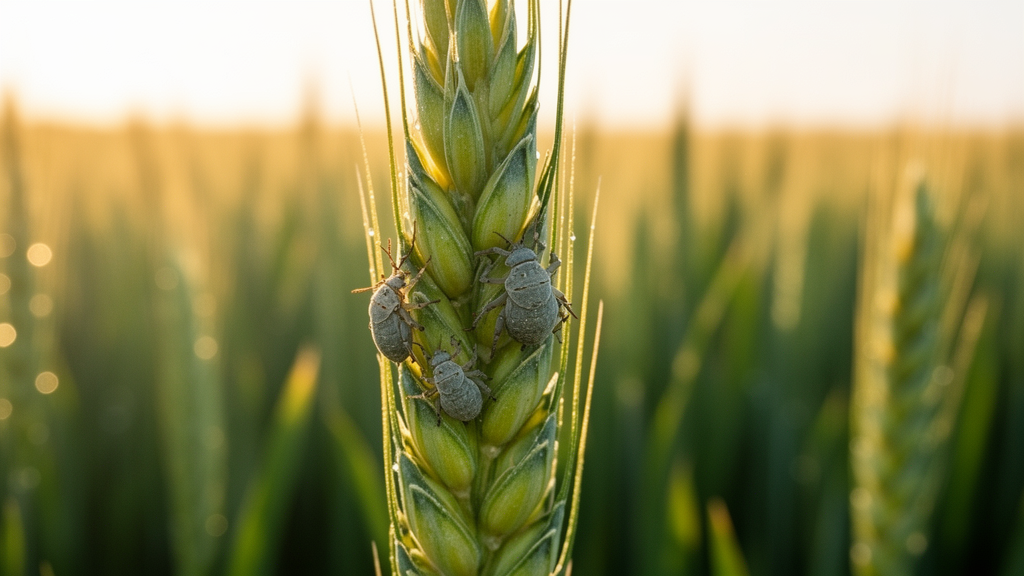
For more than four decades, wheat breeders in the United States have relied on a single gene to shield their crops from one of the Great Plains’ most destructive insect pests. That gene, known as Gb3, has quietly protected popular cultivars such as TAM110, TAM112 and TAM204 against the greenbug, an aphid that has plagued wheat, sorghum and barley since its first detection in 1882. Yet until now, no one knew what Gb3 actually was at the molecular level. A research team led by scientists at the US Department of Agriculture’s Agricultural Research Service has finally cloned the gene, and the answer is striking: Gb3 encodes an intracellular kinase fusion protein, a molecular architecture that until recently was thought to be reserved almost exclusively for fighting fungal pathogens.
The discovery, published in Nature Genetics, marks only the second insect resistance gene ever cloned in wheat and just the eleventh across all of plant science. The scarcity of cloned insect resistance genes reflects genuine technical obstacles. While more than 450 resistance genes have been cloned in crops over the past three decades, roughly 70 of those within the Triticeae tribe alone, nearly all encode canonical nucleotide-binding leucine-rich repeat proteins that defend against fungi, oomycetes, bacteria and viruses. Insect resistance phenotyping is laborious and unpredictable, and the molecular mechanisms underlying plant-aphid interactions remain poorly resolved. The Gb3 clone now offers a rare genetic foothold into that underexplored territory.
The greenbug, Schizaphis graminum, is a formidable adversary. It feeds on 70 species within the grass family, vectors the devastating barley yellow dwarf virus, and has caused as much as US$100 million in losses during severe outbreaks in the American Great Plains. The pest is also extraordinarily diverse, with about 50 biotypes identified in the United States, and the continuous emergence of new virulent biotypes regularly erodes the durability of crop resistance. Six greenbug resistance genes had been mapped to chromosome 7D of Aegilops tauschii, the diploid wild relative that contributed the D genome to bread wheat, but none had been molecularly identified since Gb1 was first described in the 1950s. Among them, Gb3 stood out for its remarkable breadth: it confers resistance to 26 of 47 previously tested greenbug biotypes.
To clone the gene, the team deployed a genome-wide association study on a panel of 260 Aegilops tauschii accessions that had been evaluated for resistance to four greenbug biotypes, C, E, I and TX1. The mapping narrowed the locus to a 300-kilobase interval on chromosome arm 7DL. Collinearity analysis across pangenome sequences of resistant and susceptible accessions then revealed a decisive pattern: extensive deletions of 155 to 180 kilobases swept through the interval in every susceptible accession, while a single annotated gene, AetT093_7Dv1G1086000, was consistently present in all resistant lines and completely absent in all susceptible ones. That gene was Gb3. Haplotype analysis across the panel confirmed the association, with Gb3 detected in 100 percent of resistant accessions and missing from 98 percent of susceptible ones, and with eight distinct haplotypes identified among the carriers, the most common of which appears concentrated in Afghanistan, Turkmenistan and Iran, hinting at the gene’s centers of origin.
What the gene encodes proved to be the study’s biggest surprise. Gb3 produces a 603-amino-acid protein with two kinase domains joined by flexible linkers: a conventional protein kinase-like domain and a mitogen-activated protein kinase kinase kinase-like domain, the latter a configuration not previously seen in any cloned plant resistance gene. Comparative analysis against the eleven cloned tandem kinase proteins showed only 20 to 36 percent sequence identity, underscoring how unusual Gb3 is. The protein carries all nine essential conserved residues in its kinase-like domain but only eight in the MAP3K-like domain, a signature of a kinase-pseudokinase pair. Biochemical assays bore this out. Recombinant proteins containing the kinase domain autophosphorylated in vitro, shifted on Phos-tag gels and incorporated radioactive phosphate from labeled ATP, while the pseudokinase domain showed no such activity. AlphaFold2 modeling revealed a modular two-domain structure with an extended beta-finger motif in the active domain, a feature implicated in effector recognition by other tandem kinases. Fluorescent tagging in wheat protoplasts localized the protein to the cytosol, confirming that Gb3 operates as an intracellular receptor.
Functional validation followed the gold standard of plant genetics. The researchers cloned the full 16.1-kilobase genomic fragment, including its native promoter and terminator, and introduced it into the susceptible wheat cultivar Fielder. Complemented lines gained resistance to all eight greenbug biotypes tested, matching the resistant control TAM112, and showed no penalty across seven agronomic and yield traits. In the reverse experiment, CRISPR-Cas9 knockouts of Gb3 in TAM112 turned susceptible to four of five biotypes tested. The one exception, biotype C, was explained by the presence of a second resistance gene, the rye-derived Gb2, which the team confirmed by PCR marker and sequencing. Together, the gain-of-function and loss-of-function results leave little doubt that this dual-domain kinase is the molecular engine of greenbug resistance.
Evolutionary analysis added a deep-time dimension. Searching 270 publicly available plant genomes across 52 monocot species, the team found Gb3 orthologs exclusively within the Triticeae tribe, in Aegilops tauschii, Aegilops sharonensis, Aegilops longissima, Aegilops speltoides and Thinopyrum intermedium. The two kinase domains themselves have separate histories: the kinase II domain is present across all grasses, while kinase I first appears in barley. Their pronounced divergence implies that Gb3 was born from the fusion of two protein domains, an event the authors estimate occurred between 7.3 and 11.6 million years ago, with subsequent duplication and indel events shaping the gene’s distribution. Notably, the six greenbug resistance genes previously mapped to chromosome 7D of Aegilops tauschii, Gb3, Gb4, Gb7, Gb8, Gb9 and Gb49921, all encode identical proteins, meaning they are the same gene independently named in different genetic backgrounds. Functional allelic variants were also identified in the other Aegilops species, and a diagnostic PCR marker developed in the study should accelerate breeding efforts.
The mechanism of resistance emerged from histological, transcriptomic and metabolomic profiling at four time points after greenbug infestation. Staining for hydrogen peroxide revealed that susceptible plants mount a prolonged and excessive oxidative stress response, with significantly elevated accumulation at feeding sites and surrounding cells at four and eight days post infestation. Resistant plants, by contrast, hosted far fewer feeding sites, indicating that Gb3 deters the insects before extensive damage occurs. Transcriptomics showed that susceptible plants activate genes tied to oxidative stress, hydrogen peroxide catabolism, glutathione metabolism and iron homeostasis, essentially scrambling to manage the damage. Resistant plants expressing Gb3 instead switched on genes for systemic acquired resistance, salicylic acid and abscisic acid responses, and, critically, the biosynthesis of oxylipins, monoterpenes, flavonoids and terpenoids within a single day of infestation.
Metabolomics reinforced the picture. Susceptible plants accumulated alkaloids, flavonoids and amino acids after attack, defenses the aphids apparently detoxify or sequester. Resistant plants showed marked increases in terpenoids, lipids and phenolic acids, particularly at eight days, with diterpenoids and sesquiterpenoids prominent among the terpenes and free fatty acids feeding a sustained oxylipin pipeline. These compound classes are well known for their repellent and insecticidal properties: volatile monoterpenes and sesquiterpenes can repel or intoxicate insects, diterpenes can disrupt cell membranes, and oxylipins such as jasmonic acid and its precursors suppress insect growth. Intriguingly, Gb3 appears to rely on jasmonic acid signaling rather than the salicylic acid pathways typical of many pathogen resistance genes, distinguishing it from canonical NLR-mediated immunity and aligning it with the peculiar biology of phloem-feeding aphids.
The working model that emerges is elegant. Gb3, sitting in the cytosol as a kinase-pseudokinase receptor, likely recognizes a greenbug effector protein delivered during feeding, with the pseudokinase domain possibly serving as a decoy that facilitates binding. Recognition then triggers transcriptional and metabolic reprogramming that floods the plant with defensive oxylipins, terpenoids and phenolic acids while repairing cell walls and priming systemic signals. When recognition fails, greenbugs suppress basal immunity, neutralize defensive metabolites and exploit oxidative stress to induce premature leaf senescence, remobilizing nutrients for their own benefit. The practical implications are immediate: with the gene cloned, a diagnostic marker in hand, and transgenic Gb3 expression shown to confer broad resistance without agronomic cost, breeders now have a powerful tool for stacking durable aphid resistance into cereal crops. As greenbug biotypes continue to evolve and climate pressures intensify insect outbreaks worldwide, a single ancient fusion protein from a wild grass relative may prove to be one of wheat’s most valuable inherited assets.
Subject of Research: Cloning and mechanism of the Gb3 insect resistance gene in wheat
Article Title: Gb3 encodes a unique kinase fusion protein conferring greenbug resistance in wheat
Article References: Lhamo, D., Shen, J., Li, G., Mohr, T., Thilmony, R., Chotewutmontri, P., Chang, H.-C., Ye, H., Luo, M., Liu, S., Bai, G., Rudd, J., Carver, B. F., Gu, Y. Q., Xu, X., & Xu, S. S. (2026). Gb3 encodes a unique kinase fusion protein conferring greenbug resistance in wheat. Nature Genetics, 58(10), 2696-2705. https://doi.org/10.1038/s41588-026-02754-0
Image Credits: AI Generated
DOI: 10.1038/s41588-026-02754-0
Keywords: wheat, Gb3, greenbug, aphid resistance, kinase fusion protein, Aegilops tauschii, plant immunity, CRISPR, oxylipins, genome-wide association study, Triticeae, crop breeding
Cite Scienmag News
Juliet Wilcox. (October 9, 2026). Wheat’s Gb3 Gene Revealed as a Rare Kinase Fusion That Stops Aphids Cold. Scienmag. https://scienmag.com/wheats-gb3-gene-revealed-as-a-rare-kinase-fusion-that-stops-aphids-cold/
Juliet Wilcox. "Wheat’s Gb3 Gene Revealed as a Rare Kinase Fusion That Stops Aphids Cold." Scienmag, 9 October 2026, https://scienmag.com/wheats-gb3-gene-revealed-as-a-rare-kinase-fusion-that-stops-aphids-cold/. Accessed 9 October 2026.
Juliet Wilcox. "Wheat’s Gb3 Gene Revealed as a Rare Kinase Fusion That Stops Aphids Cold." Scienmag. October 9, 2026. https://scienmag.com/wheats-gb3-gene-revealed-as-a-rare-kinase-fusion-that-stops-aphids-cold/


