


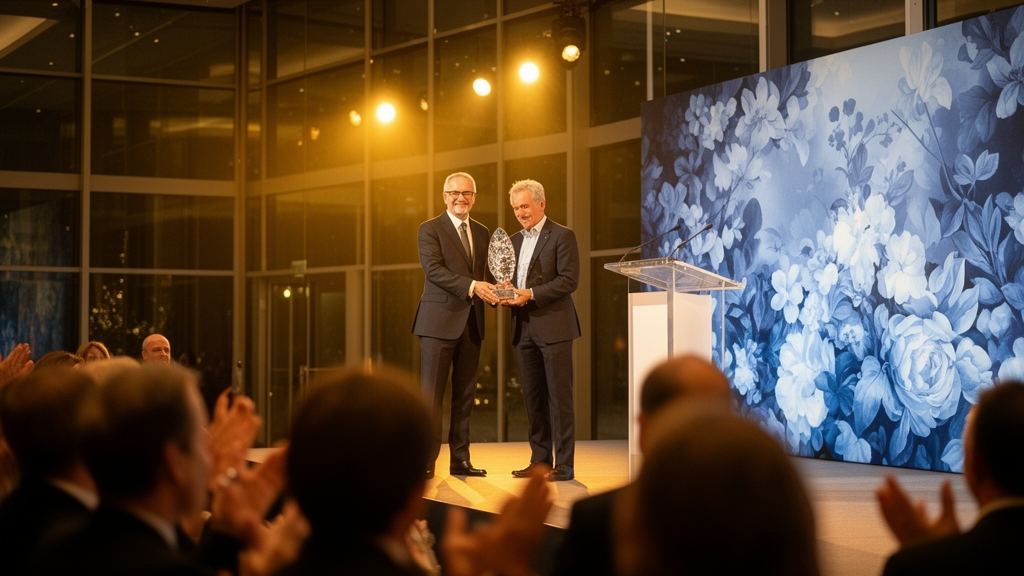
Springer Nature has announced the recipients of its Editor of Distinction Awards for 2026, an annual programme that recognises the editors whose behind-the-scenes labour keeps the scientific record accurate, fair and trustworthy. Among the journals celebrating this year is BMC Pharmacology and Toxicology, part of the BMC series of open access titles, which has named a cohort of honorees across two award categories: the Springer Nature Editorial Contribution Award and the Springer Nature Author Service Award. The announcement, published on the journal’s Springer Nature updates page, is a reminder that peer review, often invisible to readers, depends on people who volunteer substantial time and expertise to evaluate manuscripts they will never be credited for in a byline.
The Editorial Contribution Award is given for meticulous assessment of submissions and rigorous management of the peer review process, with the stated aim of safeguarding the scientific accuracy of the published record. At BMC Pharmacology and Toxicology, thirteen editors were recognised in this category: Abdelwahab Omri, Anshuman Chandra, Catherine Sherwin, Giovanni Tarantino, Hualin Cai, Imran Khan, Jeffrey Raj, Josef Yayan, Koushik Debnath, Marcelo Arbo, Md Jakaria, Zhengwei Huang and Zhenwei Yu. The breadth of the list reflects the international character of modern pharmacology and toxicology research, drawing in editors whose work spans drug discovery, toxicological safety assessment and translational pharmacology.
The second category, the Author Service Award, recognises exceptional service in improving the author experience and ensuring that the peer review process is efficient, constructive and fair. Four editors received this distinction at the journal: Anindya Bose, Josef Yayan, Simone Brogi and Zhenwei Yu. Notably, two names appear on both lists, Josef Yayan and Zhenwei Yu, indicating that their contributions were judged strong enough to merit recognition for both the technical rigour of their manuscript assessments and the quality of the guidance they provide to authors navigating revision and resubmission.
Why does this matter to the wider research community? Peer review is the gatekeeping mechanism on which virtually every scientific claim published in a journal depends. In pharmacology and toxicology, the stakes are particularly high, because published findings feed directly into decisions about drug safety, dosing, regulatory submissions and clinical practice. An editor who catches a flawed statistical analysis, questions an implausible dose-response curve, or insists on proper reporting of animal studies is doing work that protects patients as well as the integrity of the literature. Awards like these make that labour visible at a time when the peer review system is under sustained strain from rising submission volumes and growing concerns about research integrity.
The mechanics of the editorial role are worth unpacking for readers outside academic publishing. When a manuscript arrives at a journal such as BMC Pharmacology and Toxicology, an academic editor, typically a practising researcher serving in a voluntary or honorarium-based capacity, performs an initial assessment to decide whether the paper falls within scope and meets basic standards of methodological soundness. If it passes that triage, the editor selects and invites peer reviewers, usually two or more independent experts, then weighs their reports, arbitrates disagreements, and issues a decision: accept, minor revision, major revision or rejection. Throughout, the editor is responsible for ensuring that reviewers’ criticisms are conveyed constructively and that authors’ responses are given fair consideration.
That process is more demanding than it may sound. Reviewers frequently disagree, sometimes diametrically, about whether a finding is robust. Authors may push back against requests for additional experiments. Editors must judge whether a revision genuinely addresses a scientific concern or merely papers over it with rewording. In fields like toxicology, where studies often involve complex dose-response modelling, interspecies extrapolation and long-term exposure data, the technical questions an editor must adjudicate can be highly specialised. The Editorial Contribution Award explicitly rewards this kind of meticulous assessment, framing it as a safeguard for scientific accuracy rather than a bureaucratic checkpoint.
The Author Service Award, by contrast, highlights a dimension of editing that has gained prominence as open access publishing has expanded. BMC journals operate on an open access model in which authors pay article processing charges and papers are made freely available to readers worldwide. In that environment, the author experience, how quickly decisions arrive, how clearly revision requests are communicated, how fairly appeals are handled, becomes a competitive differentiator as well as an ethical obligation. An editor who returns detailed, actionable feedback helps authors improve their papers rather than simply filtering them, which is the spirit the award language captures in its emphasis on efficiency, constructiveness and fairness.
Springer Nature’s broader framing of the awards underscores the range of activities that editorial service encompasses. In the announcement, the publisher notes that editorial teams work to develop networks for authors and peer reviewers, to help authors improve their papers, and to advocate for their journal communities, describing this contribution as outstanding and as helping to advance discovery. That advocacy component is easy to overlook: editors are also ambassadors who recruit submissions, encourage early-career researchers to review, and shape a journal’s reputation through the standards they enforce. For a specialty journal in pharmacology and toxicology, a credible editorial board is one of the main signals to authors that their work will be evaluated seriously.
The 2026 awards also arrive against a backdrop of intense debate about the sustainability of peer review. Studies of reviewer workload have suggested that a small fraction of researchers shoulder a disproportionate share of reviews, and publishers have experimented with everything from artificial intelligence screening tools to published peer review reports to distribute and legitimise the work. Against that backdrop, formal recognition programmes serve a dual purpose: they reward individuals whose service might otherwise go unacknowledged on a curriculum vitae, and they signal to the community that editing is a valued scientific activity, not an administrative afterthought. For early-career researchers weighing whether to accept an invitation to join an editorial board, that signal matters.
For the honorees themselves, the recognition carries practical weight. Editorial service is increasingly counted in research assessments, funding applications and promotion cases, and a named award from a major publisher provides verifiable documentation of that contribution. For readers of BMC Pharmacology and Toxicology, the list offers a transparent look at who is steering the journal’s quality control. And for the research communities the journal serves, from medicinal chemists screening candidate compounds to toxicologists assessing environmental hazards, the message is that the people guarding the pipeline of published evidence are being held up, and held accountable, by name. The full list of this year’s recipients, along with the publisher’s announcement, is available on the journal’s updates page at Springer Nature’s link.springer.com platform.
Subject of Research: Editorial recognition awards for peer review and author service at BMC Pharmacology and Toxicology
Article Title: Springer Nature Editor of Distinction Awards 2026
Article References: Springer Nature Editor of Distinction Awards 2026. (n.d.). Original publication
Image Credits: AI Generated
DOI: Not provided
Keywords: Springer Nature, peer review, BMC Pharmacology and Toxicology, Editor of Distinction Awards, editorial service, open access publishing, scientific integrity, pharmacology, toxicology, author experience, research publishing, academic editors
Cite Scienmag News
Ophelia Keating. (October 9, 2026). Peer Review Champions Honoured in Springer Nature Editor of Distinction Awards 2026. Scienmag. https://scienmag.com/peer-review-champions-honoured-in-springer-nature-editor-of-distinction-awards-2026-2/
Ophelia Keating. "Peer Review Champions Honoured in Springer Nature Editor of Distinction Awards 2026." Scienmag, 9 October 2026, https://scienmag.com/peer-review-champions-honoured-in-springer-nature-editor-of-distinction-awards-2026-2/. Accessed 9 October 2026.
Ophelia Keating. "Peer Review Champions Honoured in Springer Nature Editor of Distinction Awards 2026." Scienmag. October 9, 2026. https://scienmag.com/peer-review-champions-honoured-in-springer-nature-editor-of-distinction-awards-2026-2/


