


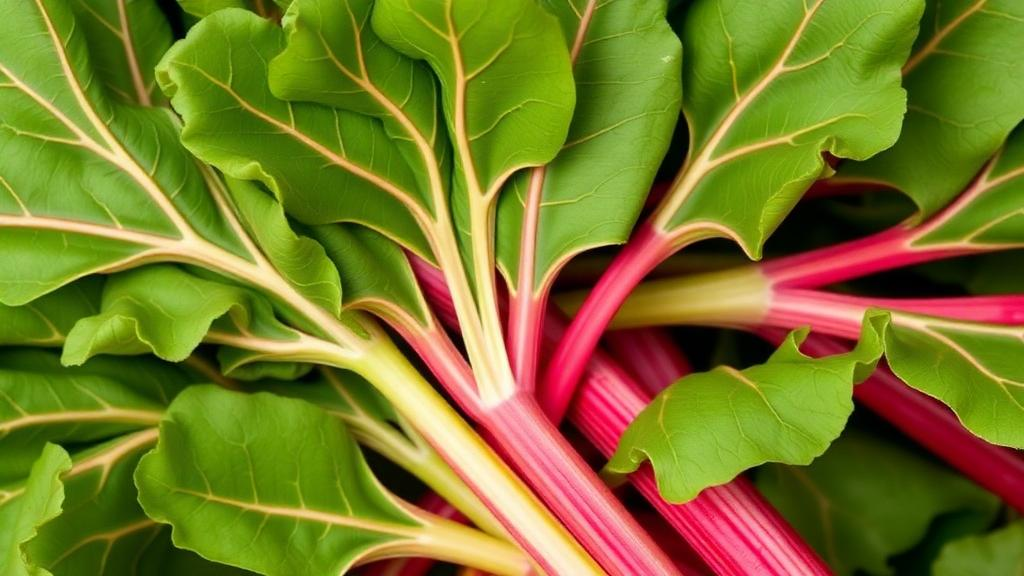
High in the Western Himalayas, a plant with deep cultural and medicinal roots is running out of safe ground. Himalayan rhubarb, Rheum australe, a striking member of the buckwheat family prized for centuries in traditional medicine systems across South Asia, now faces a double squeeze: a warming, shifting climate and mounting human pressure on the fragile mountain ecosystems where it grows. A new field survey and modeling study, published in Plant Biosystems, maps where the species clings on today and where it is likely to survive as the century unfolds, and the picture is one of temporary gains followed by long-term contraction.
The research team, led by Abdul Basit Mehmood of Quaid-i-Azam University in Islamabad together with colleagues at The University of Azad Jammu and Kashmir, combined intensive fieldwork with species distribution modeling to build one of the most detailed assessments to date of the plant’s status in the region. Their survey covered 28 sampling sites and 560 vegetation quadrats scattered across the mountainous terrain of the Neelum Valley area. In total, they recorded 96 plant species belonging to 32 families, a community dominated by herbaceous plants, hemicryptophytic life forms, and species with small leaves, the classic signature of high-altitude Himalayan flora.
Diversity along the elevation gradient followed a pattern that ecologists have documented in mountain ranges worldwide but that still carries important local lessons. Using polynomial regression, the team found that both Simpson and Shannon diversity peaked at intermediate elevations, with the models explaining a substantial share of the variation, R-squared values of 0.72 and 0.68 respectively. Higher up, the story changed: species evenness declined with elevation, with an R-squared of 0.54, while dominance increased, with an R-squared of 0.61. In other words, the highest zones are not only less diverse but also more lopsided, with fewer species asserting greater control over the vegetation, a structural fragility that leaves alpine communities less resilient to disturbance.
Beta diversity analysis added another layer of insight. Twenty-six species together accounted for 78 percent of the community dissimilarity among sites, meaning that a relatively small set of plants drives most of the turnover in composition from one valley slope to another. The researchers also identified nineteen indicator species that consistently accompany Rheum australe, and their identity tells a sobering story. These companion species are characteristic of excessive grazing pressure and degraded habitats, suggesting that the rhubarb now survives disproportionately in places already altered by human use rather than in pristine alpine meadows.
The disturbance analysis pinpointed the human drivers with unusual clarity. Proximity to nomadic settlements emerged as a major factor, alongside the extraction of non-timber forest products and livestock grazing. Himalayan rhubarb is itself a sought-after medicinal plant, harvested for its anthraquinone-rich roots, which have been studied for antiproliferative and other pharmacological properties. That demand, layered on top of grazing and trampling from migratory herds, creates a persistent erosion of both the plant population and the habitat it depends on. For a species already considered endangered across much of its range, the combination of direct harvesting and indirect habitat degradation is a compounding threat that no single conservation measure can address alone.
To project the future, the team turned to MaxEnt, a widely used maximum-entropy approach for species distribution modeling that estimates the probability of suitable habitat from occurrence records and environmental layers. The model performed with high accuracy, achieving an area under the curve, or AUC, value of 0.949, well above the threshold generally considered reliable. Among the environmental predictors, mean diurnal temperature range stood out as the dominant variable shaping where the plant can persist, a reminder that for alpine organisms the rhythm of freezing nights and milder days is often more decisive than average annual temperature alone.
Under current conditions, the total area classified as suitable habitat, spanning low to very high suitability classes, covers 5,283.58 square kilometers. Within that, the most valuable zones are tightly concentrated: high-suitability habitat covers 1,551.60 square kilometers and very high suitability just 596.11 square kilometers, almost entirely within the northern high-elevation zone of Neelum Valley. That concentration is both a blessing and a liability. It gives conservationists a clear geographic target, but it also means the species’ regional fate rests on a comparatively small and accessible patch of mountain landscape.
The future projections, run under two standard climate scenarios, reveal a nuanced and somewhat counterintuitive trajectory. Under the intermediate SSP-245 scenario, suitable habitat shows a slight redistribution toward the northern mountainous regions by mid-century, followed by contraction and fragmentation by 2100. Under the high-emissions SSP-585 scenario, suitability actually expands northward and upslope during the 2061 to 2080 window, with high-suitability areas reaching 2,461.74 square kilometers. But that apparent expansion is a mirage of timing: toward the end of the century, suitability declines again, indicating a temporary range expansion followed by overall habitat contraction. The plant may climb the mountains as temperatures warm, but the mountains are finite, and the summit zones it retreats into are small, isolated, and ecologically harsh.
This pattern, in which mid-century gains give way to end-century losses, is increasingly recognized as one of the most dangerous dynamics for mountain endemics, because it can lull managers into complacency precisely when the long-term trend is negative. Fragmentation compounds the risk: as suitable patches shrink and split, populations become smaller and more isolated, eroding genetic diversity and reducing the capacity of the species to adapt. Previous studies of other Himalayan medicinal plants, from Aconitum heterophyllum to Dolomiaea costus, have documented similar climate-driven range dynamics, suggesting that Rheum australe is part of a broader wave of high-altitude flora being pushed toward the ceiling of the mountains.
The authors argue that their findings are pivotal for designing conservation strategies and monitoring programs to prevent the depletion of Rheum australe in the Western Himalaya. The practical implications are concrete: protecting the high-suitability core in northern Neelum Valley, regulating grazing and non-timber forest product extraction around nomadic settlement areas, and establishing long-term monitoring in the zones projected to remain suitable under both climate scenarios. For a plant whose roots have anchored traditional medicine for generations, the message of the study is stark but actionable. The window in which Himalayan rhubarb can be secured on its native slopes is open now, and it will not stay open indefinitely.
Subject of Research: Climate change and anthropogenic impacts on the distribution of the medicinal plant Rheum australe in the Western Himalayas
Article Title: Impact of climate change and anthropogenic disturbance on spatial distribution of Rheum australe (Polygonaceae) in the Western Himalayas
Article References: Mehmood, A. B., Mumtaz, A. S., Khan, R. W. A., Ali, A., & Shaheen, H. (2026). Impact of climate change and anthropogenic disturbance on spatial distribution of Rheum australe (Polygonaceae) in the Western Himalayas. Plant Biosystems, 160(5), Article 284. https://doi.org/10.1007/s44473-026-00299-y
Image Credits: AI Generated
DOI: 10.1007/s44473-026-00299-y
Keywords: Rheum australe, Himalayan rhubarb, Western Himalayas, climate change, MaxEnt, species distribution modeling, medicinal plants, grazing, habitat suitability, Neelum Valley, alpine flora, conservation
Cite Scienmag News
Sloane Callahan. (October 8, 2026). Climate Change Could Squeeze Out Himalayan Rhubarb, Study Warns. Scienmag. https://scienmag.com/climate-change-could-squeeze-out-himalayan-rhubarb-study-warns/
Sloane Callahan. "Climate Change Could Squeeze Out Himalayan Rhubarb, Study Warns." Scienmag, 8 October 2026, https://scienmag.com/climate-change-could-squeeze-out-himalayan-rhubarb-study-warns/. Accessed 8 October 2026.
Sloane Callahan. "Climate Change Could Squeeze Out Himalayan Rhubarb, Study Warns." Scienmag. October 8, 2026. https://scienmag.com/climate-change-could-squeeze-out-himalayan-rhubarb-study-warns/


