


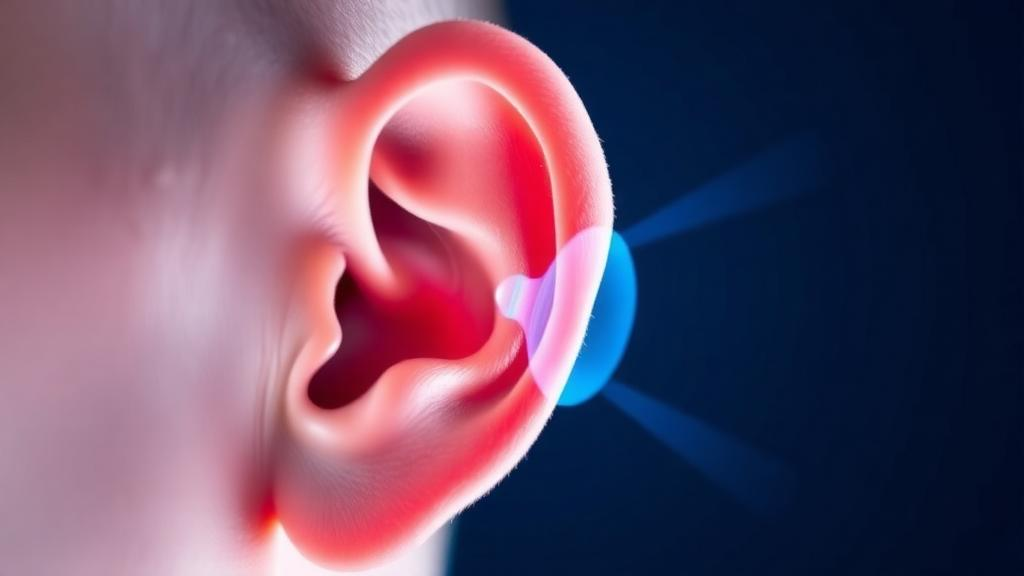
For patients treated for nasopharyngeal carcinoma, one of the most common cancers of the head and neck, the battle does not always end when the tumor is controlled. Intensity-modulated radiation therapy, or IMRT, has transformed outcomes by sculpting high doses of radiation precisely around the tumor, yet even this sophisticated technique cannot fully spare the delicate structures that surround the nasopharynx. Among the most frequent and stubborn consequences is otitis media with effusion, a condition in which sticky fluid accumulates in the middle ear, dulling hearing and persisting for months or years. A new study published in BMC Cancer offers a fresh mechanistic explanation, pointing the finger at an often-overlooked muscle buried deep in the skull: the tensor veli palatine.
The tensor veli palatine is a slender muscle whose job is deceptively simple but physiologically crucial. With each swallow, it contracts and pulls open the Eustachian tube, the narrow cartilage-and-bone channel that connects the middle ear to the nasopharynx. This momentary opening equalizes pressure on both sides of the eardrum and allows the middle ear to ventilate and drain. If the muscle fails, the tube stays collapsed, air in the middle ear is slowly absorbed, and a negative pressure vacuum draws fluid into the cavity. Clinicians have long suspected that radiation damage to this muscle contributes to the high rates of effusion seen after treatment for nasopharyngeal carcinoma, but proving the causal chain has been difficult, because human temporal bone tissue is rarely available for study and the anatomy is extraordinarily difficult to image in living patients.
To crack the problem, a team of researchers led by Jianglian Wei and Guangyao He at the First Affiliated Hospital of Guangxi Medical University turned to an unusual laboratory animal: the tree shrew, Tupaia belangeri. This small, squirrel-like mammal native to Southeast Asia occupies a curious position on the evolutionary tree, closer to primates than to rodents, and its Eustachian tube anatomy and nasopharyngeal region resemble those of humans more closely than the standard mouse or rat models do. Because nasopharyngeal carcinoma is endemic in southern China, including Guangxi, the researchers had both the motivation and the infrastructure to develop a model that mirrors the clinical situation of their patients.
The experimental design was deliberately focused. Twenty tree shrews were divided into two groups of ten. In the experimental group, the researchers aimed radiation directly at the region containing the tensor veli palatine muscle, replicating the off-target exposure that occurs when IMRT beams pass through the parapharyngeal space on their way to the tumor. The control group received no irradiation. The team then deployed a battery of complementary techniques to assess what happened to the muscle and to the middle ear, combining structural imaging, surgical observation under an operating microscope, classical histology, transmission electron microscopy, and biochemical assays of oxidative stress.
The results were striking. After radiotherapy, the auditory vesicles of the irradiated animals contained a yellowish, jelly-like secretion, the hallmark gross finding of otitis media with effusion. Micro-computed tomography performed on five of the irradiated animals confirmed the presence of an effusion sign, revealing fluid within the middle ear cavities on reconstructed images. In other words, simply irradiating the muscle region was sufficient to produce the ear pathology, without any tumor, infection, or obstruction of the tube by masses. This is the central experimental achievement of the study: a reproducible animal model in which radiation injury to the tensor veli palatine alone generates the effusion phenotype seen in patients.
Under the microscope, the irradiated muscles told a story of progressive destruction and failed repair. Hematoxylin and eosin staining revealed significant myofiber injury, with the muscle fibers showing the disorganization and degeneration characteristic of radiation damage. Sirius red staining, which highlights collagen deposition, demonstrated marked fibrosis, the replacement of functional contractile tissue with stiff scar material. The statistical differences between the irradiated and control groups were profound, with p values below 0.001 for both myofiber injury and fibrosis. Transmission electron microscopy added the ultrastructural dimension, showing damage at the level of cellular organelles and muscle architecture that light microscopy could not resolve.
The molecular findings help explain why the muscle deteriorates. Immunohistochemistry showed that expression of transforming growth factor beta 1, the master cytokine driving fibrotic scarring throughout the body, was significantly elevated after irradiation, with p below 0.001. Matrix metalloproteinase-9, an enzyme involved in remodeling the extracellular matrix and in inflammatory tissue breakdown, was also significantly increased, with p below 0.01. Together, these markers sketch a mechanism in which radiation triggers chronic inflammation and activates the fibrogenic program, flooding the muscle with TGF-beta 1 that recruits collagen-producing cells and progressively stiffens the tissue until it can no longer contract effectively to open the Eustachian tube.
Oxidative stress provided the final piece of the biochemical puzzle. The researchers measured superoxide dismutase activity and malondialdehyde content in muscle homogenates using the thiobarbituric acid assay. Superoxide dismutase is a key antioxidant enzyme that neutralizes reactive oxygen species, and its activity was significantly decreased after radiotherapy, with p below 0.01. Malondialdehyde, a lipid peroxidation product that serves as a proxy for oxidative damage to cell membranes, was significantly increased, with p below 0.001. This shift, reduced antioxidant defense combined with elevated peroxidation, is the classic signature of radiation-induced cellular injury, and it provides a plausible upstream event that initiates the cascade leading to inflammation, TGF-beta 1 release, and eventual fibrosis of the muscle.
The clinical implications are considerable. Otitis media with effusion after radiotherapy for nasopharyngeal carcinoma is not a trivial side effect. It causes conductive hearing loss that can impair communication, quality of life, and even the ability to work, and it is notoriously difficult to manage because the underlying dysfunction persists. Current treatments, such as myringotomy with ventilation tube insertion, address the symptom, the trapped fluid, rather than the cause. If radiation-induced fibrosis of the tensor veli palatine is indeed a primary driver, as this model suggests, then the therapeutic horizon shifts toward protecting the muscle during treatment, whether through more refined dose constraints in IMRT planning, radioprotective drugs that boost antioxidant defenses, or antifibrotic agents that blunt the TGF-beta 1 pathway before scarring becomes irreversible.
The study also validates the tree shrew as a valuable model organism for head and neck radiobiology. Rodents, the workhorses of radiation research, have Eustachian tube anatomy that differs substantially from that of humans, which has limited the translation of experimental findings to the clinic. The tree shrew’s closer phylogenetic relationship to primates and its comparable nasopharyngeal architecture make it a compelling platform for testing interventions before they reach patients. The work, funded by the National Natural Science Foundation of China and several Guangxi regional programs, was approved by the Experimental Animal Ethics Committee of Guangxi Medical University. As with any animal model, caveats remain: the radiation exposure was localized to the muscle region, and the timeline and dose distribution in patients are more complex. Nevertheless, by connecting a specific irradiated anatomical structure to a specific clinical complication through a defined molecular pathway, the study transforms a long-standing clinical suspicion into a testable mechanism, and it opens a concrete path toward preventing one of the most burdensome late effects of head and neck cancer therapy.
Subject of Research: Radiation-induced injury of the tensor veli palatine muscle and its role in otitis media with effusion after nasopharyngeal carcinoma radiotherapy, studied in a tree shrew model.
Article Title: Cancer-related radiation injury of tensor veli palatine and its contribution to otitis media with effusion: insights from a tree shrew model
Article References: Wei, J., Xie, M., Zhao, P., Li, J., Tang, A., & He, G. (2026). Cancer-related radiation injury of tensor veli palatine and its contribution to otitis media with effusion: insights from a tree shrew model. BMC Cancer. https://doi.org/10.1186/s12885-026-17071-2
Image Credits: AI Generated
DOI: 10.1186/s12885-026-17071-2
Keywords: nasopharyngeal carcinoma, intensity-modulated radiation therapy, tensor veli palatine, otitis media with effusion, Eustachian tube, radiation-induced fibrosis, TGF-beta 1, MMP-9, oxidative stress, tree shrew model, BMC Cancer, hearing loss
Cite Scienmag News
Nathaniel Bowman. (October 8, 2026). Radiation Damage to a Tiny Ear Muscle May Drive Hearing Loss After Cancer Therapy. Scienmag. https://scienmag.com/radiation-damage-to-a-tiny-ear-muscle-may-drive-hearing-loss-after-cancer-therapy/
Nathaniel Bowman. "Radiation Damage to a Tiny Ear Muscle May Drive Hearing Loss After Cancer Therapy." Scienmag, 8 October 2026, https://scienmag.com/radiation-damage-to-a-tiny-ear-muscle-may-drive-hearing-loss-after-cancer-therapy/. Accessed 8 October 2026.
Nathaniel Bowman. "Radiation Damage to a Tiny Ear Muscle May Drive Hearing Loss After Cancer Therapy." Scienmag. October 8, 2026. https://scienmag.com/radiation-damage-to-a-tiny-ear-muscle-may-drive-hearing-loss-after-cancer-therapy/


