


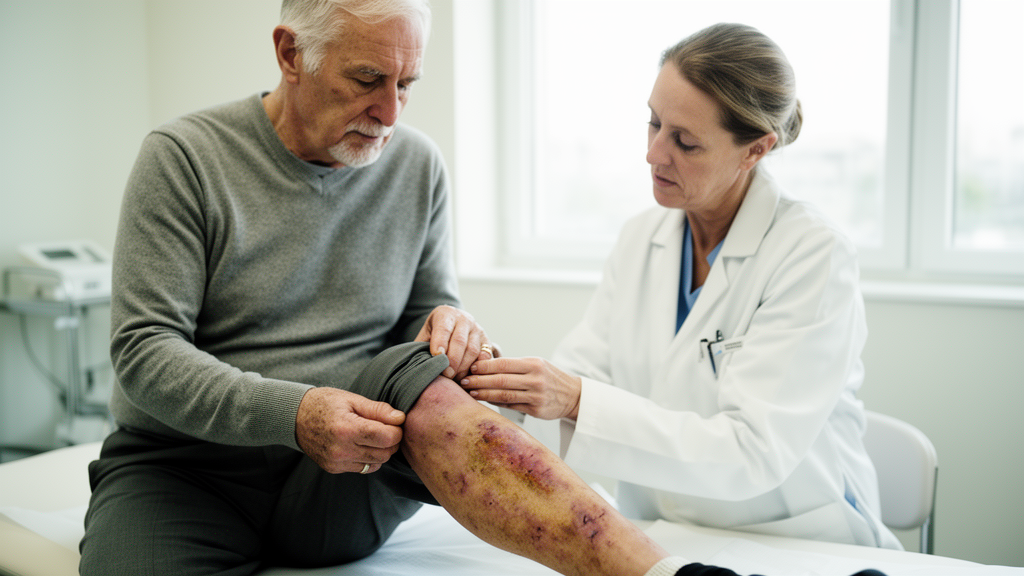
When a broken bone becomes infected, the consequences can ripple far beyond the fracture site. A new systematic review and meta-analysis published in the Journal of Bone and Joint Infection has pulled together the scattered evidence on what happens to patients in the years after they are treated for fracture-related infection, a complication that orthopaedic surgeons consider among the most challenging they face. The analysis, led by Johann Alexander Betker and colleagues at University Hospital Regensburg in Germany, examined fifteen studies and found a sobering pattern: even a year or more after treatment, patients’ physical quality of life remained persistently below normal population levels, while separate psychological testing revealed depressive symptom scores that crossed established clinical thresholds.
Fracture-related infection, often abbreviated FRI, occurs when bacteria colonize the site of a broken bone, frequently around the plates, screws, or nails used to stabilize the fracture. The condition is estimated to affect roughly one to two percent of closed fractures, but the risk climbs dramatically in severe open injuries, exceeding thirty percent in Gustilo-Anderson type III open fractures depending on the anatomical site and injury severity. Treating these infections demands meticulously staged surgical protocols, prolonged hospitalization, and extended courses of antimicrobial therapy, all aimed simultaneously at eradicating the infection and restoring the biomechanical integrity of the skeleton. Reported eradication rates range widely, from twenty-nine to eighty-seven percent, and treatment failure can leave patients with irreversible functional compromise or even amputation.
The human toll of this complication extends well beyond the operating theatre. Traumatic injury alone can provoke adverse psychological outcomes, but the superimposition of a bone infection amplifies those effects through prolonged immobility, treatment uncertainty, and financially destabilizing periods of work incapacity. Infection recurrence portends intensified morbidity, extended therapy, and a profound deterioration in quality of life. Yet until now, the long-term effects of FRI on quality of life and mental health had remained murky, scattered across studies that used different instruments, definitions, and follow-up periods.
To bring order to this fragmented literature, the Regensburg team conducted a search compliant with the Preferred Reporting Items for Systematic Reviews and Meta-Analyses, scanning PubMed, Web of Science, and Google Scholar for studies published between 2010 and August 2025. The initial search identified 7,808 articles, which the researchers whittled down through systematic screening to fifteen studies meeting strict inclusion criteria: adult patients with FRI, more than five participants, validated quality-of-life instruments, and a minimum follow-up of twelve months. Methodological quality was appraised using the Methodological Index for Non-Randomised Studies, known as MINORS, and risk of bias was assessed with the ROBINS-I framework, with discrepancies resolved through consensus meetings.
What the quality assessment revealed was a field built on shaky foundations. The evidence base was dominated by retrospective cohort studies, with no study achieving level I evidence, the gold standard of randomized trials. Studies achieved on average only 66.4 percent of the maximum MINORS score, and the average loss to follow-up was nearly twenty percent, ranging as high as 57.3 percent in one study. Ten of the fifteen studies carried a moderate risk of bias, three a high risk, and only two a low risk, with confounding identified as the principal source of bias because retrospective designs rarely fully account for factors that shape outcomes.
The quantitative findings nonetheless paint a coherent picture. In a meta-analysis of three studies covering 125 patients tracked before and after surgery, the physical component score of the SF-36 and SF-12 questionnaires rose by an average of 5.81 points at twelve months or more, an improvement that did not reach statistical significance. The mental component score rose by 3.86 points, also non-significant. More striking were the pooled long-term estimates drawn from seven studies comprising 262 patients: a mean physical component score of 38.9 and a mean mental component score of 51.2. When compared against normative data from the United States general population, where the mean physical score sits at 49.22, the FRI patients’ physical quality of life was significantly reduced, while the difference in mental quality of life was not statistically significant.
The psychological analysis added a troubling dimension. Three studies assessing 118 patients with the ICD-10-based Symptom Rating questionnaire, or ISR, found that the weighted mean depression score reached 1.08, crossing the cut-off value for a mild psychological symptom burden, a finding the researchers call caseness. The total ISR score of 0.68 also surpassed the caseness threshold, and sensitivity analyses confirmed that the depressive symptom finding was robust to the removal of any single study. Anxiety, compulsive, eating, and somatoform symptom scores, by contrast, remained below clinical thresholds, suggesting the psychological burden concentrates specifically in the depressive domain.
The authors are careful to caution against over-interpretation. Heterogeneity across the pooled studies was extreme, with the I-squared statistic reaching approximately 85.7 percent for the physical component score and a staggering 97.8 percent for the mental component score, indicating that study-specific, clinical, and methodological factors strongly influence observed outcomes. The pooled estimates, the researchers argue, should be read as descriptive reference benchmarks rather than precise predictions. Moreover, the depression findings cannot be attributed to infection itself, because the analysis lacked an appropriately matched control group of patients with comparable fractures, trauma exposure, or chronic conditions. It remains unclear whether the observed symptoms reflect the effects of the infection or the broader consequences of severe musculoskeletal injury and prolonged treatment.
Another complication is that the studies span more than fifteen years, a period during which the conceptual understanding and diagnostic framework of FRI evolved considerably. International consensus on a standardized definition of the condition emerged only recently, and earlier investigations often relied on less-standardized criteria, injecting further variability into the evidence base. Most cohorts also originated from German healthcare systems while the normative comparison data came from the United States, a mismatch the authors note is softened by previous work showing broad agreement between German and American SF-36 reference values, but which may still color the observed differences.
Perhaps the most clinically resonant insight emerges from the longitudinal data: successful eradication of infection does not inevitably restore patient-reported health. While two studies reported improved quality of life after treatment, the largest cohort actually demonstrated a decline following surgery, a discrepancy that underscores how the surgical battle against infection and the patient’s subjective recovery can diverge. The authors call for prospective, properly blinded studies using standardized FRI definitions, validated quality-of-life instruments, longitudinal follow-up, integrated psychological assessment, and carefully selected control groups to clarify whether the observed impairments arise primarily from the infection, the severe trauma, the surgical treatment, or the cumulative burden of recovery. In the meantime, they suggest, regular psychological screening of FRI patients deserves a place in routine follow-up care, because the wounds this complication leaves behind are not always visible on an X-ray.
Subject of Research: Long-term quality of life and depressive symptoms after fracture-related infection treatment
Article Title: Investigating long-term quality of life and depressive symptoms following fracture-related infection: a systematic review with meta-analysis of heterogeneous evidence
Article References: Betker, J. A., Walter, N., Rupp, M., Baertl, S., & Alt, V. (2026). Investigating long-term quality of life and depressive symptoms following fracture-related infection: a systematic review with meta-analysis of heterogeneous evidence. Journal of Bone and Joint Infection, 11(5), 569-577. https://doi.org/10.5194/jbji-11-569-2026
Image Credits: AI Generated
Keywords: fracture-related infection, quality of life, depression, systematic review, meta-analysis, orthopaedic surgery, osteomyelitis, patient-reported outcomes, SF-36, mental health, trauma surgery, psychological screening
Cite Scienmag News
Glenn Wilkins. (October 8, 2026). Bone Infections Leave Lasting Physical Scars and Hidden Depression, Review Finds. Scienmag. https://scienmag.com/bone-infections-leave-lasting-physical-scars-and-hidden-depression-review-finds/
Glenn Wilkins. "Bone Infections Leave Lasting Physical Scars and Hidden Depression, Review Finds." Scienmag, 8 October 2026, https://scienmag.com/bone-infections-leave-lasting-physical-scars-and-hidden-depression-review-finds/. Accessed 8 October 2026.
Glenn Wilkins. "Bone Infections Leave Lasting Physical Scars and Hidden Depression, Review Finds." Scienmag. October 8, 2026. https://scienmag.com/bone-infections-leave-lasting-physical-scars-and-hidden-depression-review-finds/


