


NASA has awarded $20 million to a University of Arizona-led team to build a small satellite that will do something no spacecraft has done in nearly three decades: measure the polarization of ultraviolet starlight from orbit. The mission, known as PUFFINS, short for Polarimetry in the Ultraviolet to Find Features in INterStellar dust, will stare at roughly 70 stars from low-Earth orbit and analyze how their light has been subtly twisted and filtered by the dust that drifts between the stars. That dust, often dismissed as a nuisance by astronomers trying to see beyond it, is the mission’s real quarry. By reading the fingerprints it leaves on starlight, PUFFINS aims to answer long-standing questions about what interstellar dust grains are made of, how they form, how they evolve, and how they ultimately become the raw material for new stars and planets.
The award places the University of Arizona at the center of an unusual corner of NASA’s astrophysics portfolio. PUFFINS is the second mission the university has led under the Astrophysics Pioneers program, an initiative launched in 2020 to deliver high-value science on small, cost-capped platforms. The university also leads Aspera, a first-generation Pioneers mission scheduled to launch early next year, and contributed significantly to Pandora, which launched in January of this year. According to university leadership, Arizona has emerged as the only university leading multiple missions in the Pioneers program, while also running mission operations for Pandora. The new mission is a joint effort with the McDonald Observatory at The University of Texas at Austin and an international network of early-career and senior scientists, with corporate partners including Tucson-based Ascending Node Technologies and SFL Missions Inc. of Toronto.
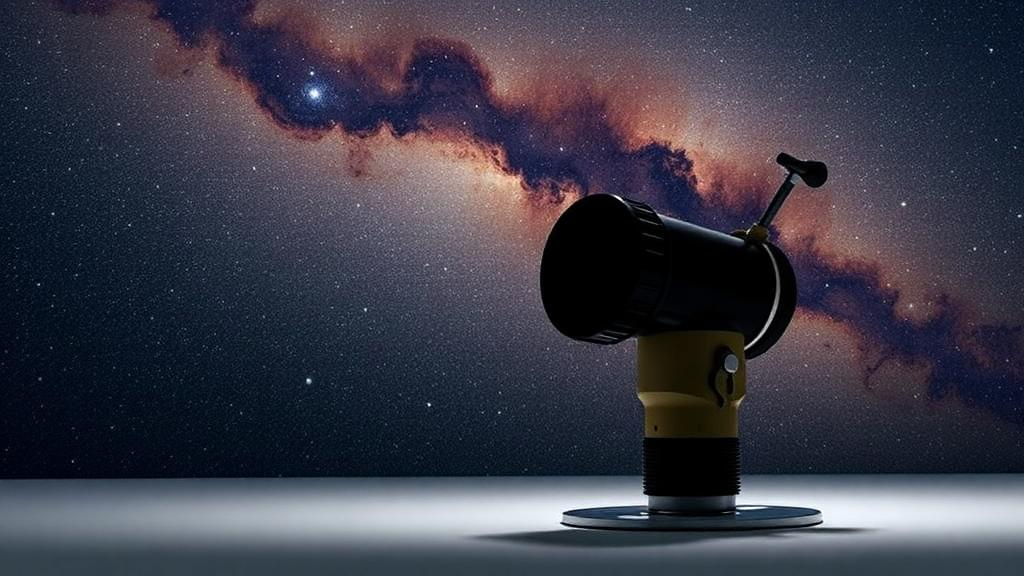
At the heart of the satellite sits a specialized telescope just 10 inches across, roughly the size of a large dinner plate, designed to capture ultraviolet light from distant stars. Despite its modest aperture, the instrument’s value lies not in collecting vast quantities of light but in dissecting it with extraordinary care. PUFFINS will measure the polarization properties of starlight across a range of ultraviolet wavelengths using a technique called spectropolarimetry, an approach that has not been deployed in space in nearly thirty years. Polarization describes the orientation of light waves as they travel, and it carries information that ordinary brightness measurements cannot reveal. When unpolarized starlight passes through a cloud of interstellar dust, the dust imprints a preferred orientation on the light, and the precise way that imprint varies with wavelength encodes the size, composition, and alignment of the grains themselves.
The physics behind the technique is elegant. Interstellar dust grains made of silicates, when spun up by collisions and other processes, tend to align with the galaxy’s magnetic field, much like tiny compass needles. Once aligned, they act collectively as a polarizing filter for starlight passing through them. By measuring that polarization in the ultraviolet, PUFFINS can probe the smallest grain sizes, those smaller than about 50 nanometers, roughly the size of the common cold virus. Such grains are effectively invisible to optical and infrared telescopes, which is precisely why the ultraviolet window matters. The small grains are believed to play an outsized role in the chemistry and energy balance of the interstellar medium, yet their properties remain poorly constrained by existing observations.
Ramya Anche, an assistant research professor at Steward Observatory who serves as the mission’s principal investigator, described the stakes in plain terms. PUFFINS, she said, will change how we understand the dust between stars, and understanding these tiny grains is essential to building a complete picture of how interstellar dust forms, evolves over time, and ends up incorporated into new stars and planets. For Anche, the mission is also a personal milestone. She said PUFFINS represents the culmination of more than a decade of instrument-building work in polarimetry, and that it will be the first instrument she helped design that will actually be built and launched into space. She led the winning proposal to NASA while still a postdoctoral researcher at Steward Observatory, a detail that Steward Observatory director Buell Jannuzi highlighted as evidence of the institution’s unusual willingness to let junior scientists lead major programs.
B-G Andersson, the mission’s science principal investigator and assistant director for research at McDonald Observatory, has spent more than two decades studying how interstellar dust grains align with magnetic fields. He framed the mission’s scientific ambition around one of the oldest puzzles in the field. Interstellar polarization was discovered in 1949, he noted, and astronomers are finally beginning to understand its origin in dust grains. PUFFINS, he said, will work on fully solving what for more than fifty years was the second-longest-standing mystery of interstellar medium physics. The connection between grain alignment and magnetic fields means the mission’s data will also inform studies of the galaxy’s magnetic structure, a topic that touches everything from star formation to the propagation of cosmic rays.
The reach of interstellar dust extends far beyond the specialists who study it directly. Dust makes up only about one percent of the visible mass of the Milky Way, yet its effects ripple through nearly every corner of astrophysics. It dims and reddens the light of distant supernovae, complicating measurements of cosmic expansion. It shields molecules in cold clouds, enabling the chemistry that precedes star birth. It injects heavy elements, forged inside dying stars, back into the galactic ecosystem, where they later condense into the next generation of stars and planets. Because dust properties vary with environment, uncertainties about dust translate directly into uncertainties about nearly every astronomical measurement made from within the Milky Way.
PUFFINS is designed to attack that variability head-on. By observing stars at different distances and in different environments, including nearby stellar nurseries, reflection nebulae where dust scatters starlight back toward Earth, and even the Magellanic Clouds, our closest extra-galactic neighbors, the mission will build a detailed map of how interstellar dust varies across the sky. Comparing polarization signatures across such diverse settings allows scientists to separate the effects of grain composition from those of grain size distribution and magnetic environment. The target list of about 70 stars is chosen so that each sightline probes a distinct combination of dust conditions, turning the spacecraft into a sampling network for the galaxy’s dusty byways.
The mission is currently in its early design phase, with a launch target of 2030. Its planners see it as more than a standalone experiment: PUFFINS is intended to serve as a critical bridge to NASA’s Habitable Worlds Observatory, the agency’s next flagship space telescope currently in development for the 2040s. That flagship may carry an ultraviolet spectropolarimeter in one of its instrument ports, and PUFFINS data can help define what science such an instrument could accomplish. Demonstrating spectropolarimetry in orbit on a small platform, decades after the last such instrument flew, would de-risk the technology and sharpen the scientific case for its inclusion on a far larger observatory.
Behind the hardware, the team has been deliberate about designing PUFFINS as a training ground as much as a science mission. Graduate students and undergraduate researchers are embedded in the instrument development effort from the start, and the University of Arizona roster spans faculty, postdoctoral researchers, and students across Steward Observatory. Kyle Van Gorkom, an early-career faculty member at Steward Observatory who serves as deputy principal investigator and leads the spacecraft interface work, said the team is excited to start from conceptualizing a space telescope and see it through from build to launch to operating in orbit. While the payload is being designed and assembled, the science team will acquire spectropolarimetry data of the mission’s target stars in visible and infrared light using University of Arizona telescopes and other facilities around the world, groundwork that will enhance the ultraviolet data PUFFINS collects and enable a more complete analysis. Erika Hamden, a professor of astrophysics at Steward Observatory who leads the Arizona Space Institute, said the institute was set up to enable exactly these types of missions and that the team has a great science idea. If all goes to plan, by the early 2030s a dinner-plate-sized telescope will be quietly reading the light of distant stars, and with it the story of the dust that fills the space between them.
Subject of Research: Ultraviolet spectropolarimetry of starlight to characterize interstellar dust grains
Article Title: Stories from star dust: U of A-led mission will study light from distant stars
Article References: Stories from star dust: U of A-led mission will study light from distant stars. (n.d.). Original publication
Image Credits: AI Generated
DOI: Not provided
Keywords: PUFFINS, NASA, interstellar dust, polarization, ultraviolet astronomy, spectropolarimetry, University of Arizona, Steward Observatory, Astrophysics Pioneers, small satellites, magnetic fields, star formation
Cite Scienmag News
Grant Pearson. (October 8, 2026). NASA Bets $20 Million on a Tiny Telescope to Decode the Mystery of Starlight and Stardust. Scienmag. https://scienmag.com/nasa-bets-20-million-on-a-tiny-telescope-to-decode-the-mystery-of-starlight-and-stardust/
Grant Pearson. "NASA Bets $20 Million on a Tiny Telescope to Decode the Mystery of Starlight and Stardust." Scienmag, 8 October 2026, https://scienmag.com/nasa-bets-20-million-on-a-tiny-telescope-to-decode-the-mystery-of-starlight-and-stardust/. Accessed 8 October 2026.
Grant Pearson. "NASA Bets $20 Million on a Tiny Telescope to Decode the Mystery of Starlight and Stardust." Scienmag. October 8, 2026. https://scienmag.com/nasa-bets-20-million-on-a-tiny-telescope-to-decode-the-mystery-of-starlight-and-stardust/


