


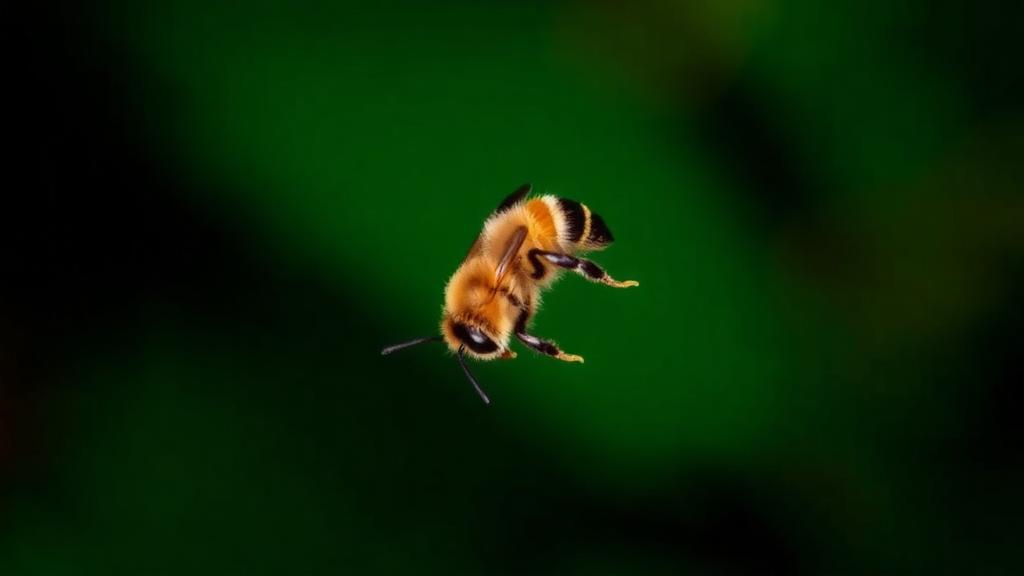
Deep in the mountain forests of Viti Levu, Fiji’s largest island, lives a group of bees so small, so elusive, and so tied to the forest canopy that scientists only described them formally in 2024. Now, a new genomic study has delivered a sobering verdict on their fate: the most abundant of these bees, a species named Hylaeus navai, has lost roughly 99 percent of its effective population size over the past 150 years, a collapse that closely tracks European colonisation, deforestation, cyclones and the spread of a toxic invasive tree. The findings, published in Ecology and Evolution, offer one of the clearest genetic portraits yet of a cryptic pollinator decline in the tropics, and they suggest that many similar collapses may be going undetected in forest canopies around the world.
The research team, led by scientists at the University of Wollongong in Australia, combined systematic field surveys, population genomics and species distribution modelling to assess the conservation status of Fiji’s endemic Hylaeus bees. These tiny insects, averaging just 3.9 millimetres in body length, belong to a radiation of six canopy-specialist species found nowhere else on Earth. Unlike most bees, they carry pollen internally in their crops rather than on external hairs, and they appear to specialise on red-flowered canopy plants, a preference that challenges the long-standing assumption that bees cannot see red. Their small size likely limits their foraging ranges, making them particularly vulnerable to habitat fragmentation and forest disturbance.
Sampling these bees posed a formidable challenge. The team designed a stratified, randomised survey across Viti Levu, dividing the island into elevational bands and land-use categories, and generating 36 primary sampling sites along the road network, with 36 auxiliary sites as backups. At each site, crews of three to five people worked in parallel: one person always sweep-netting low vegetation with a standard net, and at least one person always deploying a specialised canopy net extending nine to fourteen metres into the treetops. This dual approach was essential, because traditional ground-level surveys systematically miss entire pollinator communities living in the canopy. Between April 14 and May 11, 2025, the team visited 54 locations and collected 101 Hylaeus specimens, dominated by the species Geissois superba and Metrosideros collina as floral hosts.
The elevational patterns were immediately striking. Hylaeus navai and H. veli were found only between 875 and 1,334 metres, while H. derectus ranged from 371 to 900 metres and H. albaeus from 3 to 923 metres. Critically, of the 26 randomly generated sites below 600 metres, the team collected only a single Hylaeus specimen, despite nearly an hour of average sampling effort per site. This near-total absence from lowlands, where historical records from 1970 to 2016 show these bees were once present, is deeply concerning and points to possible extirpations across Fiji’s lowland forests, which make up 78 percent of the country’s forested area.
To read the demographic history written into the bees’ genomes, the researchers sequenced genome-wide single nucleotide polymorphisms from 94 specimens using Diversity Arrays Technology, filtering the raw data down to 4,839 high-quality loci for the focal species H. navai. They supplemented this with mitochondrial COI barcoding from 16 pinned representatives, sequenced rapidly using Oxford Nanopore technology at the Australian National University. The nuclear data revealed a single, panmictic population of H. navai across the highland forests: principal component analyses, discriminant analyses and ancestry coefficient estimates all pointed to one interbreeding population, with no significant isolation by distance. This genetic uniformity likely reflects ongoing gene flow through the contiguous highland forest, though the COI phylogeny revealed clear divergence between island populations on Viti Levu and Taveuni, hinting that structure emerges at larger geographic scales.
The most dramatic results came from coalescent-based demographic reconstruction using Stairway Plot 2, which infers past effective population size from the site frequency spectrum. Calibrated with a honey bee mutation rate and an estimated six generations per year, based on the life history of the related Hawaiian species Hylaeus anthracinus, the reconstruction revealed a staggering trajectory. A modest decline of about 7 percent began around 1550, plausibly linked to the spread of slash-and-burn agriculture, first evidenced in Fiji around 2,000 years ago. Then, from roughly 1874, coinciding with European colonisation, the declines accelerated sharply. Three separate ten-year windows each saw losses that would individually justify IUCN Red List categories: a 61 percent drop between 1933 and 1942, a 76 percent drop between 2002 and 2011, and an 82 percent drop between 2016 and 2025. Taken together, the effective population size fell by approximately 99 percent over 150 years, with even the most conservative confidence intervals indicating a decline of at least 81.6 percent.
The timing of these crashes aligns with known ecological upheavals. Fiji’s closed natural forests declined by 21 percent between 1991 and 2007, largely through urban and agricultural expansion. The invasive African tulip tree, introduced as an ornamental in the 1930s, produces nectar toxic to honey bees and stingless bees, and as a red-flowering canopy tree it may act as an ecological trap for the red-flower-specialist Hylaeus. Species distribution models built with MaxEnt showed strong predictive performance, with suitable habitat for H. navai confined to just 1.4 to 2.4 percent of Fiji’s terrestrial area, concentrated at mid-to-high elevations, while the African tulip tree’s suitable habitat, covering 13.4 percent of the study area, was largely inverse to the bee’s, concentrated in the lowlands the bees appear to have abandoned.
Cyclones add another layer of threat. The 2020 population crash coincides with Tropical Cyclone Harold, a category four storm that struck in April of that year. The team also noted that a 2015 specimen of H. albaeus from Rakiraki could not be recollected after Tropical Cyclone Winston devastated the area in 2016, despite repeated targeted efforts in subsequent years. Cyclones destroy canopy cover, fell nest-bearing stems and create disturbed habitat that favours African tulip tree establishment, and projected increases in cyclone intensity under climate change could accelerate these declines further. Warming temperatures, rising by 0.018 to 0.024 degrees Celsius per year in daily maxima across Fiji, may also be narrowing the bees’ suitable elevational niche, as experimental work on related megachilid bees has shown reduced emergence rates at warmer, lower elevations.
Contemporary effective population size estimates from linkage disequilibrium methods were inconsistent across allele frequency thresholds, ranging from 121 to 418, and the researchers chose the most conservative estimate of 121 as the most reliable. Either way, the numbers are extraordinarily small for a species that appears to be the most commonly encountered Hylaeus in Fiji. The authors argue that these findings should form the basis of a Critically Endangered listing for H. navai under IUCN criterion A2b, and they emphasise that the declines show no sign of abating. As populations shrink, proportional losses can accelerate, creating a demographic ratchet that becomes progressively harder to reverse.
Beyond the immediate conservation implications for Fiji, the study offers a transferable framework for detecting cryptic declines in understudied ecosystems worldwide. Canopy-specialist Hylaeus bees are expected to be widespread across the Pacific, linking Australian and French Polynesian taxa, and the threats documented here are likely to affect relatives throughout the region. Only 2.6 percent of the world’s 21,000 described bee species have been assessed with sufficient data for the IUCN Red List, and research remains heavily skewed toward North America and Western Europe. The authors argue that systematic, multi-strata sampling paired with molecular techniques provides a roadmap for uncovering hidden biodiversity losses, particularly for forest pollinators that traditional ecological surveys never encounter. Without such integrative approaches, entire radiations of specialist pollinators could collapse before anyone knows they exist.
Subject of Research: Population genomics and conservation status of endemic canopy-specialist Hylaeus bees in Fiji
Article Title: Genomics Reveal Population Crash and Range Contraction in Elusive Fijian Hylaeus Bees
Article References: Edwards, T. A., Esquerré, D., Johnston, N. P., Galvin, S., Maxwell, N. L., Encinas‐Viso, F., & Dorey, J. B. (2026). Genomics Reveal Population Crash and Range Contraction in Elusive Fijian Hylaeus Bees. Ecology and Evolution, 16(10), Article e74366. https://doi.org/10.1002/ece3.74366
Image Credits: AI Generated
DOI: 10.1002/ece3.74366
Keywords: Hylaeus bees, Fiji, population genomics, pollinator decline, canopy ecology, effective population size, species distribution modelling, invasive species, African tulip tree, IUCN Red List, tropical forest, conservation
Cite Scienmag News
Gavin Prescott. (October 8, 2026). Genomes Show Fiji’s Tiny Canopy Bees Have Lost 99% of Their Population. Scienmag. https://scienmag.com/genomes-show-fijis-tiny-canopy-bees-have-lost-99-of-their-population/
Gavin Prescott. "Genomes Show Fiji’s Tiny Canopy Bees Have Lost 99% of Their Population." Scienmag, 8 October 2026, https://scienmag.com/genomes-show-fijis-tiny-canopy-bees-have-lost-99-of-their-population/. Accessed 8 October 2026.
Gavin Prescott. "Genomes Show Fiji’s Tiny Canopy Bees Have Lost 99% of Their Population." Scienmag. October 8, 2026. https://scienmag.com/genomes-show-fijis-tiny-canopy-bees-have-lost-99-of-their-population/


