Dark, sticky lumps of weathered oil known as tarballs are drifting across the surface of the Eastern Arabian Sea in far greater numbers and with far more toxic cargo than previously documented, according to a new open-access study published in Discover Oceans. A team of Indian oceanographers led by S. S. Shaju of the Centre for Marine Living Resources and Ecology has produced the first systematic account of where these floating petroleum residues appear along India’s west coast, when they show up, and what dangerous chemicals they carry. Drawing on fifteen monthly research cruises conducted between December 2017 and February 2019, the researchers found that tarballs persist in the region from May through December, transported by the seasonally reversing monsoon winds and the West India Coastal Current, and laden with polycyclic aromatic hydrocarbons and heavy metals at concentrations that raise serious ecological and public health concerns.
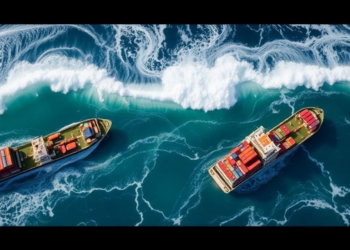
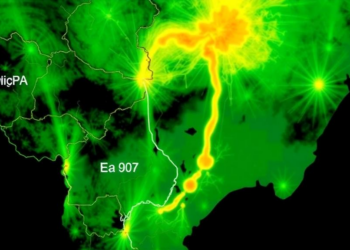
The study area could hardly be more exposed to petroleum pollution. The Arabian Sea receives more than 700 tonnes of oil spill input annually, a burden driven by some of the world’s busiest international tanker routes connecting Middle Eastern oil producers with Japan via the Malacca Strait and with South Africa via the Mozambique Channel. The eastern Arabian Sea, bordering the Indian states of Gujarat, Maharashtra, Goa, Karnataka and Kerala, is also dotted with offshore oil installations, major ports, and shipping lanes where wrecks and accidents occur with troubling regularity. Operational discharges such as tank washings and cargo residues add a steady background of petroleum input, while natural seepage from subsurface reservoirs contributes the remainder. Globally, anthropogenic sources account for slightly more than half of the marine tar load, and the Arabian Sea sits at the intersection of nearly every major contributor.
Tarballs are the end product of a chemical and physical transformation sequence that begins the moment crude oil hits seawater. Lighter hydrocarbon fractions evaporate or dissolve within hours, while wave turbulence and wind shear whip the remaining oil into a water-in-oil emulsion that is foamy and stickier than the parent crude. Roughly half of a typical spill disperses through weathering within twenty-four hours, but the heavier asphaltene-rich residue persists, accumulating debris and fragmenting into small, dark aggregates that are hard and brittle on the outside and soft and semi-solid within. Because these aggregates are less dense than seawater, they float at the surface, riding currents and winds for weeks. The study reports that floating tarballs can remain in the marine environment for sixty to ninety days, ample time to travel hundreds of kilometres before washing onto beaches, mangroves and other sensitive coastal habitats.
The fieldwork behind the new findings was conducted as part of the Marine Ecosystem Dynamics of Eastern Arabian Sea programme, a national initiative of India’s Ministry of Earth Sciences. Researchers aboard the vessels ORV Sagar Kanya and FORV Sagar Sampada repeatedly occupied ten transects running from Cape Comorin in the south to Okha in the north, visually surveying the sea surface each month. Tarballs appeared only in May, September, October, November and December of 2018, and were collected at stations off Mumbai, Goa, Ratnagiri and Bhatkal using buckets and a towed bongo net. The observed tarballs ranged from 0.1 to 4 centimetres in diameter, with the largest specimens, between 2 and 4 centimetres, found off Mumbai in November and December. Notably, no tarballs were sighted during the peak summer monsoon months of June through August, when winds exceeded 9 metres per second and rough seas likely broke oil patches into fragments scattered over much wider areas.
The spatial pattern of sightings maps neatly onto the region’s reversing circulation. The West India Coastal Current flows poleward from November to February and equatorward from April to September, and the researchers used satellite-derived surface current data from NASA’s OSCAR dataset to show how these currents, combined with cross-shore winds, herd tarballs toward or away from the coast. In May, tarballs appeared near Mumbai under onshore-directed currents of less than 0.15 metres per second. By December, during the winter monsoon, tarballs were detected in open-ocean waters as far as 350 kilometres from the coast, caught in well-defined northward current pathways. Many of the tarballs carried goose barnacles of varying sizes, a biological clock of sorts: large barnacles off Bhatkal in September suggested prolonged residence at sea, while small ones off Mumbai indicated fresher arrivals. The authors argue that these sighting locations can be used to validate forward-tracking and backtracking models capable of pinpointing the original sources of the oil.
Chemical analysis revealed that the tarballs are far more than a nuisance for beachgoers. Using inductively coupled plasma optical emission spectrometry, the team measured ten metals and found strikingly elevated concentrations, particularly at nearshore stations off Mumbai, where zinc reached 2,039 parts per million, copper 2,514.8 ppm, nickel 2,293.7 ppm, cobalt 2,220.6 ppm, chromium 2,746.3 ppm, lead 1,396.3 ppm and cadmium as high as 1,354.0 ppm. Iron peaked at 20,052.5 ppm at a station between Ratnagiri and Mumbai, and magnesium reached 53,385.5 ppm off Mumbai. The authors attribute the higher nearshore values to land runoff and industrial activity, noting that the tarballs’ high surface area and hydrophobic chemistry allow them to adsorb additional trace metals from the water column as they drift through polluted coastal waters. The heavy metal burden is partly inherited from the asphaltene fraction of the parent crude oil, which acts as a natural chelating agent for elements such as nickel, vanadium, iron and copper.
The organic fraction of the tarballs proved equally alarming. Gas chromatography tandem mass spectrometry identified eleven polycyclic aromatic hydrocarbons, a class of fused-ring compounds listed by the United States Environmental Protection Agency as priority pollutants for their carcinogenic, mutagenic and toxic properties. Low molecular weight PAHs with two to three rings dominated at stations off Mumbai and Ratnagiri, reaching concentrations of 1,497 and 525 micrograms per gram respectively, a signature the researchers interpret as evidence of relatively fresh petrogenic input, since these lighter compounds degrade and volatilise readily. Four-ring PAHs dominated at four other stations, indicating older, more weathered material. Because low molecular weight PAHs are more water-soluble and bioavailable, freshly formed tarballs are actually more toxic than aged ones, and small tarballs can enter the food chain most easily, consumed directly by filter feeders including whales, sharks, fish and zooplankton.
To trace where the oil came from, the team applied diagnostic ratio analysis, comparing the relative abundance of anthracene to phenanthrene and fluoranthene to pyrene. These isomer pairs form at different rates depending on whether petroleum matured slowly at low temperature underground or was generated by high-temperature combustion. The ratios pointed overwhelmingly to a petrogenic origin, meaning the tarballs derive from crude oil or refined petroleum released through spills, shipping operations or natural seepage, with only a few samples showing values consistent with fossil fuel combustion, plausibly linked to the region’s heavy marine traffic. The authors caution that diagnostic ratios alone provide only a preliminary source assessment, and that definitive fingerprinting would require biomarker or isotopic techniques. Even so, the analysis confirms that the Eastern Arabian Sea is receiving continuous inputs of fresh petroleum rather than merely recycling old residues.
The ecological consequences extend well beyond chemical toxicity. Oil films at the sea surface can impede air-sea gas exchange, promoting temporary anoxia in a basin already notorious for its expanding oxygen minimum zone. Tarballs that beach can fuse with plastic debris to form composite aggregates called plastitar, a newly recognised sink for coastal plastic contamination. Following a shipwreck off Kochi in May 2025, oil contamination was detected in zooplankton, raising the prospect of petroleum residues moving up the food web into fish. Perhaps most unsettling for public health, previous research has found that disease-causing bacteria, including Vibrio vulnificus, occur on tarball surfaces at counts significantly higher than in surrounding sand and seawater, meaning tarballs may serve as rafts dispersing pathogens and non-indigenous species such as barnacles across entire ocean basins.
The study’s authors are candid about its limitations: sampling was opportunistic rather than standardized, no quantitative density measurements were possible, and some samples could not be retained for full chemical characterisation. They frame the work as a qualitative baseline and call for standardized monitoring, improved oil spill response and stronger regulation. With heavy metals known to cause renal failure, birth defects, and damage to the nervous, cardiovascular and respiratory systems, and with PAHs bioaccumulating and biomagnifying through marine food webs to reach human consumers, the stakes are high. The findings feed directly into United Nations Sustainable Development Goal 14 on conserving oceans, and they deliver a clear message: the monsoon that replenishes India’s west coast also delivers its oil pollution, and only sustained observation can reveal where it comes from and how to stop it.
Subject of Research: Spatial and temporal distribution of floating tarballs and their associated heavy metal and PAH pollution in the Eastern Arabian Sea
Article Title: Spatial and temporal distribution of floating tarballs and associated ecological pollution in the Eastern Arabian Sea
Article References: Shaju, S. S., Naseera, K., Ramu, C. V., Ardra, K. R., Kumar, V. A., & Gupta, G. V. M. (2026). Spatial and temporal distribution of floating tarballs and associated ecological pollution in the Eastern Arabian Sea. Discover Oceans, 3(1), Article 65. https://doi.org/10.1007/s44289-026-00180-y
Image Credits: AI Generated
DOI: 10.1007/s44289-026-00180-y
Keywords: tarballs, oil pollution, Eastern Arabian Sea, polycyclic aromatic hydrocarbons, heavy metals, monsoon currents, West India Coastal Current, marine ecotoxicology, goose barnacles, Vibrio, coastal pollution, SDG 14
Cite Scienmag News
Violet Maxwell. (October 7, 2026). Toxic Tarballs Ride Monsoon Currents Along India’s West Coast, Study Finds. Scienmag. https://scienmag.com/toxic-tarballs-ride-monsoon-currents-along-indias-west-coast-study-finds/
Violet Maxwell. "Toxic Tarballs Ride Monsoon Currents Along India’s West Coast, Study Finds." Scienmag, 7 October 2026, https://scienmag.com/toxic-tarballs-ride-monsoon-currents-along-indias-west-coast-study-finds/. Accessed 7 October 2026.
Violet Maxwell. "Toxic Tarballs Ride Monsoon Currents Along India’s West Coast, Study Finds." Scienmag. October 7, 2026. https://scienmag.com/toxic-tarballs-ride-monsoon-currents-along-indias-west-coast-study-finds/