


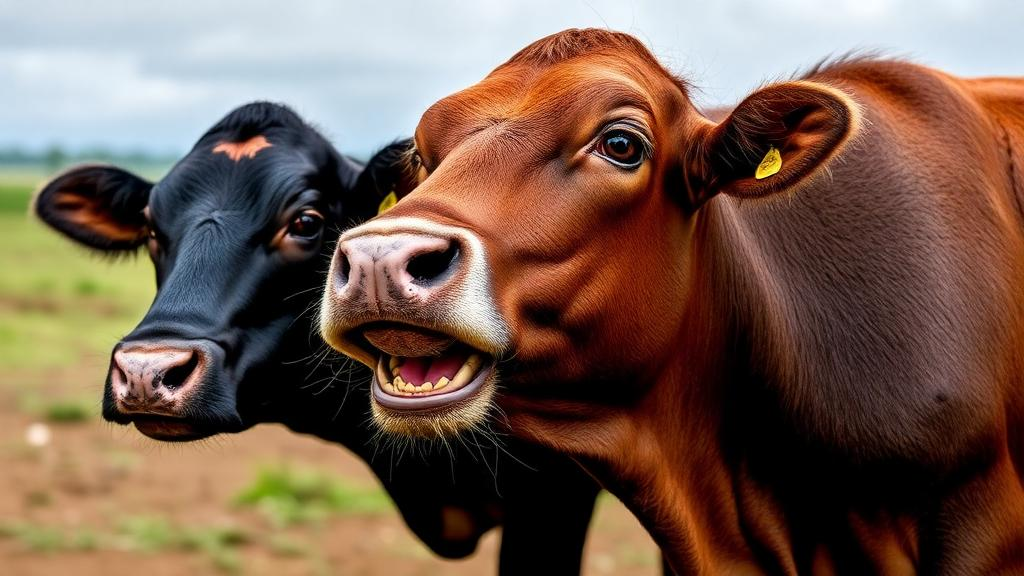
In the western reaches of the Brazilian Amazon, a mysterious oral disease has haunted cattle herds since the 1960s. Known locally as “cara inchada” or “swollen face,” the condition causes painful periodontal lesions that progressively destroy the tissues anchoring teeth in place, leaving young animals unable to feed properly. Outbreaks were repeatedly reported after forests were cleared and pastures established or renewed, but the environmental trigger remained stubbornly elusive. Now, an interdisciplinary team of Brazilian and American researchers has traced the disease’s footprint across an unexpected chain of connection: from the mineral particles of the soil, through the grass that cattle graze, all the way to the bacterial biofilms clinging to the animals’ teeth. The findings, published in Environmental Geochemistry and Health, suggest that the health of a herd’s gums may be written, in part, in the chemistry and microbiology of the ground beneath its hooves.
The study, led by soil scientist Fernando Igne Rocha of the Federal Rural University of Rio de Janeiro and the University of São Paulo, together with veterinary researcher Ana Carolina Borsanelli and colleagues, compared eight extensive pasture systems across three regions: Bujari in Acre state and Boca do Acre and Manicoré in Amazonas. The farms were carefully chosen so that confounding factors could be minimized: each had conserved Amazon forest adjacent to its pastures, no history of liming or chemical fertilization, and herds of at least 200 adult beef cattle maintained exclusively on pasture and mineral salt for at least a year. Clinical examinations then split the systems into two contrasting groups. In high-prevalence systems, more than 20 percent of the herd carried periodontal lesions; in low-prevalence systems, fewer than 5 percent did. Crucially, the two classes shared similar deforestation histories, meaning that differences in disease could not simply be attributed to how recently the forest had fallen.
At each pasture, the researchers laid out 200-meter transects with sampling points every 50 meters, collecting bulk soil from the top 10 centimeters and forage leaves at grazing height. Adjacent forest soil served as a baseline reference. Back in the laboratory, the team characterized the physical and chemical properties of the soil, analyzed the nutritional composition of the forage, and extracted DNA from three distinct microbial habitats: soil, forage, and the subgingival biofilms scraped from the teeth of clinically examined cattle. The 16S rRNA gene’s V4 region was amplified and sequenced on an Illumina MiSeq, yielding more than 1.37 million reads distributed across 11,470 amplicon sequence variants, with an average of roughly 13,450 reads per sample. Taxonomy was assigned against the SILVA database, and the team applied rigorous quality filtering through the DADA2 pipeline before any downstream analysis.
To sift through the many measured variables, the researchers combined two machine-learning approaches: LASSO regression, which shrinks uninformative coefficients to zero, and Random Forest, which ranks variables by their classification power. The two methods converged on a striking pattern. Low-prevalence pastures sat on finer-textured soils, with silt content roughly three times higher and silt-to-clay ratios about 4.4 times higher than in high-prevalence systems. Soil copper was about twice as abundant, effective cation exchange capacity 1.6 times higher, and sodium 3.4 times higher. Forage in the healthy herds carried roughly 1.6 times more zinc and 2.8 times more manganese, along with more calcium, phosphorus, magnesium, and protein fractions. High-prevalence pastures, by contrast, were defined by sandier ground, with sand content about 7.4 times greater, elevated soil carbon-to-nitrogen ratios, and forage richer in nitrogen-free extract, the readily fermentable carbohydrate fraction.
The microbial story mirrored the chemical one. Non-metric multidimensional scaling of Bray-Curtis dissimilarities separated the communities of high- and low-prevalence systems in all three compartments, and PERMANOVA tests with roughly 10,000 permutations confirmed the separation: soil communities differed most strongly, explaining about 26 percent of compositional variation, followed by forage at 11 percent and cattle at 9 percent. Hill-number diversity profiles revealed that high-prevalence systems generally harbored greater alpha diversity within samples and consistently greater gamma diversity across the pooled metacommunity, a pattern that can accompany the expansion of dysbiotic communities in periodontal systems. In the animals’ mouths, high-prevalence biofilms were enriched in Bacteroidetes and Fusobacteria, including genera such as Porphyromonas and Fusobacterium that are recognized members of dysbiotic oral communities in ruminants with periodontitis, while low-prevalence cattle carried more Gammaproteobacteria and Firmicutes, including Streptococcus and Corynebacterium.
Perhaps most intriguing was the fate of two bacterial genera with known antagonistic potential. Bacillus and Pseudomonas, groups whose members can produce antimicrobial metabolites and suppress pathogens, were depleted in the soil and forage of high-prevalence systems and more abundant in the forage and cattle of low-prevalence ones. The researchers are careful to note that they did not directly measure antagonism in this study, and correlation networks built from Spearman co-occurrence patterns cannot demonstrate ecological interactions. Still, the co-occurrence networks themselves told a story of reorganization: high-prevalence systems showed higher network-level modularity across all three compartments, suggesting more compartmentalized association structures. In the cattle networks, prominent correlations in healthy herds involved Neisseria and Corynebacterium, whereas diseased herds featured connections between Porphyromonas and Fusobacterium. These edges represent statistical co-occurrence only, but their consistent divergence between prevalence classes hints at fundamentally different microbial architectures.
Functional predictions added another layer. Using Tax4Fun, which maps 16S taxonomic profiles onto KEGG orthologs, the team found that high-prevalence forage and cattle microbiomes showed greater predicted representation of pathways for streptomycin biosynthesis, phenylpropanoid metabolism, and starch and sucrose metabolism, while high-prevalence cattle also showed elevated predictions for lipopolysaccharide biosynthesis and glycan degradation, functions previously reported in chronic human periodontitis. Low-prevalence microbiomes, in contrast, predicted more secondary-metabolite biosynthesis, including beta-lactam and alkaloid pathways. These are predictions of functional potential, not measurements of gene expression, and the authors stress this limitation explicitly. Yet the parallel signals across compartments were consistent enough to warrant targeted molecular follow-up.
That follow-up came in the form of quantitative PCR targeting strB1, a gene encoding a conserved component of the streptomycin biosynthetic pathway in Streptomyces species. The choice was deliberate: earlier experimental work had shown that sub-inhibitory concentrations of streptomycin can enhance the adherence of periodontal bacteria to oral epithelial cells and promote biofilm formation, and Brazilian outbreaks of cara inchada had long been suspected of involving soil-associated antibiotic exposure. The qPCR results showed significantly higher 16S-normalized strB1 abundance in the soil and forage of high-prevalence systems. In the forest-to-pasture soil dataset, the ratio was positively associated with soil sum of bases only in high-prevalence soils, a significant interaction that suggests fertility shifts may modulate the streptomycin-biosynthesis potential of the community. In the cattle themselves, clinically diseased animals carried higher absolute copy numbers of both strB1 and bacterial 16S rRNA genes in their subgingival biofilms than healthy animals, indicating a larger total bacterial load rather than proven relative enrichment of the gene.
The authors are meticulous about what these findings do and do not demonstrate. The study is observational, spanning only five farms and eight pasture systems, and no source tracking or strain-resolved metagenomics was performed, so microbial transmission from soil to mouth remains a hypothesis rather than a demonstrated pathway. Streptomycin production and animal exposure were never measured directly, and Tax4Fun predictions depend on reference genomes that may poorly represent poorly characterized environmental taxa. Host variables such as breed, age, dental wear, and treatment history could not be fully controlled. What the study does provide is a coherent, testable framework: forest-to-pasture conversion reshapes soil texture and nutrient balance, those edaphic conditions filter the microbial communities of soil and forage, and grazing cattle are repeatedly exposed to the resulting microorganisms, metabolites, and mineral profiles in ways that may tip the oral microbiome toward dysbiosis and periodontal disease.
The practical implications reach well beyond veterinary medicine. The researchers argue that their results reinforce recent calls to include soil microbiomes explicitly in One Health policy, since environmental, animal, and human health are interdependent. Micronutrient stewardship, particularly maintaining balanced zinc and copper availability, may support plant defense and animal resistance to infection, echoing historical trials in which copper supplementation reduced mortality in affected calves. Practices such as rotational grazing, pasture renovation, buffer strips, and diversified swards could limit the transfer of soil particles and associated microbes to forage, while microbiome-aware management, including organic amendments and reduced disturbance, might preserve microbial groups associated with suppressive functions. The team even proposes surveillance strategies incorporating qPCR markers like strB1 alongside routine oral examinations of herds, enabling early detection of high-risk environmental conditions. For the millions of hectares of already converted Amazon pasture, the message is that the ground itself may hold clues to keeping cattle healthy, and that understanding those clues demands looking at the landscape as a single connected system rather than a collection of separate parts.
Subject of Research: Associations between soil and forage properties, microbial communities, and bovine periodontitis prevalence in converted Amazon pastures
Article Title: Soil-plant-animal properties and microbial reassembly distinguish cattle oral disease prevalence across converted Amazon pasture systems
Article References: Rocha, F. I., Borsanelli, A. C., de Oliveira, A. P., Filho, C. V. S., Coelho, M. R. R., Schwab, S., dos Santos, C. M., Teixeira, W. G., Cole, J., Howe, A., Dutra, I. S., & da Conceição Jesus, E. (2026). Soil-plant-animal properties and microbial reassembly distinguish cattle oral disease prevalence across converted Amazon pasture systems. Environmental Geochemistry and Health, 48(16), Article 627. https://doi.org/10.1007/s10653-026-03516-x
Image Credits: AI Generated
DOI: 10.1007/s10653-026-03516-x
Keywords: Amazon deforestation, bovine periodontitis, soil microbiome, forage composition, oral microbiome, One Health, streptomycin biosynthesis, soil fertility, microbial ecology, cattle health, cara inchada, Environmental Geochemistry and Health
Cite Scienmag News
Morgan Morrow. (October 7, 2026). From Soil to Smile: Amazon Pasture Microbes Linked to Cattle Gum Disease. Scienmag. https://scienmag.com/from-soil-to-smile-amazon-pasture-microbes-linked-to-cattle-gum-disease/
Morgan Morrow. "From Soil to Smile: Amazon Pasture Microbes Linked to Cattle Gum Disease." Scienmag, 7 October 2026, https://scienmag.com/from-soil-to-smile-amazon-pasture-microbes-linked-to-cattle-gum-disease/. Accessed 7 October 2026.
Morgan Morrow. "From Soil to Smile: Amazon Pasture Microbes Linked to Cattle Gum Disease." Scienmag. October 7, 2026. https://scienmag.com/from-soil-to-smile-amazon-pasture-microbes-linked-to-cattle-gum-disease/


