


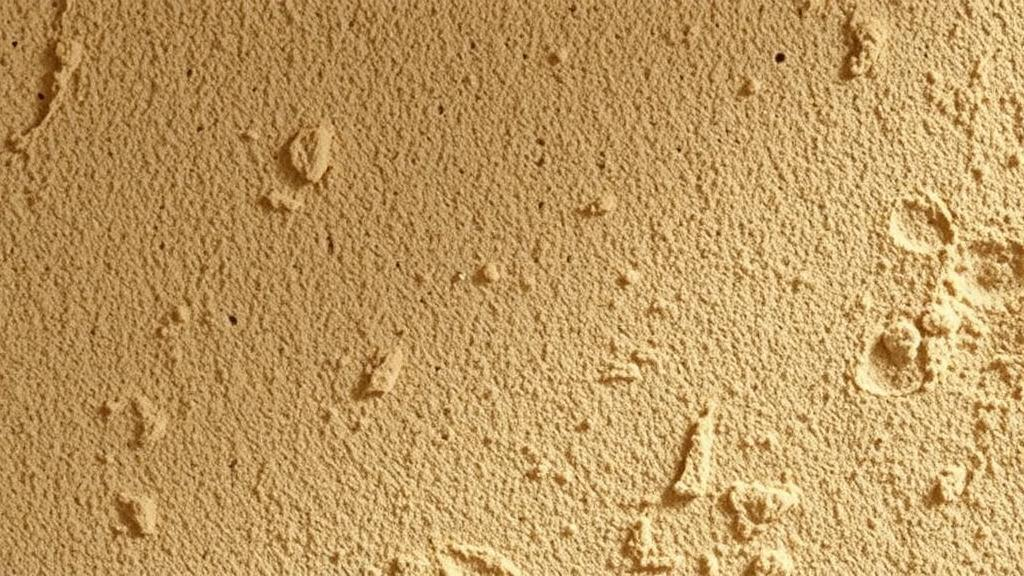
Hempcrete, the lightweight bio-composite made from hemp shives, lime-based binders and water, has long been celebrated as one of the greenest materials in construction. It insulates well, resists fire, and locks away more carbon dioxide than its production releases. Yet the material has struggled to escape the fringes of the building industry, held back by one stubborn weakness: its compressive strength is far too low for anything beyond non-structural infill walls, and its long-term durability remains poorly characterised. Now a team of researchers at Cape Peninsula University of Technology in South Africa reports that a simple chemical tweak, adding a small dose of potassium sulphate to the binder, can dramatically strengthen hempcrete while leaving its carbon-negative credentials essentially intact.
The study, published in Case Studies in Construction Materials, was led by Kari Steyn with Wibke De Villiers and Adewumi John Babafemi as supervisors. The motivation is urgent. Cement and steel production together account for roughly sixteen percent of global carbon dioxide emissions, and the United Nations Environment Programme has repeatedly warned that the building sector must transform rapidly to meet global climate targets. Bio-based materials such as hempcrete offer a rare opportunity to not merely reduce emissions but reverse them, because the hemp plant absorbs carbon dioxide as it grows and the lime binder continues to absorb the gas as it slowly carbonates over the life of the building.
The researchers prepared two hempcrete mixes with identical hemp-to-binder-to-water ratios of 1.0:2.8:2.8 by mass. The reference mix combined a dolomitic pressure-hydrated lime, a calcium hydrated lime and a highly reactive metakaolin in proportions of forty, twenty and forty percent of the binder respectively. The modified mix, designated M1, replaced three percent of that binder with potassium sulphate. The dosage was chosen deliberately, informed by prior studies showing that sulphate-based activators accelerate pozzolanic reactions in lime and slag systems. In related binders, sodium sulphate has produced strength gains of up to 274 percent at one day, and potassium sulphate has outperformed it in cement-slag mortars, lifting compressive strength by five to six megapascals at higher dosages.
The mechanism behind the enhancement is the accelerated precipitation of ettringite, a calcium aluminium sulphate hydrate mineral. Metakaolin supplies abundant reactive alumina, confirmed by X-ray fluorescence analysis showing 44.40 percent aluminium oxide in the material, while the limes supply calcium oxide at 35.94 and 71.06 percent respectively. The potassium sulphate delivers the sulphate ions needed for ettringite crystals to form rapidly during early curing. Scanning electron microscopy confirmed the prismatic and cuboidal crystal morphology of the activator and the angular, plate-like texture of the metakaolin, while energy-dispersive spectroscopy verified the elemental signatures of every constituent, including the hemp shives themselves, whose water-transporting vessels and tracheids were imaged in detail.
The mechanical results were striking. The activated mix achieved compressive strengths 50.47 percent higher than the reference at seven days, 99.73 percent higher at fourteen days, and 64.99 percent higher at twenty-eight days, reaching 0.681 megapascals compared with 0.413 megapascals for the control. Those figures may sound modest next to ordinary concrete, but for a material weighing roughly 548 kilograms per cubic metre, less than a quarter the density of conventional concrete, they represent a meaningful advance. The activated hempcrete outperformed comparable lime-metakaolin hempcretes reported in the literature, including mixes that incorporated Portland cement or were cured for ninety days, and it matched or exceeded sunflower bark and rice husk composites of similar density.
Equally important was what the additive did not do. Density, the property that underpins hempcrete’s thermal insulation, was essentially unchanged: ambient-cured specimens registered 547.27 kilograms per cubic metre for the reference mix and 548.59 for the activated mix at twenty-eight days. Oven-dried specimens were lighter still, at roughly 502 to 519 kilograms per cubic metre, placing the material in the same density class as autoclaved aerated concrete. The activated mix also retained its strength far better after oven drying, losing only 6.06 percent of its compressive strength compared with a 44.09 percent loss for the reference, suggesting that the sulphate activation produced a more stable internal microstructure.
Durability testing revealed further benefits. Using a digital image correlation technique with two cameras tracking microscopic displacements over six hundred hours, the researchers measured drying shrinkage, a property that has remained largely unexplored in hempcrete composites. The activated mix shrank by only 0.247 percent, against 0.344 percent for the reference, a clear sign of improved dimensional stability attributed to early ettringite formation. Capillary water absorption tests showed that the activated mix absorbed water significantly more slowly in the first minutes of exposure, with an initial rate of 4.290 kilograms per square metre per minute versus 5.840 for the control, though after twenty-four hours of immersion the two mixes converged and the activated mix absorbed slightly more water over the full 144-hour test.
The carbon accounting was the study’s most consequential finding. In a bubble column reactor through which a carbon dioxide-rich gas mixture was bubbled for sixty minutes, the reference binder sequestered 0.229 kilograms of carbon dioxide per kilogram of binder and the activated binder 0.207, with pH rising above thirteen within the first minute as calcium dissolved and then falling as carbonate precipitated. Scaling this up in a cradle-to-gate life-cycle assessment, each 290 by 140 by 90 millimetre specimen emitted about 0.75 kilograms of carbon dioxide equivalent during production, dominated almost entirely by lime calcination, but sequestered 0.920 kilograms through hemp growth plus roughly 0.3 kilograms through binder carbonation. The net result was negative: minus 0.491 kilograms of carbon dioxide equivalent per specimen for the reference mix and minus 0.470 for the activated mix.
That the potassium sulphate addition shifted the net footprint by only about four percent is the crux of the study’s argument. Previous attempts to strengthen hempcrete, whether by adding more binder or by densifying the mix, have typically raised embodied energy and degraded the hygrothermal performance that makes the material attractive in the first place. Here, a three percent chemical addition delivered near-doubled strength and measurably better dimensional stability at negligible environmental cost. The authors caution, however, that the proposed ettringite mechanism rests on compositional evidence from X-ray fluorescence and electron microscopy, and they recommend direct confirmation through X-ray diffraction and thermal analysis in future work.
The road to commercial viability still requires answers to harder questions. The researchers recommend expanding the dosage range to map the full response curve, and they stress that long-term performance, including freeze-thaw resistance, accelerated ageing and biodeterioration over multi-year cycles, remains untested. End-of-life pathways for hempcrete, and the degradation kinetics that would allow a true cradle-to-grave assessment, are also largely uncharted. But the direction of travel is clear. A material that grows in fields, absorbs carbon as it cures, and can now be made substantially stronger with a pinch of inexpensive fertiliser chemistry is edging closer to the mainstream of sustainable construction, where every kilogram of embodied carbon matters.
Subject of Research: Enhancing the mechanical and durability performance of hempcrete with potassium sulphate while maintaining carbon sequestration
Article Title: Performance of hempcrete for carbon-negative construction: Density, compressive strength, durability and carbon sequestration
Article References: Steyn, K., De Villiers, W., & Babafemi, A. J. (2026). Performance of hempcrete for carbon-negative construction: Density, compressive strength, durability and carbon sequestration. Case Studies in Construction Materials, 25, Article e06597. https://doi.org/10.1016/j.cscm.2026.e06597
Image Credits: AI Generated
DOI: 10.1016/j.cscm.2026.e06597
Keywords: hempcrete, carbon-negative construction, potassium sulphate, compressive strength, ettringite, lime binder, metakaolin, drying shrinkage, carbon sequestration, life-cycle assessment, sustainable building materials, durability
Cite Scienmag News
Denise Maddox. (October 7, 2026). Hempcrete Gets a Strength Boost: Sulphate Additive Makes Carbon-Negative Building Material Tougher. Scienmag. https://scienmag.com/hempcrete-gets-a-strength-boost-sulphate-additive-makes-carbon-negative-building-material-tougher/
Denise Maddox. "Hempcrete Gets a Strength Boost: Sulphate Additive Makes Carbon-Negative Building Material Tougher." Scienmag, 7 October 2026, https://scienmag.com/hempcrete-gets-a-strength-boost-sulphate-additive-makes-carbon-negative-building-material-tougher/. Accessed 7 October 2026.
Denise Maddox. "Hempcrete Gets a Strength Boost: Sulphate Additive Makes Carbon-Negative Building Material Tougher." Scienmag. October 7, 2026. https://scienmag.com/hempcrete-gets-a-strength-boost-sulphate-additive-makes-carbon-negative-building-material-tougher/


