


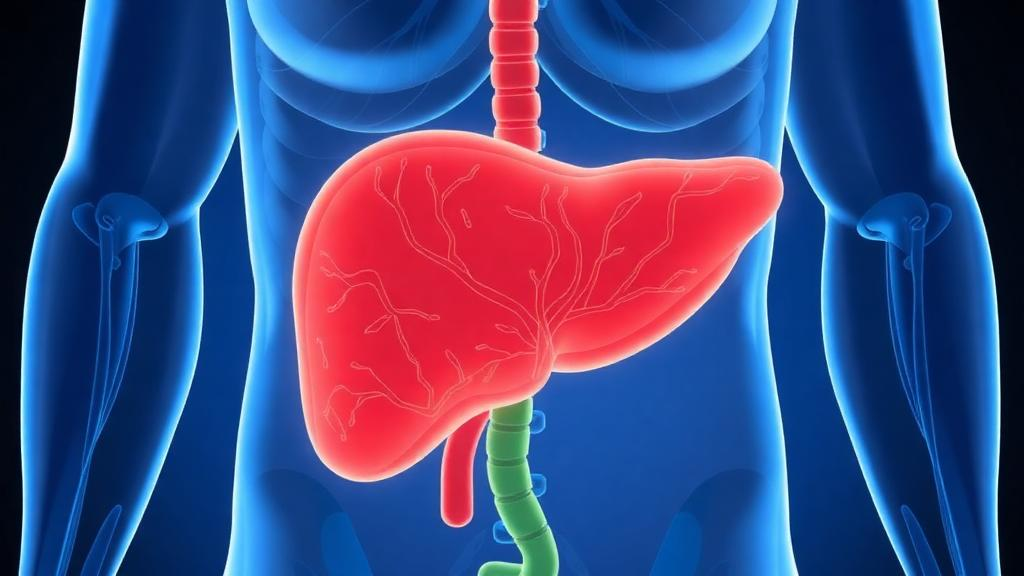
Fructose has long occupied a peculiar place in human nutrition science. Unlike glucose, which nearly every cell in the body can burn for fuel, fructose is handled almost exclusively by the liver, the kidney and the small intestine. The first committed step of its breakdown is catalysed by an enzyme called ketohexokinase, also known as fructokinase, which rapidly phosphorylates fructose and funnels it into pathways that feed fat synthesis. Decades of epidemiological and experimental work have linked high fructose intake, particularly from sugar-sweetened beverages, to weight gain, fatty liver, insulin resistance and cardiovascular risk. Now a rigorously designed clinical trial has tested what happens when that first step is pharmacologically blocked in people whose livers are already burdened by fat, and the results suggest that shutting down fructose metabolism can ripple beneficially through the entire body.
The study, published in Nature Metabolism by Evi J. C. Koene of Maastricht University and colleagues, enrolled fifteen individuals with metabolic dysfunction-associated steatotic liver disease, or MASLD, the condition formerly known as non-alcoholic fatty liver disease. In a randomized, placebo-controlled crossover design, each participant received six weeks of treatment with PF-06835919, an oral inhibitor of ketohexokinase, and six weeks of placebo, with the order of the two periods assigned at random. The crossover architecture is a powerful one for a small trial: because every participant serves as their own control, individual differences in diet, genetics and lifestyle are largely cancelled out, allowing the drug’s metabolic effects to emerge with unusual clarity from a modest sample.
The primary question the investigators asked concerned hepatic insulin sensitivity, a parameter that is notoriously difficult to measure outside specialized research settings. The team used a two-step hyperinsulinemic euglycemic clamp combined with stable isotope tracer dilution, the gold-standard methodology for dissecting where in the body insulin is doing its work. During a clamp, insulin is infused at fixed rates while blood glucose is held constant, and the rate at which insulin suppresses the liver’s endogenous glucose production reveals how responsive the hepatic insulin signaling machinery remains. In people with fatty liver disease, this suppression is typically blunted, forcing the liver to keep releasing glucose even when the hormone is signaling it to stop, a hallmark of the prediabetic state.
After six weeks of ketohexokinase inhibition, the participants’ livers had become measurably more sensitive to insulin, even though their body weight did not change. This is a critical distinction. Many metabolic interventions, from dieting to bariatric surgery, improve insulin sensitivity largely by stripping pounds away; the new trial demonstrates that blocking fructose metabolism can deliver hepatic benefits through a mechanism that is independent of weight loss. Alongside the improvement in insulin action, proton magnetic resonance spectroscopy revealed a reduction in intrahepatic lipid content, the defining feature of MASLD, and specifically a decline in the saturated fatty acid fraction of that liver fat. Saturated fat accumulation within the liver has previously been associated with de novo lipogenesis, the process by which the liver converts excess carbohydrate into new fat, and with hepatic insulin resistance, making its reduction a particularly meaningful endpoint.
What elevates the study beyond a straightforward liver-fat story is the breadth of effects observed outside the liver. The drug improved insulin-stimulated glucose disposal, meaning skeletal muscle and other peripheral tissues took up glucose more effectively under insulin stimulation. Adipose tissue insulin sensitivity also improved, visible as better insulin-mediated suppression of plasma free fatty acid release, and the distribution of body fat shifted in a favorable direction. The researchers even detected an increase in nocturnal fat oxidation, recorded in a respiration chamber, suggesting that the participants’ overnight fuel preference tilted toward burning fat rather than carbohydrate. None of these tissues processes fructose to any meaningful degree, which raises the intriguing question of how inhibiting an enzyme concentrated in the liver can remodel metabolism throughout the body.
Part of the answer appears to lie in the blood. The treatment changed the size distribution of very low-density lipoprotein particles, the triglyceride-rich lipoproteins assembled by the liver to export fat to peripheral tissues. Particle size matters clinically: larger VLDL particles are hydrolyzed differently by lipoprotein lipase and are associated with the atherogenic dyslipidemia typical of insulin-resistant states. The team also observed changes in circulating hepatokines, proteins secreted by the liver that act as endocrine messengers to distant organs. The liver, in this view, is not merely a passive victim of fructose overload but an active conductor of whole-body metabolism, and easing its fructose-driven stress retunes the signals it sends to muscle, fat and beyond.
The molecular detail supporting this interpretation came from transcriptomic and lipidomic profiling of skeletal muscle biopsies, together with plasma lipidomics. While the authors report that the treatment affected the muscle lipid profile, the targeted analysis of genes governing fatty acid handling and non-oxidative glucose disposal suggests the peripheral improvements were not driven by wholesale rewiring of muscle gene expression. This points instead toward indirect mechanisms: a leaner, more insulin-sensitive liver exporting a less lipotoxic cargo, a healthier adipose tissue releasing fewer fatty acids into the circulation, and an altered hepatokine milieu acting on insulin target tissues. Disentangling these causal threads will require further work, but the pattern is consistent with the liver serving as the upstream driver of the systemic disturbances that define MASLD.
The trial also provided reassuring safety and mechanistic signals. Urinary fructose excretion rose markedly during treatment, exactly what one expects when the enzyme that normally metabolizes fructose is blocked and the sugar spills into the urine instead. Serum uric acid, which rises when fructose is metabolized because ATP consumption in the fructokinase reaction generates AMP that is degraded to urate, fell during ketohexokinase inhibition, a change of interest given uric acid’s own suspected role in cardiometabolic disease. Alanine aminotransferase, a marker of liver injury, was also monitored. The hereditary fructose intolerance literature, in which individuals lacking aldolase B live healthy lives provided they avoid fructose, has long suggested that blocking this pathway is survivable, and the growing clinical experience with ketohexokinase inhibitors, including earlier phase 2 trials in NAFLD that reported liver fat and inflammatory marker reductions, adds to that picture.
Context matters for interpreting the magnitude of these findings. The trial was small, with fifteen participants, and was funded by Pfizer Inc. as an investigator-initiated study, with two Pfizer employees among the co-authors. The crossover design and the use of clamp-based, spectroscopy-based and chamber-based endpoints lend credibility to the physiological claims, but a trial of this size cannot establish effects on hard clinical outcomes such as diabetes incidence or cardiovascular events. Nor does the study speak to the practical question of whether a drug is the right tool for a problem rooted in diet; randomized trials of fructose restriction, such as the FRUITLESS study, have explored the dietary route, though adherence to sugar restriction in the modern food environment remains a formidable challenge.
Even with those caveats, the study marks a conceptual advance. It demonstrates in humans that pharmacologically interrupting the first committed step of fructose metabolism improves hepatic and peripheral insulin sensitivity, reduces liver fat and its saturated fat fraction, improves adipose tissue function and nocturnal fat oxidation, and remodels the lipoprotein and hepatokine profile, all without weight loss. The implication is that a substantial share of the metabolic damage attributed to dietary fructose flows through a single, druggable enzymatic gatekeeper, and that the benefits of closing that gate extend well beyond the organs that metabolize the sugar. As ketohexokinase inhibitors progress through clinical development, the question will shift from whether the biology holds to whether it can be translated into a therapy for the hundreds of millions of people living with fatty liver disease and its downstream consequences.
Subject of Research: Effects of pharmacological ketohexokinase inhibition on insulin sensitivity and liver fat in metabolic dysfunction-associated steatotic liver disease
Article Title: Metabolic benefits of ketohexokinase inhibition in individuals with MASLD: a randomized placebo-controlled crossover trial
Article References: Koene, E. J. C., Schrauwen-Hinderling, V. B., Basset-Sagarminaga, J., Brouwers, K., Op den Kamp-Bruls, Y. M. H., Mevenkamp, J., Haans, F., Schaart, G., Kornips, E., Jorgensen, J. A., Scheijen, J. L. J. M., Schalkwijk, C. G., van Weeghel, M., Vaz, F. M., Houtkooper, R. H., Wong, E., Kersten, S., Saxena, A. R., Esler, W. P., … Brouwers, M. C. G. J. (2026). Metabolic benefits of ketohexokinase inhibition in individuals with MASLD: a randomized placebo-controlled crossover trial. Nature Metabolism. https://doi.org/10.1038/s42255-026-01626-5
Image Credits: AI Generated
DOI: 10.1038/s42255-026-01626-5
Keywords: ketohexokinase, fructose metabolism, MASLD, fatty liver disease, insulin sensitivity, PF-06835919, hepatic fat, hyperinsulinemic clamp, hepatokines, VLDL, adipose tissue, clinical trial
Cite Scienmag News
Daisy Hatcher. (October 7, 2026). Blocking Fructose Metabolism Improves Insulin Sensitivity in Fatty Liver Disease Trial. Scienmag. https://scienmag.com/blocking-fructose-metabolism-improves-insulin-sensitivity-in-fatty-liver-disease-trial/
Daisy Hatcher. "Blocking Fructose Metabolism Improves Insulin Sensitivity in Fatty Liver Disease Trial." Scienmag, 7 October 2026, https://scienmag.com/blocking-fructose-metabolism-improves-insulin-sensitivity-in-fatty-liver-disease-trial/. Accessed 7 October 2026.
Daisy Hatcher. "Blocking Fructose Metabolism Improves Insulin Sensitivity in Fatty Liver Disease Trial." Scienmag. October 7, 2026. https://scienmag.com/blocking-fructose-metabolism-improves-insulin-sensitivity-in-fatty-liver-disease-trial/


