


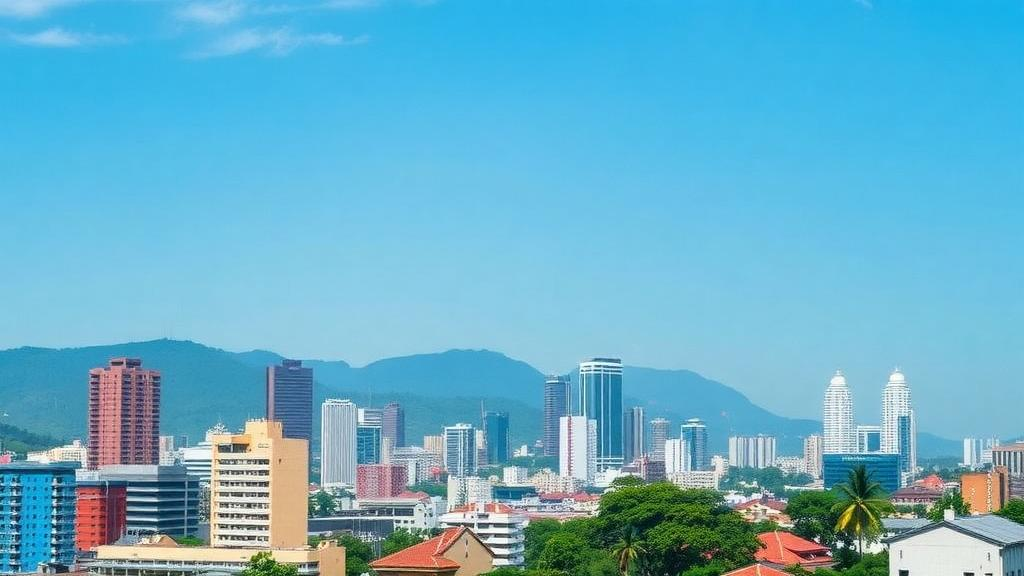
In the narrow Andean valley that cradles Medellín, Colombia’s second-largest city, the air residents breathe carries a burden that scientists have now quantified in startlingly familiar terms: the equivalent of smoking roughly ten passive cigarettes every day. A new five-year analysis of black carbon exposure, published in the journal Air Quality, Atmosphere & Health, has transformed continuous measurements of this sooty pollutant into a tangible health risk indicator, offering one of the most detailed portraits yet of combustion pollution in a topographically confined tropical city.
The research, led by D. A. Grajales-González of the Environmental School at Universidad de Antioquia, draws on equivalent black carbon (eBC) measurements collected continuously between 2019 and 2023 at an urban background site in Medellín. Black carbon, the light-absorbing soot released by diesel engines, biomass fires, and other incomplete combustion processes, has long been recognized as both a potent climate warmer and a meaningful tracer of the most harmful components of particulate pollution. Yet despite its importance, eBC has remained poorly characterized in tropical cities hemmed in by mountains, where meteorology and emission patterns differ sharply from the temperate cities where most monitoring networks were designed.
The study’s methodological core rests on three complementary approaches. First, the team applied spectral source apportionment using aethalometer data, exploiting the fact that fossil fuel combustion and biomass burning absorb light differently across wavelengths. The absorption Ångström exponent, a spectral fingerprint of the aerosol, averaged 1.05 with a standard deviation of just 0.12 across all periods, a value squarely in the range of fossil fuel sources and a clear signal that traffic and other diesel-dominated combustion dominated Medellín’s black carbon load throughout the five years. Biomass burning, by contrast, emerged as an episodic regional modifier, injecting soot from fires that sweep across northern South America during certain seasons rather than as a steady background contribution.
Second, the researchers translated their concentration data into a framework designed to make the invisible visceral: passive smoking equivalence. Building on earlier work that expressed air pollution health risks in terms of the number of passively smoked cigarettes a person would inhale, the team calculated that Medellín’s baseline urban exposure amounted to 10.1 passive cigarette equivalents per day. During the COVID-19 mobility restrictions of 2020, that figure fell to 6.3, and after restrictions lifted it rebounded to 8.0. The comparison is deliberately provocative, designed to communicate risk in terms the public intuitively grasps, and it makes plain that simply living in this Andean valley imposes a respiratory burden comparable to sharing space with a chain smoker.
The pandemic, tragic as it was, handed atmospheric scientists an unprecedented natural experiment. When Colombia’s mobility restrictions brought much of Medellín’s traffic to a standstill, median eBC concentrations dropped by 37 percent. But here the study delivers its most sobering finding: even under maximum suppression of human activity, the temporal structure of exposure remained essentially intact, and 56.1 percent of hourly observations still exceeded 1 microgram per cubic meter. In other words, the valley’s meteorology, its residual emissions, and its regional smoke intrusions conspired to keep black carbon levels elevated even when the city’s engines largely fell silent. The lockdown did not erase the pollution problem; it merely dented it.
Those dents, however, translated into measurable health benefits. Applying concentration-response functions to the observed reductions, the researchers estimate that between 78 and 198 cardiovascular deaths were averted during the restriction period, depending on which exposure-response scenario is assumed. The range reflects genuine scientific uncertainty in how mortality responds to changes in particulate pollution, but even the conservative end of the estimate underscores a critical policy point: relatively short-term reductions in combustion emissions produce immediate, quantifiable cardiovascular dividends. Black carbon has been repeatedly linked to adverse cardiovascular outcomes, in some analyses serving as a better predictor of harm than bulk particulate mass metrics such as PM10 or PM2.5, precisely because it tracks fresh combustion particles rich in toxic compounds.
The third analytical pillar was spatial. By comparing the urban background site with near-road monitoring, the team tracked how exposure heterogeneity across the valley evolved through the pandemic. Before the restrictions, near-road concentrations ran 3.6 times higher than background levels. After the restrictions ended, that ratio expanded to 4.66, indicating that the gap between what a pedestrian on a busy avenue inhales and what a resident of a quieter neighborhood breathes widened rather than narrowed as traffic returned. The perturbation, in effect, revealed how strongly Medellín’s exposure landscape is stratified, with the burden of traffic-related soot concentrated on those who live and work closest to major roadways.
Medellín’s geography amplifies every one of these dynamics. The city sits in the Aburrá Valley, a deep, elongated canyon whose steep walls restrict ventilation and trap pollutants beneath temperature inversions, particularly during the drier months. Previous research in the valley has documented how regional aerosol transport and limited vertical mixing conspire to produce severe pollution episodes, and how long-range transport of biomass burning emissions from northern South America elevates hazardous components of fine particulate matter across the region. The new study fits squarely into this picture, showing that while local fossil fuel combustion supplies the persistent black carbon backbone, regional fires periodically ratchet concentrations upward in ways that local authorities cannot directly control.
What distinguishes this work is its argument about infrastructure. The authors contend that continuous aethalometer deployments at urban background sites, when complemented by near-road monitoring, provide a viable and reproducible framework for characterizing black carbon exposure structure in tropical cities with limited observational resources. This is a significant claim for the many rapidly growing cities of the Global South, where comprehensive chemical speciation networks are often financially out of reach but where the health stakes of combustion pollution are highest. A single well-maintained instrument, paired with strategic roadside sampling, appears sufficient to reconstruct the essential anatomy of a city’s soot exposure, its sources, its rhythms, and its spatial gradients.
The implications ripple outward from public health into climate policy. Black carbon is among the most potent short-lived climate forcers, and curbing it delivers a rare double dividend: near-term warming mitigation alongside immediate reductions in cardiovascular mortality. The Medellín findings suggest that diesel-dominated urban fleets are the primary lever, since fossil fuel combustion dominated every period of the five-year record regardless of season or pandemic conditions. They also caution against complacency, because the persistence of elevated exposure even during a historic mobility collapse reveals how deeply embedded combustion sources are in the valley’s atmospheric system. For the residents of Medellín, the message distilled into the study’s cigarette-equivalent metric is difficult to ignore: cleaning up this city’s air would amount to taking ten cigarettes a day out of every pair of lungs in the valley, and the pandemic briefly proved that doing so saves lives.
Subject of Research: Black carbon exposure and its health risk implications in the tropical urban valley of Medellín, Colombia
Article Title: From atmospheric loading to passive smoking: Black Carbon exposure as a health risk indicator in Medellín, Colombia
Article References: Grajales-González, D. A., Cañón-Barriga, J. E., Gómez-Marín, M., Blanco-Donado, E. P., & Ramírez, O. (2026). From atmospheric loading to passive smoking: Black Carbon exposure as a health risk indicator in Medellín, Colombia. Air Quality, Atmosphere & Health, 19(10), Article 225. https://doi.org/10.1007/s11869-026-02116-z
Image Credits: AI Generated
DOI: 10.1007/s11869-026-02116-z
Keywords: black carbon, Medellín, air quality, COVID-19 lockdown, cardiovascular mortality, passive smoking equivalence, aethalometer, source apportionment, urban air pollution, Aburrá Valley, biomass burning, environmental health
Cite Scienmag News
Russell Cooper. (October 7, 2026). Medellín’s Air Carries the Equivalent of Ten Passive Cigarettes a Day, Five-Year Study Finds. Scienmag. https://scienmag.com/medellins-air-carries-the-equivalent-of-ten-passive-cigarettes-a-day-five-year-study-finds/
Russell Cooper. "Medellín’s Air Carries the Equivalent of Ten Passive Cigarettes a Day, Five-Year Study Finds." Scienmag, 7 October 2026, https://scienmag.com/medellins-air-carries-the-equivalent-of-ten-passive-cigarettes-a-day-five-year-study-finds/. Accessed 7 October 2026.
Russell Cooper. "Medellín’s Air Carries the Equivalent of Ten Passive Cigarettes a Day, Five-Year Study Finds." Scienmag. October 7, 2026. https://scienmag.com/medellins-air-carries-the-equivalent-of-ten-passive-cigarettes-a-day-five-year-study-finds/


