


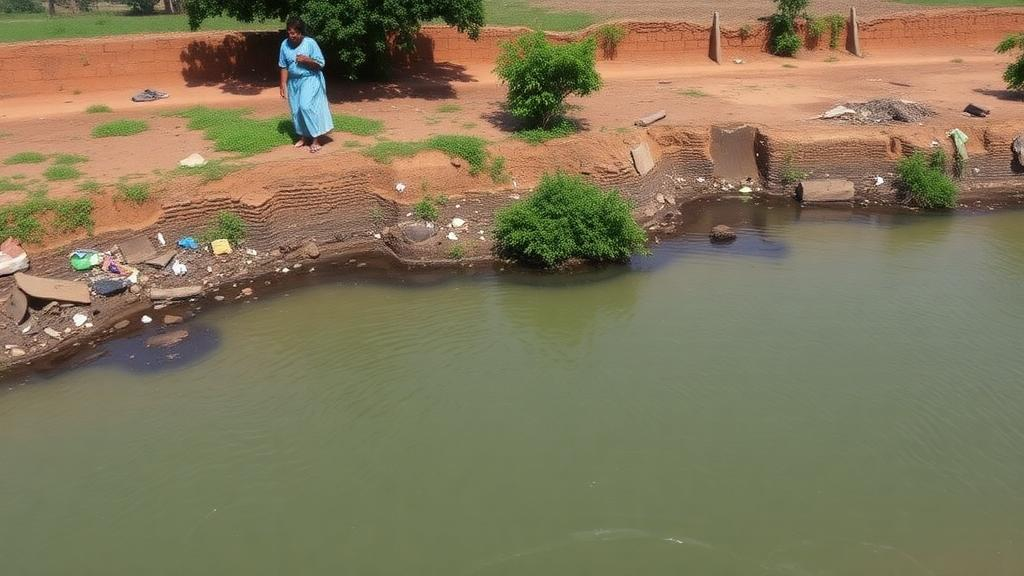
A sweeping synthesis of more than two decades of research has revealed that antibiotic contamination is now pervasive across Ghana’s environmental systems, from hospital wastewater and landfill leachates to drinking water reservoirs, river sediments and fish farms. The systematic review, published in Discover Chemistry, analysed 46 studies published between 2000 and 2026 and found that some of the highest antibiotic concentrations ever recorded in the environment occur in the country’s urban centres, with levels in untreated effluents exceeding safety thresholds by several orders of magnitude. The findings carry profound implications for the global fight against antimicrobial resistance, one of the most serious threats to modern medicine.
The review, conducted by Emmanuel Kaboja Magna of the University of Environment and Sustainable Development in Somanya, Ghana, followed the PRISMA framework for systematic reviews. The initial search identified 1,246 records from databases including Scopus, Web of Science, PubMed and Google Scholar, supplemented by reports from the World Health Organisation, the United Nations Environment Programme, the Ghana Environmental Protection Agency and the Food and Agriculture Organisation. After rigorous screening, 46 studies met the inclusion criteria, of which 21 were judged high quality, 18 moderate and 7 low. Where methodologies were comparable, 32 studies were pooled into a quantitative synthesis. Concentration values reported in different units were standardised to allow comparison across water, sediment, soil and waste matrices.
The headline numbers are striking. Hospital effluents in Sunyani contained amoxicillin at concentrations reaching 8,760 micrograms per litre, alongside ciprofloxacin at 4,740 micrograms per litre and doxycycline at 2,930 micrograms per litre, figures the review describes as among the highest environmental antibiotic concentrations reported globally. In Kumasi, leachate from the Dompoase landfill recorded penicillin concentrations as high as 67,420 micrograms per litre, a level approaching therapeutic doses. For context, published predicted no-effect concentrations for resistance selection in aquatic environments are around 0.25 micrograms per litre for amoxicillin and 0.064 micrograms per litre for ciprofloxacin. The Ghanaian effluent values therefore exceed these thresholds by tens of thousands of times, indicating that untreated pharmaceutical waste is being discharged directly into the environment.
Three urban hotspots emerge consistently from the evidence: Kumasi, Sunyani and Sefwi Wiawso. These cities combine intensive healthcare activity, high population density, widespread pharmaceutical consumption and inadequate wastewater treatment infrastructure. In Sefwi Wiawso, ciprofloxacin concentrations in dumpsite soils ranged from 2,140 to 4,060 micrograms per kilogram, while antibiotic-related compounds reached 670 micrograms per litre in water samples. The review attributes these patterns to a combination of continuous source loading, leachate infiltration into organic-rich soils, and episodic runoff into receiving waters. Poorly engineered landfills that lack containment systems allow contaminants to migrate into groundwater and surface water, turning municipal waste sites into continuous secondary sources of pollution.
Yet contamination is not confined to these hotspots. A comprehensive 118-kilometre transect study of the Lower Volta River, one of Ghana’s most critical freshwater resources, detected antibiotics at every sampled location, generally in the low nanogram-per-litre range, together with antibiotic resistance genes. The authors of that study also found per- and polyfluoroalkyl substances, or PFAS, in the same system, highlighting the co-occurrence of multiple classes of emerging contaminants. In fish farms on the Lower Volta Lake, antibiotics including ciprofloxacin, sulfamethoxazole, sulfadiazine, chlortetracycline and tetracycline were measured at concentrations up to 9.14 micrograms per litre in farm waters, with residues also detected in fish tissues. Even the Owabi and Barekese reservoirs, which supply drinking water, contained antibiotics at levels between 0.06 and 36.51 micrograms per litre, suggesting incomplete removal during water treatment.
The review also exposes a technical weakness in Ghana’s monitoring capacity. Among the principal residue-monitoring studies with identifiable analytical platforms, 62.5 per cent relied on high-performance liquid chromatography with ultraviolet or diode-array detection, methods that are accessible but less sensitive than mass spectrometry. Only 25 per cent used tandem mass spectrometry, which offers superior sensitivity and the ability to quantify many compounds simultaneously. The review cautions that differences in reported concentrations, and even some non-detections, may partly reflect analytical performance rather than genuine differences in contamination. Greater adoption of validated multi-residue LC-MS/MS methods, harmonised sampling protocols and consistent reporting of detection limits and recoveries would substantially strengthen the reliability of environmental monitoring.
The public health consequences flow through several pathways. Humans are exposed through contaminated drinking water, the consumption of fish and vegetables grown with polluted irrigation water, occupational contact and recreational use of polluted water bodies. More alarmingly, the review documents antibiotic-resistant bacteria and resistance genes across rivers, reservoirs, drinking water systems and sediments. Urban rivers such as the Odaw and Okurudu carry especially high resistance burdens, including extended-spectrum beta-lactamase-producing Escherichia coli. Warm temperatures, high organic loading and dense microbial populations in tropical aquatic systems favour horizontal gene transfer through conjugation, transformation and transduction, mechanisms that allow resistance genes to spread rapidly between bacterial species. Mobile genetic elements associated with carbapenem and aminoglycoside resistance have been detected in Ghanaian hospital and urban wastewater systems, underscoring the potential for environmental resistance to reach clinical settings.
Ecologically, the picture is equally concerning. Antibiotic contamination alters microbial community structure, disrupts nutrient cycling and organic matter decomposition, and may reduce microbial diversity in heavily impacted receiving environments. Aquatic ecosystems face risks to phytoplankton productivity, food-web dynamics and fish health, while sediments and soils act as long-term reservoirs that can prolong impacts even after direct discharges decline. In terrestrial systems, disruption of beneficial soil organisms such as nitrogen-fixing bacteria and mycorrhizal fungi could undermine soil fertility and agricultural productivity. Compound chemistry shapes where these effects concentrate: strongly sorbing fluoroquinolones like ciprofloxacin accumulate in soils and sediments, whereas more hydrophilic sulfonamides remain mobile in water.
The sources of this pollution are diverse. Hospitals discharge wastewater containing unmetabolised antibiotics and resistant bacteria, often without specialised treatment. Households discard expired medicines with domestic refuse, and over-the-counter access to antibiotics compounds the problem. In agriculture and aquaculture, antibiotics are used not only to treat disease but also to promote growth, with residues excreted in partially metabolised form and entering soils and waterways through manure and medicated feed. Pharmaceutical manufacturing may add localised industrial discharges, though empirical evidence in Ghana remains limited. The review notes that these patterns mirror those seen elsewhere in sub-Saharan Africa, with river sediments in Kenya reaching 4,125 micrograms per kilogram and Lake Victoria sediments in Uganda up to 130 micrograms per kilogram, suggesting a regional crisis driven by rapid urbanisation and weak regulatory enforcement.
Addressing the problem, the review concludes, will require coordinated national action spanning environmental monitoring, pharmaceutical waste management, wastewater treatment upgrades, antimicrobial stewardship and regulatory reform. Ghana’s current framework is fragmented, with overlapping responsibilities among the Environmental Protection Agency, the Food and Drug Administration and the ministries of health and agriculture, and no specific permissible limits for most pharmaceuticals in wastewater or surface waters. The review recommends specialised pharmaceutical waste treatment in hospitals, take-back programmes for unused medicines, engineered landfills, veterinary oversight and antibiotic stewardship in farming. Advanced treatment technologies such as activated carbon adsorption, membrane bioreactors and advanced oxidation processes show promise but are costly, so nature-based alternatives like constructed wetlands and algae-based treatment may offer more sustainable options. Above all, long-term surveillance programmes that integrate chemical monitoring with antimicrobial resistance tracking are essential to identify emerging hotspots and guide evidence-based policy before environmental reservoirs of resistance further erode the effectiveness of life-saving antibiotics.
Subject of Research: Antibiotic residue contamination and antimicrobial resistance in Ghanaian environmental systems
Article Title: Antibiotic residues in Ghanaian environmental systems: sources, distribution patterns, and public health implications
Article References: Magna, E. K. (2026). Antibiotic residues in Ghanaian environmental systems: sources, distribution patterns, and public health implications. Discover Chemistry, 3(1), Article 498. https://doi.org/10.1007/s44371-026-00955-4
Image Credits: AI Generated
DOI: 10.1007/s44371-026-00955-4
Keywords: antibiotic residues, Ghana, antimicrobial resistance, hospital effluents, landfill leachate, water pollution, pharmaceutical pollution, systematic review, aquaculture, resistance genes, wastewater treatment, environmental monitoring
Cite Scienmag News
Bethany Barker. (October 7, 2026). Ghana’s rivers, hospitals and landfills are steeped in antibiotic pollution, review finds. Scienmag. https://scienmag.com/ghanas-rivers-hospitals-and-landfills-are-steeped-in-antibiotic-pollution-review-finds/
Bethany Barker. "Ghana’s rivers, hospitals and landfills are steeped in antibiotic pollution, review finds." Scienmag, 7 October 2026, https://scienmag.com/ghanas-rivers-hospitals-and-landfills-are-steeped-in-antibiotic-pollution-review-finds/. Accessed 7 October 2026.
Bethany Barker. "Ghana’s rivers, hospitals and landfills are steeped in antibiotic pollution, review finds." Scienmag. October 7, 2026. https://scienmag.com/ghanas-rivers-hospitals-and-landfills-are-steeped-in-antibiotic-pollution-review-finds/


