


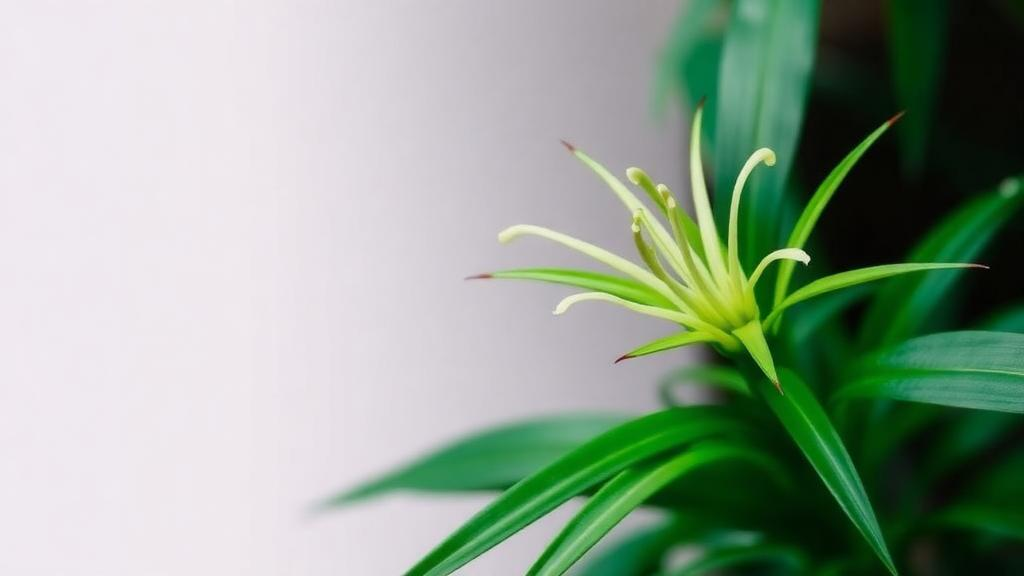
Deep in the temperate broadleaf forests of Arunachal Pradesh, along a roadside between Shergaon and the Gyuto monastery in the West Kameng district, a team of Indian botanists has documented a plant that should not, according to every published flora of the country, be there. The plant, a modest, grass-like herb with whitish to purplish flowers and a creeping underground rhizome, has been confirmed as Ophiopogon japonicus, the famous dwarf lilyturf of East Asian gardens and traditional medicine. The discovery, published in the journal Discover Plants, marks the first verified record of the species for the flora of India and extends its known distribution deep into the Eastern Himalaya, one of the most biologically rich and least thoroughly explored mountain regions on Earth.
The find came about during a floristic exploration conducted in May 2025, when researchers Arundhuti Singha and Sharmistha Singha of the Uluberia Botanical Institute Herbarium encountered a small cluster of unfamiliar individuals growing on a moist, shaded forest floor at an elevation of 2,185 meters above sea level. At first glance the plants suggested Ophiopogon clarkei, a species already known from the Indian Himalaya. But field notes, careful dissection under a stereo microscope, and comparison against the original species description and authenticated herbarium material told a different story. The leaf margins were finely retroserrulate, the flowering stalks were short, the ovary globose, and the roots non-tuberous, a combination of characters that pointed unambiguously to O. japonicus rather than any of its Indian relatives.
Confirming the identity required navigating one of the more tangled corners of monocot taxonomy. The genus Ophiopogon, placed in the asparagus family Asparagaceae, comprises roughly 85 species distributed across tropical and temperate Asia. Its history of classification is a case study in how botanical families have been reshuffled by successive generations of evidence. Because of their lily-like flowers, these plants were originally housed in the sprawling family Liliaceae. Anatomical and pollen studies later moved them into Convallariaceae, and only molecular phylogenetic analyses, drawing on plastid and nuclear DNA sequences, finally settled them within Asparagaceae. Even today the genus is easily confused with its closest ally, Liriope, a lookalike group that shares the clumping, grass-like habit. The two can be separated by a suite of technical characters: Ophiopogon typically bears underground rhizomes, monosulcate pollen grains, and berry-like fruits of five to eight millimeters, whereas Liriope forms clumps with tuberous roots, pollen with trichotomocolpate or trichotomosulcate apertures, and slightly smaller fruits.
Before this discovery, seven species of Ophiopogon were recognized from India: O. clarkei, O. dracaenoides, O. griffithii, O. intermedius, O. micranthus, O. reptans, and the Garhwal endemic O. sar-garhwalensis. Ophiopogon japonicus was not among them, despite being one of the most widely cultivated and economically significant members of the genus. Native to East Asia, the species ranges naturally across Nepal, China, Japan, and Korea. In China it grows abundantly in the provinces of Zhejiang, Sichuan, Hubei, and Fujian, occupying moist, shaded forest understories, hillsides, and stream banks at elevations from 200 to 2,800 meters. In Japan and Korea it is a component of temperate forest ecosystems. Beyond its native range it is planted extensively across Asia as an ornamental groundcover and as a medicinal crop, which makes its absence from the documented Indian flora all the more striking.
There is, in fact, a historical footnote that makes the new record less a surprise than a long-delayed confirmation. The earliest authenticated Indian specimen of O. japonicus traces back to a collection made by R. Blinkworth in the Kumaon region of Uttarakhand, catalogued in the historic Wallich Catalogue assembled in the early nineteenth century. That specimen, held at the Royal Botanic Gardens, Kew, demonstrates that the species has been present on Indian soil for perhaps two centuries. Yet it never entered the Indian flora, the regional floras of Uttarakhand, or the annotated checklists of the Indian Himalayan region. The authors of the new study suggest a simple explanation: the plant’s grass-like appearance and low-growing habit in shaded understories make it easy to overlook, and its resemblance to native Ophiopogon species invites misidentification.
The taxonomic case for the new record rests on a detailed morphological account supported by field photographs, microscopic images, and a line illustration. The Arunachal plants are herbaceous geophytes with short subterranean rhizomatous stems and adventitious, non-tuberous roots. Their linear, deep green leaves, twenty to twenty-five centimeters long and less than half a centimeter wide, are tufted at the base with parallel venation and retroserrulate margins. The inflorescence is a raceme borne on a five-to-seven-centimeter scape that is shorter than the leaves, carrying ten to fifteen solitary or occasionally paired, bisexual, actinomorphic flowers. Each flower is trimerous and hypogynous, with six petaloid tepals in two whorls, six stamens with introrse, basifixed, sagittate anthers, and a tricarpellary, syncarpous gynoecium with a semi-inferior, trilocular ovary showing axile placentation. Pollen grains prepared by the acetolysis method proved monosulcate, reticulate, subprolate to prolate, and twenty-five to thirty-five micrometers in the equatorial region, exactly the profile expected for the genus and a key discriminator from Liriope.
To guard against future confusion, the team provided a comparative table and an identification key separating O. japonicus from its closest allies, including O. clarkei, O. bodinieri, and O. intermedius. The key hinges on characters visible even in the field: O. japonicus alone combines retroserrulate leaf margins with the absence of stolons, a short scape of five to seven centimeters, and a globose ovary, while O. clarkei bears stolons, longer scapes exceeding ten centimeters, and inflorescences of only two to five flowers. A voucher specimen has been deposited in the Wildlife Institute of India Herbarium under accession number WII006411, and geographic coordinates recorded with GPS were used to generate a distribution map with QGIS software. Flowering in the Arunachal population extends from May to August, with fruiting from September to November.
The discovery is more than a line added to a checklist. Ophiopogon japonicus is a plant of enormous ethnobotanical weight. In traditional Chinese medicine its tuberous roots, known as mai dong, have been used for centuries as a rejuvenating tonic, and modern pharmacological research has reported a wide spectrum of activities, including antioxidant, immunomodulatory, cardioprotective, anti-inflammatory, anti-tumor, anti-aging, and anti-hyperglycemic effects. The rhizomes are extensively harvested, and the species is cultivated at industrial scale in parts of China. Whether the newly documented Himalayan population carries the same phytochemical profile is unknown, but the authors argue that the species’ ecological significance and medicinal potential justify further field investigations and long-term monitoring of its populations in the region.
There is also a conservation dimension that the researchers flag clearly. The Arunachal plants were found growing along a roadside, a habitat exposed to road construction, frequent landslides, and general disturbance, pressures that are intensifying across the Himalayan frontier. A species prized for its rhizomes could face additional harvesting pressure if its occurrence becomes widely known. At the same time, the record underscores how much remains undocumented in Northeast India. The Eastern Himalaya is a recognized global biodiversity hotspot, yet its remote forested valleys continue to yield taxa new to science and, as in this case, species new to national floras. The team recommends sustained botanical exploration of these areas, which may harbor additional rare or previously unrecorded plants hiding in plain sight beneath the forest canopy.
For now, the humble lilyturf of Chinese medicine gardens has a new entry in the annals of Indian botany, and a two-century-old specimen from Kumaon finally has a living, flowering counterpart in the Eastern Himalaya. The finding is a reminder that even in an era of satellite mapping and DNA barcoding, the foundation of biodiversity knowledge remains the patient field survey: walking a forest margin, noticing a tuft of grass-like leaves that looks slightly wrong, and taking the trouble to count the tepals, section the ovary, and check the pollen. In this instance, that patience rewrote the distribution map of one of Asia’s most familiar medicinal plants.
Subject of Research: First confirmed record of the medicinal plant Ophiopogon japonicus in India, from Arunachal Pradesh in the Eastern Himalaya
Article Title: Ophiopogon japonicus (Thunb.) Ker Gawl. (Asparagaceae), a new record for India
Article References: Naskar, A. K., Santra, T., Singha, A., Singha, S., Hoque, A., & Kumar, A. (2026). Ophiopogon japonicus (Thunb.) Ker Gawl. (Asparagaceae), a new record for India. Discover Plants, 3(1), Article 381. https://doi.org/10.1007/s44372-026-00854-z
Image Credits: AI Generated
DOI: 10.1007/s44372-026-00854-z
Keywords: Ophiopogon japonicus, Asparagaceae, Arunachal Pradesh, Eastern Himalaya, new record, plant taxonomy, traditional Chinese medicine, biodiversity, West Kameng, floristics, morpho-taxonomy, conservation
Cite Scienmag News
Margaret Porter. (October 6, 2026). Medicinal Lily Relative Ophiopogon japonicus Recorded in India for the First Time. Scienmag. https://scienmag.com/medicinal-lily-relative-ophiopogon-japonicus-recorded-in-india-for-the-first-time/
Margaret Porter. "Medicinal Lily Relative Ophiopogon japonicus Recorded in India for the First Time." Scienmag, 6 October 2026, https://scienmag.com/medicinal-lily-relative-ophiopogon-japonicus-recorded-in-india-for-the-first-time/. Accessed 6 October 2026.
Margaret Porter. "Medicinal Lily Relative Ophiopogon japonicus Recorded in India for the First Time." Scienmag. October 6, 2026. https://scienmag.com/medicinal-lily-relative-ophiopogon-japonicus-recorded-in-india-for-the-first-time/


