


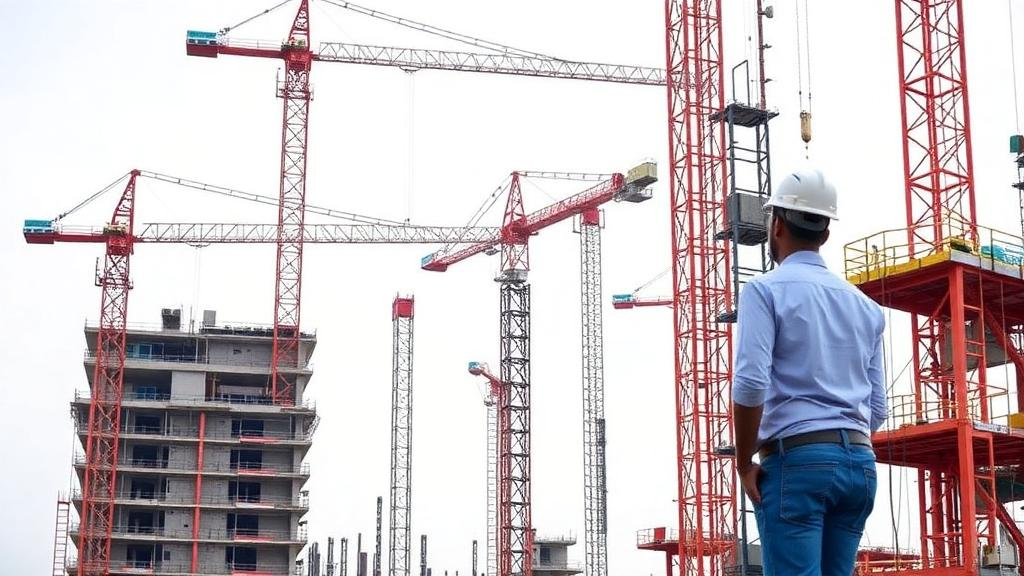
Construction workers in Bangladesh already labored in one of the world’s most hazardous industries before the pandemic arrived, but a new qualitative study from Sylhet shows how COVID-19 transformed existing vulnerabilities into a cascading crisis of health, management, and competence. Researchers Iftakhar Ahmad and Md. Ismail Hossain of Shahjalal University of Science and Technology interviewed 26 construction workers in depth, alongside 12 key informants including contractors, subcontractors, building owners, and government officials in the Sylhet City Corporation area. Their findings, published in Discover Social Science and Health, reveal that the pandemic did not simply add new problems to the sector; it amplified latent organizational failures that had been quietly accumulating for decades.
The study rests on an integrated theoretical framework combining three established models. The Job Demands–Resources model explains how excessive workloads, environmental hazards, and psychological strain erode well-being when they are not balanced by adequate resources such as protective equipment, supervision, and social support. Reason’s Accident Causation Theory contributes the distinction between latent failures, which are systemic weaknesses embedded in organizational processes, and active failures, the unsafe acts committed by frontline workers. Human Capital Theory completes the picture by framing education, training, and skill acquisition as determinants of productivity and safety. Together, these lenses allowed the researchers to trace how structural conditions, managerial decisions, and worker capacities interacted to produce harm during the crisis.
On the physical health front, the interviews documented a striking rise in respiratory illnesses, including asthma, shortness of breath, and chest congestion, which participants linked to the absence of personal protective equipment, overcrowded sites, viral exposure, and environmental pollution. Workers with pre-existing conditions were hit hardest. One asthmatic worker described having to continue living in a tent on site to support his family, which worsened his condition. Skin diseases such as itching, eczema, and infections also surged, attributed to frequent contact with unclean tools and limited access to safe water. Notably, the study captured a sharp divergence in accountability: building owners held contractors responsible for worker protection, while contractors framed the illnesses as natural phenomena or the result of workers’ own poor hygiene practices, and a government official acknowledged that Bangladesh lacks a comprehensive occupational health framework tailored to construction, with no standardized injury reporting or emergency response protocols.
Mental health emerged as a second, less visible casualty. Fear of infection combined with income uncertainty imposed by movement restrictions created profound psychological strain. The researchers found that socioeconomic position shaped behavioral responses: some workers from relatively well-off families simply stopped working to protect themselves, while those without savings faced an agonizing choice between infection risk and family survival. One worker recounted being penniless during the pandemic and continuing to work despite fear and uncertainty because stopping meant no income for his family. This psychosocial tension, the authors argue, represents a persistent dilemma for informal laborers whose livelihoods depend on daily physical presence at hazardous sites.
Environmental conditions at the worksites compounded these risks. Participants described unsanitary sites lacking adequate water and soap, makeshift tents that were dirty and overcrowded, and waste scattered across working areas. Weak site organization and poor management amplified the hazards. Yet even here, narratives diverged: one contractor insisted that soap and water had been provided at every site under his contract, blaming workers’ lackadaisical attitudes for non-compliance, while workers pointed to the absence of basic facilities. The researchers interpret this gap between managerial claims and worker experience as evidence of both weak enforcement and uneven adherence, mediated by limited education and awareness.
Workforce management failures formed the study’s second major theme. Contractors, who often serve as the sole authority on Bangladeshi construction sites, were frequently absent during the pandemic. Their absence produced disorganization, communication gaps, and neglected site maintenance, with debris left scattered and workers receiving no clear guidelines or schedules. In the power vacuum, older workers, those with higher education, and relatives of contractors assumed informal supervisory roles, pressuring colleagues to complete tasks quickly to demonstrate performance to the contractors rather than to protect health and safety. Compliance with protective measures proved almost entirely externally driven: workers reported wearing masks and gloves only when the contractor or site owner visited, focusing otherwise on finishing quickly to secure their daily wage.
The pandemic also fractured schedules and supply chains. Lockdowns, transportation restrictions, and shop closures disrupted the delivery of construction materials, while contractors’ absences left workers uncertain about their next tasks and procedures. Irregular working hours, sometimes beginning before 9 a.m. or extending past 5 p.m. without consultation, spilled over into workers’ family lives and mental health. Building owners reported difficulties paying wages and meeting financial obligations to suppliers and subcontractors as cash flow constraints intensified. The study links these operational breakdowns directly to increased occupational risk, arguing that role ambiguity and disorganized activity translated managerial inefficiency into physical danger.
Perhaps the most culturally distinctive finding concerns religious belief. Many workers interpreted COVID-19 as a curse from Allah, a consequence of human sins that would affect only the guilty, and believed that ultimate protection came from God rather than human intervention. While such beliefs provided psychological comfort, they often reduced adherence to preventive measures. One building owner described advising a worker to refit a mask that had slipped beneath his lip; the worker refused, stating that infection happens according to Allah’s will. The authors emphasize that these fatalistic interpretations, particularly common among workers with limited literacy, underscore the need for health education that is culturally sensitive rather than dismissive of religious context.
Skill development, the third theme, revealed a structural failure long predating the pandemic. Formal training programs and vocational certification schemes for construction workers in Bangladesh remain limited, and most workers enter the trade without task-specific competencies in plastering, bricklaying, handling sharp tools, or working at heights. Skills are instead acquired through informal mechanisms: learning from mistakes, observation, peer mentoring, and occasional safety meetings held by contractors. One worker described progressing from material bearer to plasterer over nine years of gradual development, while noting that many newcomers lose their jobs before achieving proficiency. The pandemic severed these fragile learning pathways, as lockdowns and social distancing ended safety discussions and reduced contact with experienced workers, leaving novices confused, error-prone, and unsafe.
The study’s integrative contribution lies in showing how these three domains reinforce one another. Limited skills made workers unable to understand or apply pandemic protocols, such as physical distancing or sanitizing shared tools, while managerial absence removed the guidance that might have compensated. The result was slower task completion, repeated errors, interrupted workflows, and reduced productivity, alongside heightened infection and injury risk. The authors propose a multi-level response: strict enforcement of the Bangladesh National Building Code, institutionalized safety audits, mandatory contingency planning with risk financing and insurance, continuous site-level supervision with quality protective equipment and digital communication tools, structured competency-based vocational training, and community-based mental health services and awareness campaigns delivered by NGOs and labor organizations. They acknowledge limitations, including the regional focus on Sylhet, purposive sampling, and self-reported data, and call for mixed-methods and post-pandemic research. But their central conclusion stands: the pandemic exposed how structural, managerial, educational, and cultural factors interact to produce occupational vulnerability, and only coordinated, evidence-informed action across all of them can build a resilient construction workforce in Bangladesh.
Subject of Research: Impacts of the COVID-19 pandemic on occupational health, workforce management, and skill development among construction workers in Bangladesh
Article Title: Impacts of COVID-19 on occupational health, workforce management, and skill development in the construction sector in Bangladesh
Article References: Ahmad, I., & Hossain, M. I. (2026). Impacts of COVID-19 on occupational health, workforce management, and skill development in the construction sector in Bangladesh. Discover Social Science and Health, 6(1), Article 94. https://doi.org/10.1007/s44155-026-00426-2
Image Credits: AI Generated
DOI: 10.1007/s44155-026-00426-2
Keywords: COVID-19, construction industry, occupational health, Bangladesh, workforce management, skill development, informal workers, mental health, workplace safety, qualitative research, Sylhet, labor informality
Cite Scienmag News
Courtney Benton. (October 6, 2026). COVID-19 Deepened Health Risks and Skill Gaps for Bangladesh Construction Workers. Scienmag. https://scienmag.com/covid-19-deepened-health-risks-and-skill-gaps-for-bangladesh-construction-workers/
Courtney Benton. "COVID-19 Deepened Health Risks and Skill Gaps for Bangladesh Construction Workers." Scienmag, 6 October 2026, https://scienmag.com/covid-19-deepened-health-risks-and-skill-gaps-for-bangladesh-construction-workers/. Accessed 6 October 2026.
Courtney Benton. "COVID-19 Deepened Health Risks and Skill Gaps for Bangladesh Construction Workers." Scienmag. October 6, 2026. https://scienmag.com/covid-19-deepened-health-risks-and-skill-gaps-for-bangladesh-construction-workers/


