


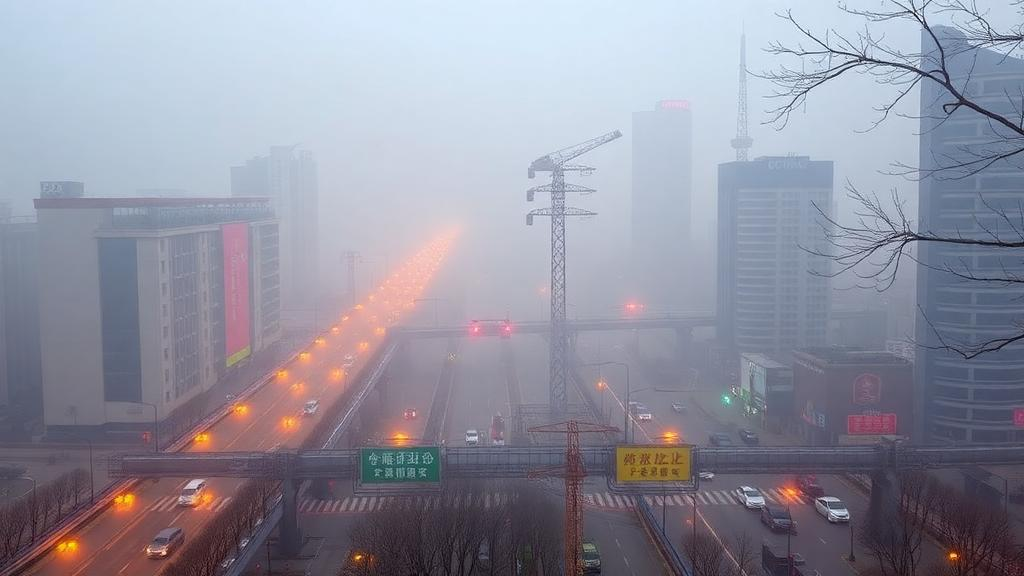
Acute respiratory infections remain one of the most stubborn burdens on global health, and the mix of viruses and bacteria behind them shifts constantly with geography, season, and the people they strike. A new retrospective study from Kaifeng, an inland city in China’s Henan Province, now offers one of the most detailed local pictures yet of how that microbial landscape is composed — and, importantly, how little it appears to bend under the influence of weather and air pollution. Published in BMC Infectious Diseases, the research analyzed nearly two thousand patients treated at a single sentinel hospital between 2023 and 2025, testing for seventeen of the most common respiratory pathogens using real-time fluorescence quantitative PCR, the laboratory workhorse that amplifies and detects specific genetic sequences with high sensitivity.
The headline finding is a measure of just how busy the respiratory pathogen world is in this region. Of the 1,716 patients enrolled in the study, 957 — or 55.77 percent — tested positive for at least one pathogen. Viruses dominated the spectrum, accounting for a 40.44 percent detection rate, while bacterial pathogens were found in 28.03 percent of samples. Most infections were caused by a single organism, at 34.15 percent, but a striking 21.51 percent of patients carried mixed infections, meaning two or more pathogens were detected simultaneously. That co-infection rate underscores a growing recognition in respiratory medicine that the old model of one microbe, one disease is often an oversimplification, particularly in children and in patients whose symptoms are severe enough to bring them to a hospital.
Demographics turned out to matter enormously. Children bore the heaviest pathogen load by far, with a detection rate of 69.81 percent in the pediatric group — nearly double the 35.68 percent seen in adults aged 66 and older, who had the lowest rate of any age bracket. This pattern is consistent with immunological reality: young children encounter most respiratory viruses for the first time and have not yet built the antibody repertoires that older adults accumulate over decades of exposure. Sex, by contrast, made essentially no difference. Male and female detection rates were almost perfectly matched, at 55.78 and 55.75 percent respectively, a difference so small it carried no statistical significance.
Perhaps the most socially revealing result was the urban-rural divide. Patients from urban areas tested positive 62.10 percent of the time, while those from rural districts were positive in only 20.28 percent of cases — a gap so large that the chi-square statistic reached 132.522 with a P value below 0.005. The authors of the study note that detection rates differed significantly across regions, and while the retrospective design cannot fully disentangle the reasons, several plausible mechanisms suggest themselves. Urban patients may reach the sentinel hospital earlier and more often, giving laboratory tests a better chance to catch pathogens before the immune system clears them. Differences in healthcare access, testing frequency, and exposure patterns between city and countryside could all contribute to what is, on its face, one of the starkest disparities in the dataset.
Seasonality, as expected, proved to be a powerful organizing force. Influenza A virus, the perennial driver of winter epidemics, peaked in the winter months with a detection rate of 20.40 percent. Rhinovirus, the most common cause of the common cold, reached its highest detection in autumn at 15.63 percent. Every major pathogen in the study displayed a significant seasonal pattern, reinforcing the idea that the calendar is one of the most reliable predictors of which microbe a clinician is likely to encounter. For hospitals in Kaifeng and comparable cities, this kind of seasonally resolved baseline is more than an academic curiosity: it can guide when to stock particular diagnostics, when to anticipate surges in pediatric admissions, and when to prioritize vaccination campaigns against specific influenza strains.
The study’s second major aim was more ambitious — to test whether environmental conditions, specifically temperature, precipitation, and fine particulate matter known as PM2.5, correlate with the ebb and flow of individual pathogens. This question has long fascinated epidemiologists. Laboratory studies show that cold, dry air stabilizes influenza virions and dries out the mucosal defenses of the airway, while air pollution can damage the epithelial lining of the lungs and impair the clearance of inhaled microbes. If those mechanisms translate cleanly into population-level patterns, one would expect strong statistical associations between meteorological variables and pathogen detection rates.
At first glance, the raw correlations looked promising. Influenza B virus detection showed a moderate negative correlation trend with precipitation, with a Spearman rank coefficient of −0.591 and a P value below 0.05, suggesting the virus was less often detected in wetter periods. Bordetella pertussis, the bacterium responsible for whooping cough, showed a moderate positive correlation trend with PM2.5 concentration, with a coefficient of 0.597 and a P value below 0.05 — the kind of result that would seem to support the idea that polluted air and bacterial respiratory infection travel together.
But the researchers did something that separates careful science from headline-chasing: they corrected for multiple comparisons. Because the team tested fifteen pathogens against three environmental variables, the analysis generated forty-five separate statistical tests. Under those conditions, a handful of nominally significant results are expected by pure chance alone. Applying the Bonferroni correction — a stringent threshold that lowered the significance cutoff to 0.0011 — neither the influenza B–precipitation link nor the B. pertussis–PM2.5 link survived. In the end, thirteen of the fifteen pathogens examined showed no statistically significant correlation with temperature, precipitation, or PM2.5, and the two marginal associations were flagged by the authors themselves as likely chance findings given the number of comparisons performed.
This kind of statistical honesty is worth pausing on, because it stands in contrast to a large body of published work that reports weather–pathogen associations without adequately accounting for the multiplicity of tests. Spearman correlation, the method used here, is an exploratory tool: it measures whether two variables rise and fall together in rank order, but it cannot establish causation, control for confounders such as seasonal testing patterns or school holidays, or distinguish a genuine biological signal from coincidence. The Kaifeng team’s decision to present their marginal findings transparently, while explicitly cautioning against overinterpretation, sets a methodological example for local surveillance studies elsewhere.
The practical value of the study lies less in its null environmental results than in the epidemiological baseline it establishes. For a city in Central China — a region the authors note has been underrepresented in multi-pathogen surveillance literature — the data provide a reference point against which future outbreaks, vaccine effects, and shifts in pathogen dominance can be measured. The findings argue for prevention strategies that are targeted by population and season rather than by weather forecast: intensified pediatric diagnostics and vaccination, attention to the diagnostic gap suggested by low rural detection rates, and winter preparedness for influenza A. As respiratory pathogens continue to circulate in an era of post-pandemic surveillance, local studies like this one, grounded in routine hospital testing and disciplined statistics, are the quiet infrastructure on which effective public health responses are built.
Subject of Research: Associations between meteorological factors and the respiratory pathogen spectrum in Kaifeng, China
Article Title: Association between meteorological factors and the respiratory pathogen spectrum in Kaifeng, China from 2023 to 2025: a retrospective analysis
Article References: Li, H., Chen, L., Li, Q., Liang, S.-S., & Zhao, H.-Y. (2026). Association between meteorological factors and the respiratory pathogen spectrum in Kaifeng, China from 2023 to 2025: a retrospective analysis. BMC Infectious Diseases. https://doi.org/10.1186/s12879-026-14522-w
Image Credits: AI Generated
DOI: 10.1186/s12879-026-14522-w
Keywords: acute respiratory infection, respiratory pathogens, meteorological factors, PM2.5, influenza, rhinovirus, Bordetella pertussis, seasonality, epidemiology, PCR surveillance, Kaifeng, China
Cite Scienmag News
Phoebe Ingram. (October 5, 2026). Weather and Pollution Show Little Sway Over Respiratory Pathogens in Central China. Scienmag. https://scienmag.com/weather-and-pollution-show-little-sway-over-respiratory-pathogens-in-central-china/
Phoebe Ingram. "Weather and Pollution Show Little Sway Over Respiratory Pathogens in Central China." Scienmag, 5 October 2026, https://scienmag.com/weather-and-pollution-show-little-sway-over-respiratory-pathogens-in-central-china/. Accessed 5 October 2026.
Phoebe Ingram. "Weather and Pollution Show Little Sway Over Respiratory Pathogens in Central China." Scienmag. October 5, 2026. https://scienmag.com/weather-and-pollution-show-little-sway-over-respiratory-pathogens-in-central-china/


